Refrigerant compatibility refers to the specific chemical type of gas an AC condenser is designed to hold and circulate. Your vehicle’s manufacturing year and regional engineering standards determine which specific refrigerant type you must match.
Which Refrigerant Compatibility Do You Need?
| If this is you | The Refrigerant Compatibility that suits you | Why |
|---|---|---|
| You own a vehicle manufactured before 2015 | R134a | Older systems rely on R134a as the standard high-pressure refrigerant. |
| You own a modern vehicle (typically 2015+ or newer) | R1234yf | Newer environmental regulations require R1234yf for most passenger cars. |
| You own a heavy-duty truck or specialized industrial vehicle | R134a (often) | Many heavy-duty applications still utilize R134a despite newer passenger car standards. |
| You are servicing an older vintage vehicle | R12 (Legacy) | Very old systems use R12, though these require specialized retrofitting and parts. |
Products in this category with a full review here
Prices across these 3 run from $117.17 to $139.41; each one has a full review here.

Buick Commercial Chassis Chevy Caprice A/C Condenser
$139.41 price checked August 2026
Read our full Caprice A/C Condenser review
If you own a Jeep, see the top-rated Jeep Grand Cherokee condenser options.
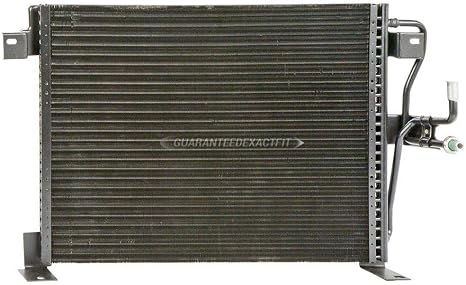
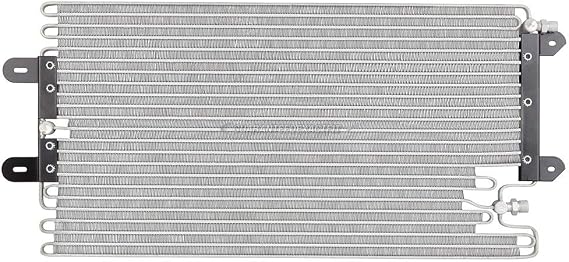
Chrysler Concorde Dodge Intrepid A/C Condenser 60-61183N
Owners of older sedans should view our comparison of the best Chrysler Concorde condenser.
$117.17 price checked August 2026
How to Check Your Vehicle’s Refrigerant Compatibility
To determine your required refrigerant compatibility, you must identify the specific gas your factory system uses. This information is rarely a guess and is documented in three primary locations on your vehicle.
The Under-Hood Specification Plate
The most direct way to find your value is to open the bonnet and look for a foil sticker or metal plate near the radiator or the AC lines. This label will explicitly state the refrigerant type, such as “R134a” or “R1234yf,” along with the required oil type and system capacity.
Proper fitment depends on size, so learn how to measure condenser width before ordering.
The Vehicle Owner’s Manual
If the under-hood label is missing or illegible, the owner’s manual contains the technical specifications for the climate control system. Look for the “Specifications” or “Maintenance” section, which lists the refrigerant type and the required amount of fluid for a full charge.
The VIN Decoding Method
If you cannot locate a physical sticker, you can use your Vehicle Identification Number (VIN) to find the factory build sheet. Providing your VIN to a dealership or using a manufacturer-specific decoding tool will confirm the exact refrigerant compatibility required for your specific production run.
What Happens if You Choose the Wrong Refrigerant Compatibility?
Choosing the wrong refrigerant compatibility creates a chemical mismatch between the gas, the lubricant oil, and the seals within the AC condenser. This mismatch leads to immediate and often expensive system failures.
Seal Degradation and Leaks
Refrigerants like R1234yf and R134a use different chemical properties to stay in a liquid or gas state. If you use R134a in a system designed for R1234yf, the seals and O-rings may swell, shrink, or degrade rapidly. This leads to a core leakage where the system loses pressure and stops cooling the cabin.
Lubrication and Compressor Failure
Each refrigerant type is paired with a specific type of PAG or POE oil. Mixing these causes the oil to break down or fail to circulate. Without proper lubrication, the compressor will experience high friction, leading to a seized motor or a burnt-out clutch, which is a much more expensive repair than a simple condenser replacement.
To ensure the unit clears your radiator, study the guide for condenser height.
Operating Pressure Mismatches
The pressure levels at which R134a and R1234yf operate are different. Using a condenser not rated for the specific gas’s pressure can lead to improper fin pitch performance. This results in high head pressure, causing the compressor to cycle off prematurely and preventing the air from reaching the desired temperature.
What to Do if Your Vehicle is Between Compatibility Standards?
Some vehicles, particularly those manufactured during the transition years between R134a and R1234yf, may sit in a grey area regarding refrigerant compatibility. In these cases, the manufacturing date alone is not a reliable indicator.
Prioritize the VIN over the Year
If your vehicle was produced in a year where both refrigerants were in use, you must rely on the VIN to confirm the factory specification. Manufacturers often produced different versions of the same model in the same year depending on the region or production month.
Consult a Qualified Technician
When the vehicle’s own documentation is unclear, the safest path is to have a qualified technician perform a system audit. They can check the existing oil type and the port sizes on the existing lines. Because fitting the condenser is a job for a qualified installer, they can confirm if the replacement unit matches your specific system’s requirements before you finalize the purchase.