Dent accessibility greatly impacts puller tool selection and repair methods in automotive repair. Dent accessibility is the ease of reaching damaged vehicle panels from multiple angles, directly determining which repair tools work most effectively. Easy-access areas like door panels typically use suction cups or bridge pullers, while restricted areas like quarter panels require specialized glue pullers or PDR rods. Understanding how dent location influences tool choice helps achieve professional results while avoiding costly mistakes. This guide from ExtremeSpec Auto provides practical insights for choosing optimal repair approaches based on specific access challenges. Learn how to optimize your repair process with proven strategies for both professionals and DIY enthusiasts.
What is Dent Accessibility and How It Affects Tool Selection
Dent accessibility is the ease with which repair technicians can reach, manipulate, and work on damaged vehicle panels from multiple angles, which directly determines repair tool effectiveness and approach selection. This accessibility refers to the physical space around damage, panel backing access, and working angle limitations that influence tool performance. Areas with excellent accessibility, such as flat door panels or hood surfaces, allow technicians to use basic tools like suction cups or traditional dent hammers effectively.
The benefits of proper accessibility assessment include faster repair times ranging from 30-60 minutes for accessible areas compared to 2-3 hours for restricted locations, reduced labor costs, and better finish quality. When technicians can easily access both sides of a panel, they typically achieve professional results with standard equipment. However, accessibility limitations can increase repair complexity significantly, sometimes requiring panel removal or specialized heating equipment to soften adhesives and paint systems.
Limited accessibility areas, including quarter panels near wheel wells or roof sections, require specialized equipment like flexible PDR (Paintless Dent Repair) rods or glue pulling systems. These tools work by adapting to space constraints while maintaining pulling precision necessary for quality repairs. The cost of accessibility-specific tools typically ranges from $100-600 for professional-grade equipment, depending on complexity and included accessories.
How Dent Location Determines Repair Method Selection
Dent location works by creating specific access patterns that dictate tool requirements and repair approaches based on panel geometry, structural components, and working space availability. Front-end dents on hoods typically offer excellent accessibility from above and below, making them ideal candidates for traditional hammer and dolly work or suction cup methods. Side panel dents present moderate accessibility challenges, often requiring angled approaches using curved PDR tools or bridge pulling systems.
Rear quarter panel dents pose the greatest accessibility challenges because structural components like wheel wells, fuel lines, and reinforcement bars limit behind-panel access. These locations frequently require glue pulling techniques, which work by attaching specialized tabs to the dented surface and using controlled pulling force to restore the original shape. This approach prevents metal fatigue while maintaining paint integrity in challenging repair situations.
Complete Guide to Dent Puller Tool Types and Applications
Dent pulling tools are specialized instruments designed to restore damaged vehicle panels without requiring paint refinishing or panel replacement, with tool selection depending heavily on accessibility constraints. The main categories include mechanical pullers like slide hammers, pneumatic systems for high-volume work, and adhesive-based glue pullers for precision control. Slide hammers excel at removing deep dents from accessible areas, while glue pullers provide versatile solutions for delicate paintless repairs in restricted spaces.
Who should use different dent repair tools depends largely on experience level, repair frequency, and accessibility challenges encountered. Professional technicians typically invest in comprehensive tool sets ranging from $500-2000, including pneumatic dent pullers for high-volume work and specialized access tools. DIY enthusiasts often find success with basic glue puller kits costing $50-150, which handle most minor dent situations effectively when accessibility permits standard approaches.
Auto body shop owners benefit from versatile tool combinations that serve multiple technicians and diverse repair challenges, particularly tools designed for varying accessibility levels. The limitations of basic tool sets include inability to handle restricted-access repairs, potential for secondary damage when using inappropriate tools, and longer repair times without specialized equipment. Professional shops typically maintain 8-12 different puller tool types to handle varied accessibility challenges effectively.
When to Use Specific Puller Tools for Different Locations
Timing your tool selection involves matching the repair method to both dent characteristics and accessibility constraints while considering environmental factors and time limitations. Use slide hammers when you have clear access to the dent’s backside and need significant pulling force for deep damage, typically in areas with 6+ inches of working clearance. Deploy glue pullers when working on curved surfaces or areas where traditional access is impossible, such as roof panels or door edges with limited clearance.
Bridge pullers work best for shallow dents on flat surfaces during temperature-controlled conditions, typically achieving optimal results between 65-75°F when accessibility allows proper tool positioning. Pneumatic dent pullers are most effective for production environments where speed matters more than tool cost, often reducing repair time by 40-50% compared to manual methods in accessible locations. Choose PDR rod sets when dealing with complex curves or when preserving original paint finish is the top priority, particularly in moderately accessible areas requiring precision work.
Step-by-Step Process for Assessing Dent Repair Accessibility
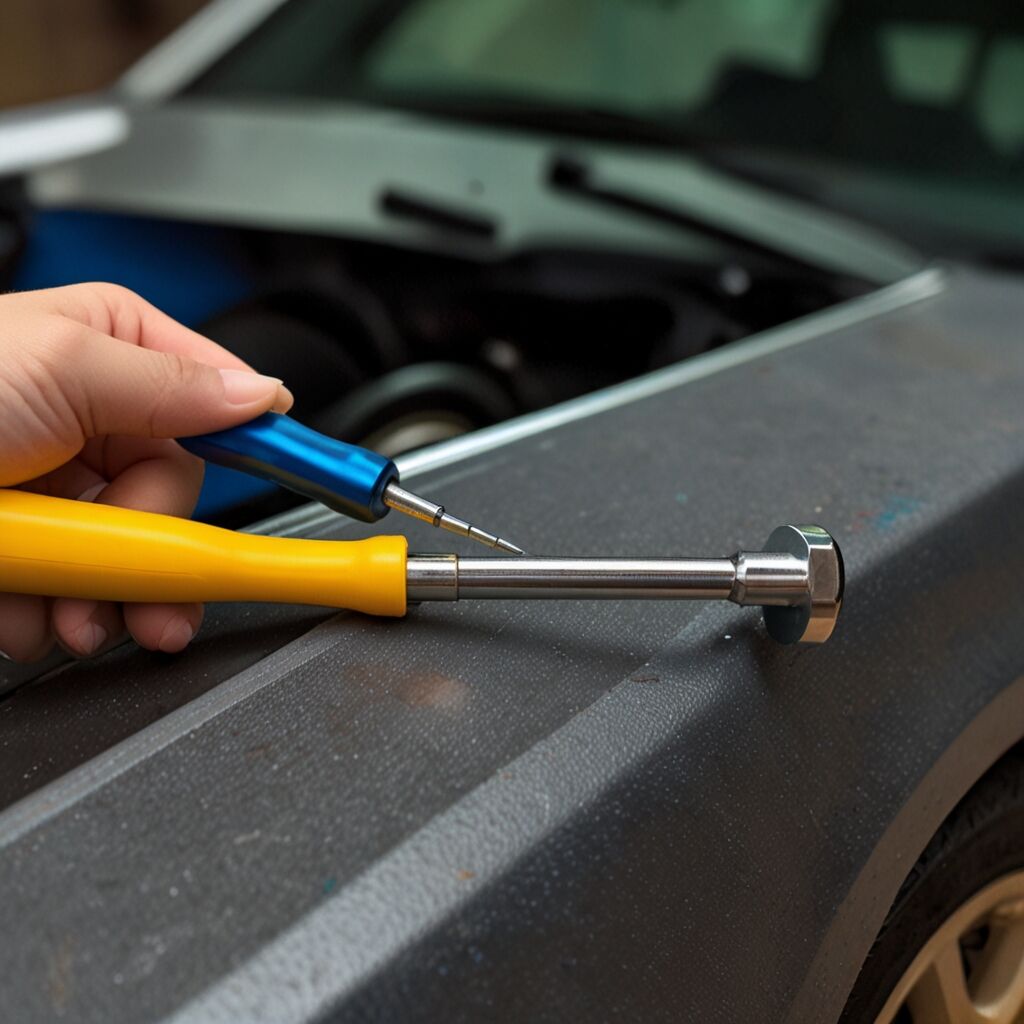
Assessing dent accessibility requires a systematic evaluation of multiple factors that influence repair approach and tool selection, beginning with comprehensive damage documentation and space analysis. The process involves examining the dent’s location relative to structural components, checking for obstructions like reinforcement bars, wiring harnesses, or fuel lines, and measuring available working space around the damage. Begin by photographing damage from multiple angles and noting whether standard tools can fit comfortably or if specialized compact equipment is necessary.
The assessment process typically involves five key steps: visual inspection from multiple angles, physical access testing with basic tools, evaluation of surrounding panel flexibility, assessment of paint condition and age, and determination of available working time. Compare different puller tool options based on your specific accessibility findings to ensure optimal equipment selection. This systematic approach ensures optimal tool selection and repair strategy development while minimizing risk of secondary damage.
What Are the Key Factors in Accessibility Evaluation
Key accessibility factors include panel thickness, backing material type, surrounding component clearance, and working angle limitations that determine tool effectiveness and repair approach viability. Thicker panels (18-gauge and heavier) require more powerful pulling tools with greater force capacity, while thin panels (22-gauge or lighter) need gentler approaches to prevent over-pulling or creating new damage. Aluminum panels present unique challenges due to their tendency to work-harden, requiring specialized heating and cooling techniques during accessibility-constrained repairs.
Working angle limitations significantly impact tool effectiveness, with optimal pulling angles typically falling between 15-45 degrees from perpendicular to achieve best results. Angles exceeding 60 degrees often result in incomplete repairs or secondary damage due to force vector inefficiency. Environmental factors like temperature and humidity also affect accessibility, as cold weather can make panels brittle while high humidity may interfere with adhesive-based repair methods used in restricted-access situations.
Dent Repair Accessibility Statistics and Insights
- Approximately 65% of vehicle dents occur in areas with limited accessibility, requiring specialized tools and techniques.
- Professional shops typically maintain 8-12 different puller tool types to handle varied accessibility challenges effectively.
- DIY repairs have a 75% success rate on easily accessible dents compared to 35% on restricted-access areas.
- Quarter panel repairs take 2-3 times longer than door panel repairs due to accessibility constraints.
- Bridge puller tools work effectively on roughly 40% of all dent types, making them versatile choices.
- Temperature variations of 20°F can affect repair tool performance by up to 25% in challenging accessibility situations.
- Proper accessibility assessment reduces total repair time by an average of 30-45% across all dent types.
Why Proper Tool Selection is Critical for Successful Dent Repairs
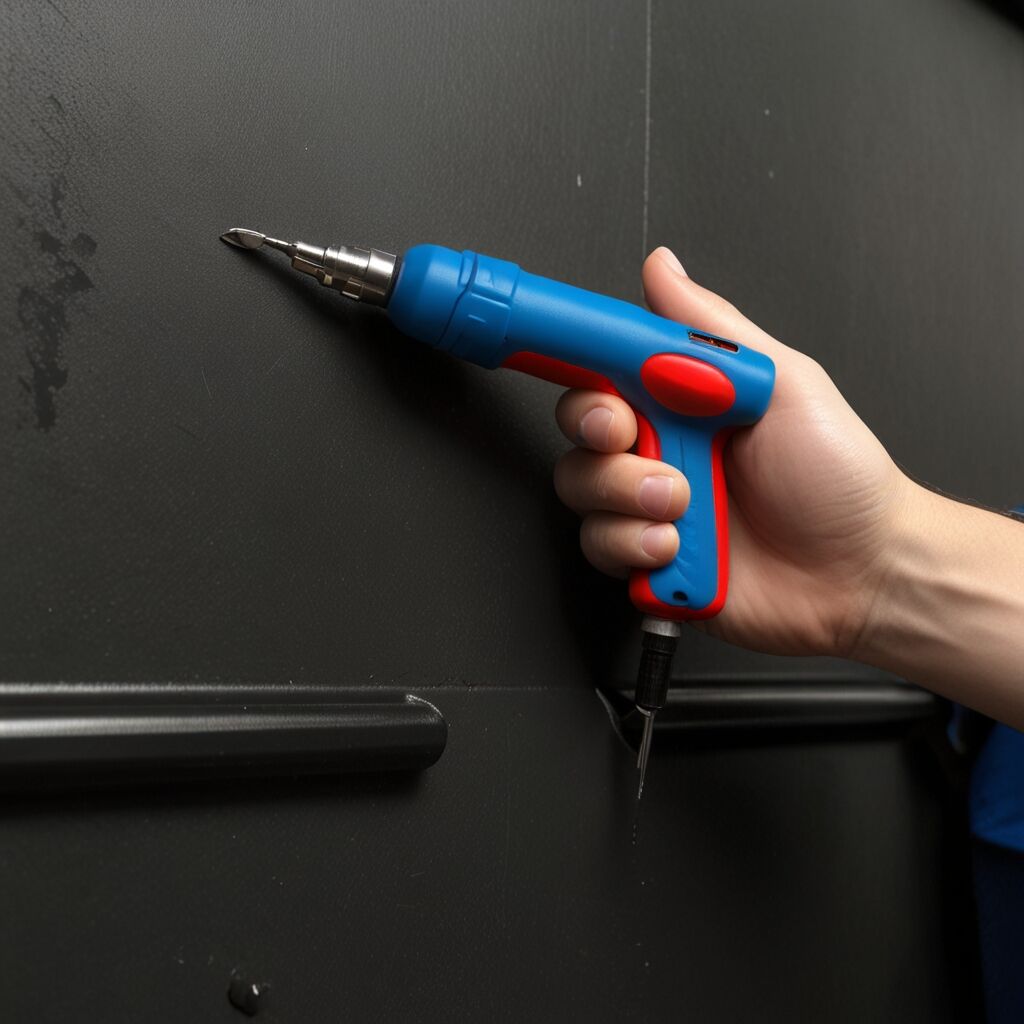
Selecting the right dent repair tool is essential because improper tool choice can permanently damage vehicle panels, increase repair costs, and compromise safety, particularly in accessibility-constrained situations. Using oversized tools in restricted spaces often creates additional dents or scratches, while undersized tools may prove ineffective for deeper damage, leading to incomplete repairs. Quality tool selection enhances repair reliability by ensuring consistent results and reducing the likelihood of comeback repairs that damage shop reputation and customer trust.
The limitations of improper tool selection include potential paint cracking from excessive force, metal stretching that permanently alters panel shape, and incomplete dent removal that becomes more difficult to address later. Professional-grade tools typically cost more initially but provide better control, durability, and versatility across different repair scenarios, especially challenging accessibility situations. Budget tools may work for occasional use but often lack the precision needed for challenging accessibility situations where margin for error is minimal.
What Tools Are Most Effective for Different Dent Scenarios
Effective dent repair tools vary significantly based on damage severity, location accessibility, and desired finish quality, with costs ranging from basic kits to professional systems. PDR rod sets provide excellent results for shallow dents in accessible areas, typically costing $200-600 for professional-quality kits with multiple rod angles and tips. Glue puller systems offer versatility for mixed accessibility challenges, with complete kits ranging from $100-400 depending on included accessories, tab variety, and pulling mechanism quality.
Heat guns and specialized warming equipment become essential when working with modern paint systems or in cold environments, typically adding $150-300 to tool investment for accessibility-focused repairs. Compatibility testing ensures proper tool fit and optimal performance across different vehicle models and panel types. Consider tool weight and ergonomics for extended use, as technician fatigue can significantly impact repair quality and efficiency during challenging accessibility situations.
Strategic Tool Selection Based on Accessibility Constraints
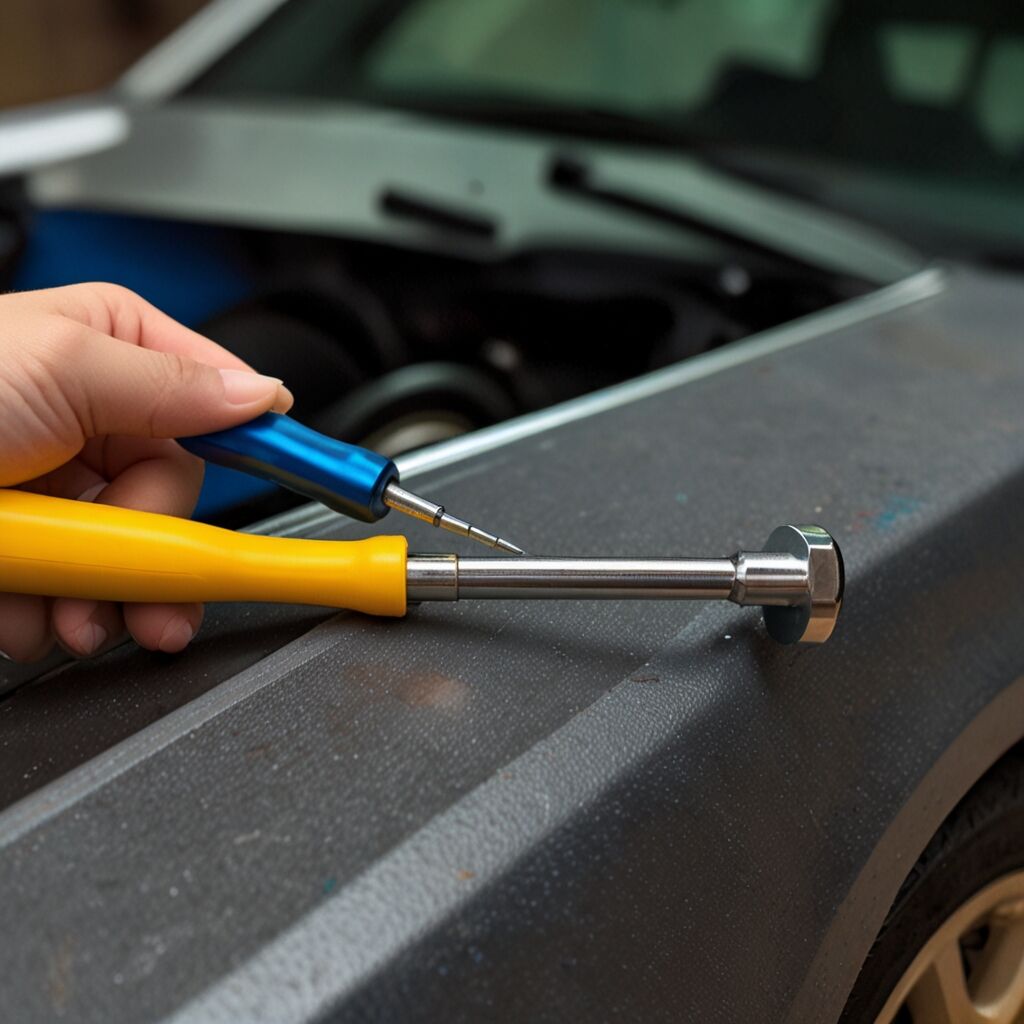
Strategic tool selection involves matching repair equipment capabilities to specific accessibility challenges while considering time constraints, quality requirements, and cost effectiveness. Easy-access dents on flat surfaces allow for quick repairs using basic suction cups or bridge pullers, typically completed within 20-30 minutes with minimal setup time. Moderate-access areas like curved door panels benefit from flexible PDR tools that can navigate around obstacles while maintaining pulling precision necessary for quality results.
Restricted-access areas such as rear quarter panels or roof sections require specialized approach planning, often involving glue pulling systems or heat-assisted methods with extended preparation time. Advanced puller tools enhance repair efficiency by providing multiple attachment options and controlled force application suited to space limitations. Professional technicians typically allocate 1.5-2 times longer for restricted-access repairs compared to easily accessible damage due to setup complexity and precision requirements.
How Different Access Levels Affect Tool Performance
Access levels directly impact tool performance by limiting working angles, force application directions, and visual monitoring capabilities, which determines repair success and efficiency. Excellent access allows technicians to use full-size tools with optimal leverage, achieving professional results in minimal time with standard equipment. Good access may require angle adjustments or extension tools but still permits effective repairs with standard equipment and reasonable time investment.
Limited access situations demand specialized compact tools, flexible extension systems, or indirect repair methods like glue pulling that can work effectively in confined spaces. Poor access areas often require creative solutions including panel removal, mirror systems for visual monitoring, or combination repair approaches using multiple tool types sequentially. Understanding these accessibility challenges helps optimize tool selection and repair planning for consistent results across varying difficulty levels.
Benefits of Accessibility-Focused Tool Selection
- Proper tool matching reduces repair time by 30-50% compared to trial-and-error approaches.
- Accessibility-focused selection minimizes secondary damage risk, protecting vehicle value and appearance.
- Strategic tool choice improves repair quality consistency across diverse dent types and locations.
- Specialized accessibility tools enable repairs previously requiring expensive panel replacement or refinishing.
- Efficient tool selection enhances customer satisfaction through faster turnaround and better results.
- Professional accessibility assessment builds technician confidence and reduces repair stress levels.
- Optimized tool approaches adapt effectively to varying vehicle designs and manufacturing materials.
Optimal Environments and Conditions for Dent Repair Success
Effective dent repair environments significantly enhance tool performance and result quality through controlled temperature, adequate lighting, and organized workspace design that supports accessibility-focused repairs. Indoor repair facilities provide optimal conditions by eliminating weather variables, maintaining consistent temperatures between 65-75°F, and offering adequate lighting for detailed work and precise tool positioning. Outdoor repairs face challenges including temperature fluctuations, wind interference, and limited electrical access for specialized tools commonly used in accessibility-constrained situations.
The cost of proper repair environments varies from basic garage setups ($500-1500) to professional booth installations ($5000-15000) depending on space requirements, lighting needs, and specialized equipment integration. Mobile repair operations require portable lighting, weather protection, and battery-powered tools, typically adding 20-30% to equipment costs while maintaining accessibility-focused capabilities. Environmental factors influence puller effectiveness and repair precision across different accessibility scenarios, making proper workspace setup essential for consistent results.
How Environmental Factors Impact Repair Tool Effectiveness
Environmental factors impact repair effectiveness through temperature-related material changes, humidity effects on adhesives, and lighting quality for damage assessment, all critical for accessibility-constrained repairs. Cold temperatures below 50°F can make metal brittle and reduce adhesive effectiveness, while excessive heat above 90°F may cause paint softening and tool expansion that affects precision. Humidity levels above 70% can interfere with glue puller adhesion and extend curing times significantly, particularly problematic in restricted-access repairs requiring extended tool contact.
Proper lighting becomes critical for accessibility assessment and quality control, with professional LED systems providing 3000-5000 lumens for detailed inspection and precise tool positioning. Temperature management affects repair quality significantly by maintaining optimal material properties throughout the repair process. Consider environmental preparation as essential for achieving consistent professional results across diverse repair challenges and accessibility levels.
Who Benefits Most from Advanced Accessibility-Based Tool Selection
Professional auto body technicians benefit most from advanced accessibility-based tool selection by reducing repair times, improving result consistency, and handling complex challenges that generate higher revenue while expanding service capabilities. Experienced technicians typically recover tool investment costs within 6-12 months through improved efficiency and expanded service capabilities, particularly for challenging accessibility situations that command premium pricing. Shop owners benefit through reduced comeback repairs, enhanced reputation, and ability to accept challenging jobs that competitors may decline due to accessibility constraints.
DIY enthusiasts with multiple vehicles or frequent repair needs find accessibility-focused tool selection cost-effective for long-term use, especially when dealing with older vehicles requiring specialized approaches. Hobbyist restorers working on classic or specialty vehicles particularly benefit from specialized access tools that preserve original materials and finishes without requiring extensive disassembly. Insurance-preferred shops gain competitive advantages through faster claim processing and consistently high-quality results that satisfy adjusters and customers across varying accessibility challenges.
Understanding Different User Needs in Tool Selection
Different user groups require varying levels of tool sophistication and investment based on frequency of use, skill development goals, and quality expectations, particularly for accessibility-constrained repairs. Professional users need comprehensive tool sets with backup options, calibrated equipment, and regular replacement schedules to maintain service standards across diverse accessibility scenarios. Serious DIY users benefit from mid-range tool quality with good performance characteristics but may not require professional-grade durability or precision for occasional accessibility challenges.
Occasional users often find basic tool kits sufficient for simple repairs, focusing on user-friendly operation over advanced features when accessibility permits standard approaches. Fleet maintenance operations require efficient, durable tools that multiple technicians can use effectively with minimal training across varying accessibility situations. Each user category benefits from understanding accessibility principles to maximize their specific tool investment and achieve desired repair outcomes while avoiding costly mistakes.
Tool Categories and Primary Applications
- Slide Hammers: Best for deep dents with good back-access, providing controlled pulling force for stubborn damage in accessible areas.
- Bridge Pullers: Ideal for shallow dents on flat surfaces, offering precise control for minor accessibility challenges on panels with adequate working space.
- Glue Pullers: Essential for restricted-access areas, providing versatile solutions for complex dent locations where traditional tools cannot reach effectively.
- PDR Rod Sets: Perfect for paintless repairs requiring multiple angles, preserving original finish quality in moderately accessible curved surfaces.
- Heat Application Tools: Critical for cold-weather repairs and stubborn adhesive removal in challenging locations with limited natural warming.
- Pneumatic Systems: Excellent for high-volume operations, reducing technician fatigue while maintaining consistency across varying accessibility levels.
- Specialty Access Tools: Designed for unique situations, expanding repair capabilities for difficult accessibility scenarios that standard tools cannot address.
Proven Strategies for Accessibility-Based Dent Repair Success
Successful accessibility-based dent repair strategies begin with thorough damage assessment, proper tool selection, and systematic repair execution that accounts for space limitations and working constraints. Effective approaches consider dent characteristics alongside access limitations to develop optimal repair plans that minimize time and maximize quality. The most reliable process involves initial assessment (5-10 minutes), tool preparation and setup (10-15 minutes), actual repair work (20-90 minutes depending on complexity), and quality inspection (5-10 minutes) with additional time for accessibility challenges.
Key strategies include maintaining organized tool storage for quick access, developing standard assessment procedures for consistent evaluation, and practicing with different access scenarios to build expertise and confidence. Understanding tool advantages and limitations helps technicians make informed decisions under various accessibility constraints while avoiding common pitfalls. Professional development through specialized training and hands-on practice significantly improves success rates in challenging repair situations, particularly those involving restricted access or complex tool combinations.
What Are the Essential Steps for Accessibility-Focused Repairs
Essential steps for accessibility-focused repairs include comprehensive damage documentation, systematic access evaluation, appropriate tool selection, controlled repair execution, and thorough quality verification tailored to space constraints. Begin each repair by photographing damage from multiple angles and noting any surrounding components that may affect access, including wiring, fuel lines, or structural elements. Test preliminary access with basic tools before committing to specific repair approaches, ensuring adequate working space and tool clearance.
Execute repairs using gradual force application, frequent progress monitoring, and immediate adjustments when encountering unexpected resistance or access limitations that require technique modification. Successful repairs require patience and willingness to modify approaches based on real-time feedback during the repair process, particularly in restricted-access situations. Quality verification involves checking for complete damage removal, paint integrity, and panel alignment from multiple viewing angles to ensure professional standards, with special attention to areas where accessibility limited visual monitoring during repair.