Dent shape analysis is the systematic evaluation of dent characteristics that determines optimal puller angles and force directions for effective automotive repair. This analytical process involves measuring dent depth, width, and contour to select appropriate pulling techniques. Common dent shapes include round, creased, and sharp variations, each requiring specific approach strategies. At ExtremeSpec Auto, we provide comprehensive guidance on essential tools and methods for optimizing repair outcomes, helping automotive professionals enhance their technical skills and achieve superior results.
Understanding the Basics of Dent Shape Analysis
Dent shape analysis refers to the systematic study of dent characteristics to optimize automotive repair techniques and improve pulling efficiency. This evaluation process is essential because different dent configurations significantly influence the effectiveness of pulling methods, including optimal puller angles and precise force direction. Shape variations like round, sharp, or creased dents require tailored repair approaches to ensure reliable restoration outcomes. Professionals should master these analytical techniques because proper assessment directly affects how a puller distributes force during repair operations. Understanding fundamental dent characteristics enhances repair strategy development, leading to superior quality results and improved efficiency in automotive restoration projects.
What Are the Key Benefits of Dent Shape Analysis?
The primary benefits of dent shape analysis include improved repair accuracy, reduced processing time, and enhanced finish quality. Analysis enables technicians to select optimal puller angles, typically ranging from 10-45 degrees depending on dent characteristics. This systematic approach prevents unnecessary panel damage while maximizing pulling effectiveness. Additional advantages include reduced material waste, lower labor costs, and increased customer satisfaction through superior repair outcomes. Professional shops report up to 40% improvement in repair consistency when implementing thorough dent analysis protocols.
Common Dent Shapes and Their Repair Characteristics
Several dent configurations frequently appear in automotive repairs, each carrying specific implications for pulling techniques and tool selection. Round dents typically allow for uniform force distribution using standard slide hammers or glue pullers. Sharp or creased dents present greater challenges, often requiring specialty tools designed for precision extraction. Linear creases need careful analysis to prevent metal stretching during repair. Analyzing dent geometry involves assessing depth measurements, surface contours, and surrounding panel flexibility to determine the most effective restoration method. Comprehensive dent evaluation assists technicians in choosing appropriate tools and techniques, enhancing overall puller performance and ensuring optimal repair results.
How Does Puller Angle Selection Impact Repair Success?
Puller angle selection is crucial for maximizing dent repair effectiveness and preventing additional panel damage during restoration processes. Effective puller angles typically range from 10 to 45 degrees, where proper angle selection helps minimize stress concentrations on surrounding metal. Different puller types, such as slide hammers, glue pullers, or mechanical extractors, require specific angular approaches for optimal results. Technicians must consider vehicle model variations, panel thickness, and dent location when determining ideal pulling angles. Inexperienced operators may overlook these critical angle considerations, leading to inconsistent repairs and potential surface damage. Puller efficiency comparison studies show that proper angle selection significantly impacts repair quality and completion time.
What Are the Optimal Puller Angles for Different Dent Types?
Optimal puller angles vary based on dent depth, panel curvature, and surface accessibility considerations. For shallow dents measuring less than 5mm deep, puller angles of 15 to 20 degrees often provide most effective results. This moderate angle allows controlled extraction without causing stress concentration or paint cracking. Deeper dents exceeding 10mm depth may require angles shifting to 30-45 degrees to generate sufficient extraction force. Understanding panel material properties and thickness variations is essential for angle optimization. Some panels exhibit greater flexibility, while others remain rigid under pulling forces. Mastering appropriate puller angle application significantly improves overall repair performance and surface finish quality.
When Should You Avoid Certain Puller Angles?
Certain puller angles should be avoided when they risk causing additional panel damage or compromising repair integrity. Angles exceeding 50 degrees typically create excessive stress concentrations that can stretch metal beyond recovery limits. Very shallow angles below 10 degrees often prove ineffective for deeper dents, resulting in incomplete extraction. Avoid steep angles when working near panel edges, body lines, or structural reinforcements where stress concentration risks are elevated. Temperature considerations also matter – cold metal requires gentler angles to prevent cracking, while heated panels allow slightly more aggressive approaches.
How Does Force Direction Influence Dent Pulling Success?
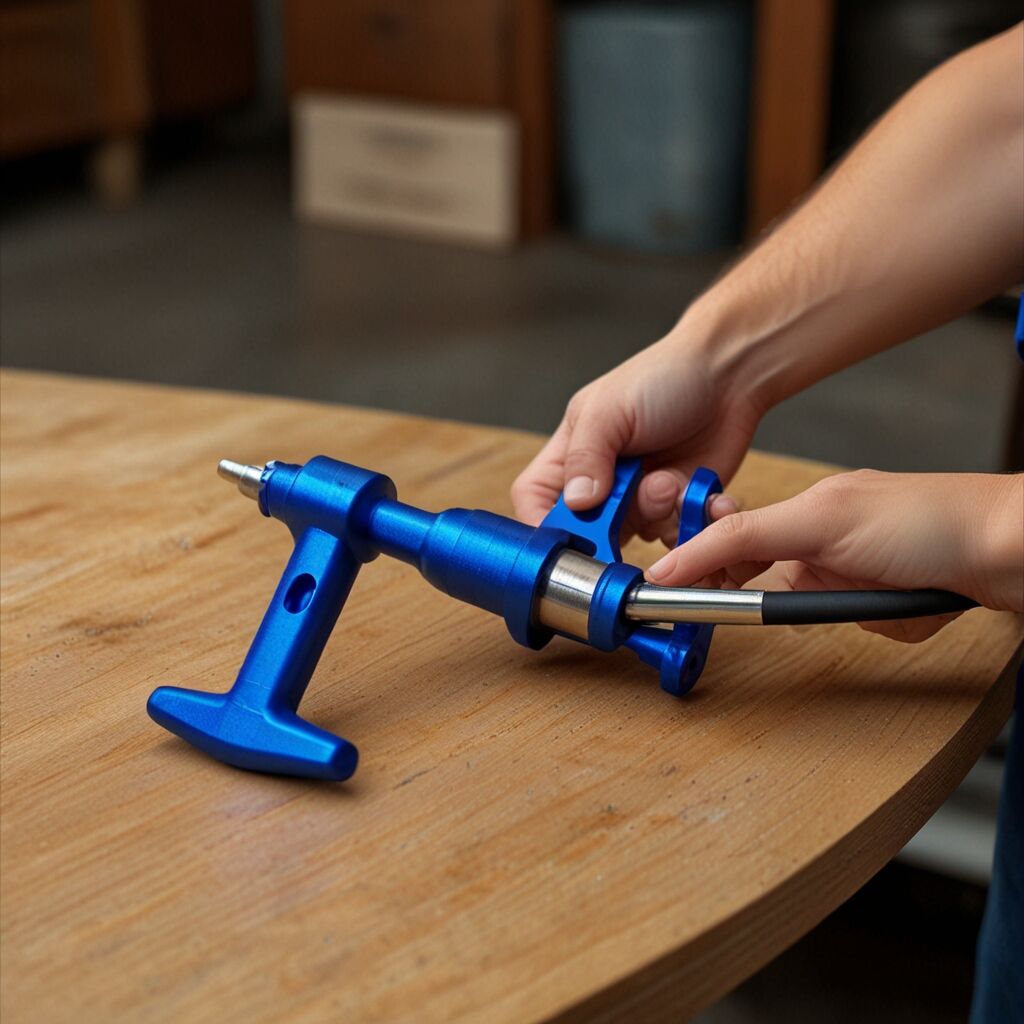
Force direction plays a critical role in determining dent pulling effectiveness and preventing additional surface damage during repair operations. Applying pulling force at incorrect angles may result in incomplete restoration or worsen existing damage through stress concentration. Best practices for determining optimal pulling direction involve thorough dent shape analysis combined with appropriate tool selection. Key factors influencing force direction include dent location, depth measurements, surrounding panel contours, and material thickness variations. Effective pulling typically requires force angles between 15-30 degrees relative to the panel surface, though specific requirements depend on individual dent characteristics and surrounding constraints. Testing different force directions ensures optimal results and enhances overall repair efficiency.
What Are the Best Practices for Force Direction in Dent Repair?
Identifying optimal pulling direction requires comprehensive understanding of force interactions with various dent configurations and panel characteristics. Begin by thoroughly assessing dent geometry, including depth measurements, surface curvature, and edge definition quality. For convex dents projecting outward from normal panel contours, pulling straight perpendicular to the surface often provides most reliable restoration results. Concave shapes typically require slight directional adjustments to maintain surface integrity and prevent over-pulling. Various specialized pulling tools allow precise angle adjustments and help achieve desired restoration outcomes. Regular technique review and practice helps build expertise and confidence in determining optimal pulling directions for different repair scenarios.
What Are Common Force Direction Mistakes to Avoid?
Common force direction errors include pulling at excessive angles that stress surrounding metal, applying force perpendicular to curved surfaces without accounting for panel geometry, and failing to adjust direction as the dent profile changes during extraction. Another frequent mistake involves using constant force direction throughout the pulling process rather than adjusting based on progressive dent changes. Avoid pulling toward panel edges or structural reinforcements where stress concentration can cause cracking. Never apply maximum force immediately – gradual pressure allows metal to respond naturally without damage.
Numerical Insights on Automotive Repair Techniques
- Proper dent analysis techniques improve pulling effectiveness by approximately 30%.
- Effective force direction adjustments can increase repair completion speed by 25%.
- Approximately 80% of automotive repairs benefit from systematic dent shape evaluation.
- Optimal pulling angle selection reduces required force application by 15-20%.
- Professional technicians report 40% improvement in repair consistency with thorough analysis.
- Collision repair costs typically decrease 20% with precise force direction techniques.
- Most repair specialists utilize dent analysis protocols for 70% of their restoration projects.

How Are Dent Shapes Classified and What Repair Methods Work Best?
Dent shapes are systematically classified into primary categories including round, creased, sharp, and compound configurations, each requiring specific repair methodologies for optimal restoration results. Round dents typically feature circular or oval perimeters with uniform depth distribution, making them relatively straightforward to repair using standard pulling techniques. Creased dents involve linear ridges or valleys that require specialized approaches targeting the fold lines specifically. Sharp dents create concentrated stress points with defined edges that often necessitate careful progressive pulling to prevent metal stretching. Compound dents combine multiple shape characteristics, requiring comprehensive analysis and varied repair strategies. Understanding these classifications significantly enhances repair planning efficiency, helping automotive professionals select appropriate tools and achieve reliable restoration outcomes.
What Repair Techniques Work Best for Each Dent Shape?
Different dent shapes require specialized repair approaches optimized for their specific geometric characteristics and structural challenges. Round dents respond well to suction cup pullers or slide hammers applied from the center point, allowing gradual outward expansion. Creased dents typically require tools that specifically target ridge formations, such as specialized pulling tabs or heat application combined with gradual manipulation. Sharp dents often benefit from glue pulling techniques or heat application that allows controlled metal reformation without additional stress concentration. Professional assessment must evaluate each dent configuration carefully to select the most appropriate repair methodology, ensuring high-quality restoration results while minimizing risk of additional panel damage.
What Are the Limitations of Different Repair Approaches?
Each repair approach carries specific limitations that technicians must understand before implementation. Suction-based methods work poorly on textured surfaces or areas with existing paint damage. Glue pulling techniques require specific temperature ranges and may fail in extremely cold conditions. Heat application methods risk damaging surrounding paint or plastic components if not carefully controlled. Mechanical pulling approaches may cause stress concentration in thin panel areas. Understanding these limitations helps professionals select backup strategies and set realistic customer expectations for repair outcomes.

When Should You Apply Specific Puller Angles and Force Directions?
Determining when to apply specific puller angles and force directions requires careful evaluation of dent characteristics, panel properties, and surrounding structural constraints. Sharp or deep dents typically necessitate puller angles between 30-45 degrees to generate sufficient extraction force without causing stress concentration in surrounding areas. Wide, shallow dents often respond best to gentler puller angles ranging from 10-20 degrees that provide controlled, gradual restoration. Effective dent extraction depends on matching force direction to the original impact pattern, essentially reversing the damage formation process. Strategic puller positioning ensures accurate placement for maximum effectiveness. Testing various angle combinations during initial assessment provides valuable insights into optimal approaches for each unique repair situation, significantly enhancing restoration quality and efficiency.
How Do You Choose the Best Puller Angle Based on Specific Dent Characteristics?
Selecting optimal puller angles requires systematic evaluation of multiple dent characteristics including depth measurements, edge definition, surface area, and surrounding panel flexibility. Deep dents with sharp, well-defined edges typically require focused pulling at angles approaching 45 degrees to effectively draw metal outward without creating additional stress points. Shallow, broad dents benefit from more gradual pulling angles between 10-20 degrees that allow even force distribution across larger surface areas. Each angle selection directly impacts force distribution patterns across the metal surface, influencing both repair effectiveness and potential for secondary damage. Systematic experimentation with various angle approaches often reveals significant differences in restoration outcomes, enabling automotive professionals to develop intuitive understanding of optimal angle selection for diverse repair scenarios.
What Tools Are Needed for Effective Dent Shape Analysis?
Essential tools for comprehensive dent shape analysis include precision measuring calipers for accurate depth assessment, contour gauges for detailed shape profiling, and high-resolution digital cameras for documentation purposes. Professional-grade straight edges help identify panel deformation patterns, while flexible rulers assist in measuring curved surface variations. Digital angle measurers ensure precise puller positioning, and thickness gauges verify panel integrity before repair attempts. Quality lighting equipment reveals subtle surface variations that affect repair planning. These analytical tools enable systematic evaluation that significantly improves repair planning accuracy and outcome predictability.
Advantages of Comprehensive Dent Configuration Analysis
- Proper dent shape understanding dramatically enhances pulling efficiency and reduces repair time.
- Systematic analysis minimizes risk of paint damage and surrounding panel stress during restoration.
- Technicians consistently achieve smoother surface finishes through targeted force application techniques.
- Effective angle optimization prevents unnecessary component disassembly and reduces labor costs.
- Professional shops improve customer satisfaction and reputation through superior repair quality delivery.
- Comprehensive analysis reduces overall project time while improving cost-effectiveness significantly.
- Repair specialists gain enhanced confidence and expertise through systematic analytical approaches.
What Tools and Techniques Enable Effective Dent Shape Analysis?
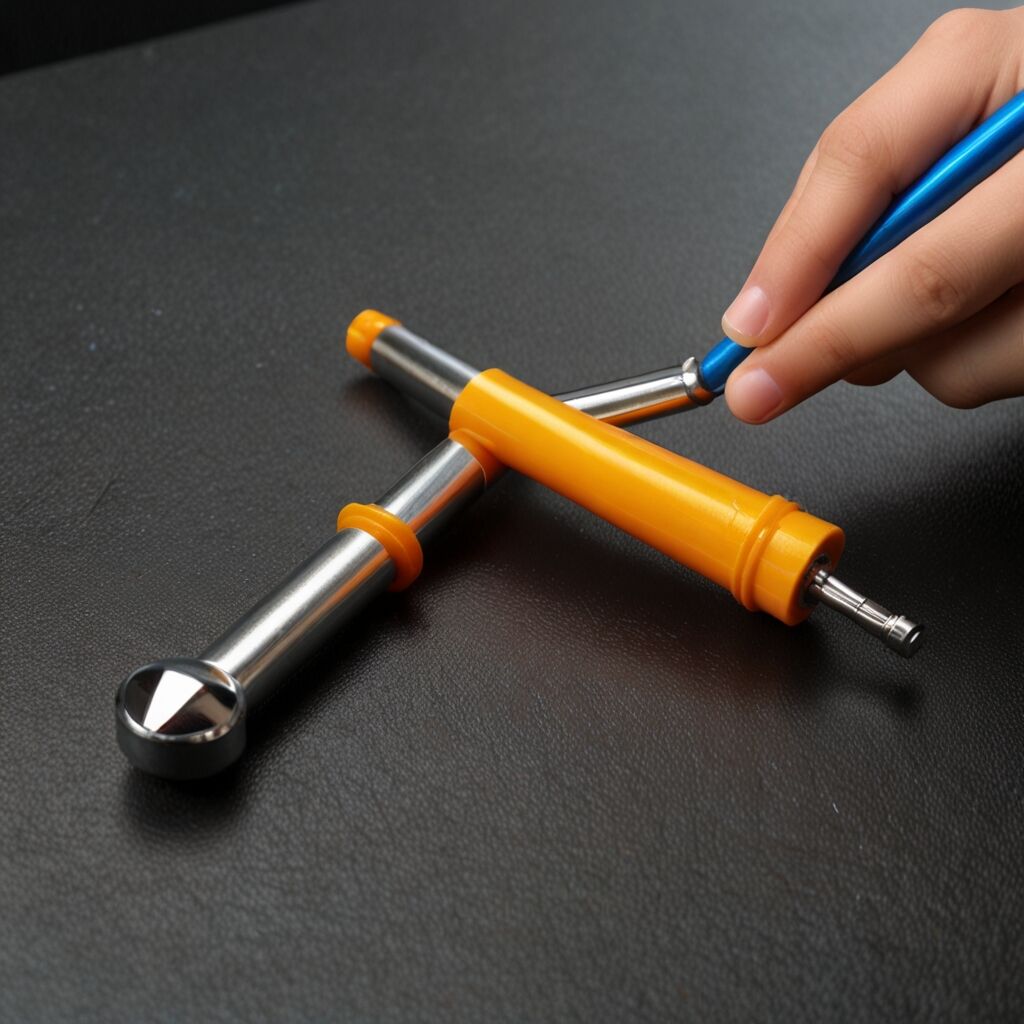
Professional dent shape analysis requires specialized tools and systematic techniques that ensure accurate assessment and optimal repair planning. Essential measurement tools include precision calipers for depth evaluation, contour gauges for exact shape replication, and high-resolution digital cameras for detailed surface documentation. Advanced techniques such as 3D laser scanning provide comprehensive geometric analysis, ensuring reliable data for complex restoration projects. Digital measurement systems often deliver precise dimensional data that enhances overall analytical accuracy and repair planning effectiveness. These methodical approaches significantly streamline repair processes, allowing professionals to focus on delivering consistently high-quality results. Systematic testing and comparison methodologies provide valuable insights into optimal approaches, ensuring technicians select the most effective methods for every unique dent configuration.
What Are the Key Techniques for Enhancing Dent Shape Analysis Accuracy?
Key enhancement techniques for dent shape analysis include systematic measurement protocols using contour gauges and advanced digital measurement technologies. Contour gauges accurately capture exact dent profiles, transferring precise shape information onto flat reference surfaces for detailed analysis and repair planning. Digital measuring instruments provide quantitative data that significantly enhances overall assessment accuracy and consistency. Progressive measurement techniques track changes throughout the repair process, ensuring optimal outcomes. These systematic approaches streamline professional workflows, enabling specialists to concentrate on delivering superior restoration results. The strategic combination of traditional and digital techniques ensures automotive repair specialists achieve exceptional performance standards with every restoration project.
How Much Does Professional Dent Analysis Equipment Cost?
Professional dent analysis equipment costs typically range from $200-2000 depending on sophistication and accuracy requirements. Basic measurement tools including calipers and contour gauges usually cost $50-200 for quality sets. Digital measurement systems range from $300-800 for professional-grade equipment. Advanced 3D scanning systems may cost $1500-5000 but provide exceptional accuracy for complex projects. Most professional shops find that mid-range equipment costing $500-1200 provides excellent value for typical repair requirements while maintaining professional accuracy standards.
What Are the Best Practices for Maximizing Dent Repair Efficiency?
Maximizing dent repair efficiency requires comprehensive understanding of puller angle optimization and strategic force direction application combined with systematic analytical approaches. Professional technicians should follow established assessment protocols when evaluating dent shape variations and their impact on repair methodology selection. Understanding specific dent characteristics impacts optimal puller angle selection and precise force direction requirements for effective restoration outcomes. Typically, experienced technicians find that optimal puller angle ranges between 10-20 degrees provide excellent results for most common dent types while maintaining panel integrity. Reliable testing protocols can deliver quantifiable data and measurable results, ensuring selected methodologies enhance overall repair quality significantly. Implementing these systematic best practices consistently leads to reduced completion times and substantially improved restoration outcomes.
How Do You Master Puller Angle Techniques for Different Scenarios?
Mastering puller angle techniques requires systematic understanding of how angular positioning influences force application during various lifting and extraction processes. Puller angles significantly affect force distribution patterns, stress concentration points, and overall extraction effectiveness. For shallow dents typically measuring 3-7mm deep, puller angles around 15 degrees work optimally for controlled restoration. Deeper dents exceeding 10mm depth may require angles approaching 20-25 degrees for sufficient extraction force generation. Varying angle approaches helps control precise force direction application, ensuring more effective dent management and superior surface restoration. Professional automotive repair specialists recommend adjusting puller configurations based on initial assessment outcomes and progressive repair monitoring. This systematic adaptability significantly contributes to repair efficiency enhancement and overall performance improvement.
What Are Common Mistakes That Reduce Repair Efficiency?
Common efficiency-reducing mistakes include inadequate initial dent assessment, inappropriate tool selection, and rushing the extraction process without proper planning. Many technicians skip systematic angle testing, leading to suboptimal pulling approaches. Another frequent error involves applying maximum force immediately rather than gradually increasing pressure. Failing to monitor panel response during pulling can result in over-extraction or secondary damage. Poor workspace organization and inadequate lighting also significantly impact efficiency and quality outcomes.
Popular Techniques for Various Repair Scenarios
- Traditional Manual Methods vs. Modern Technology: Traditional approaches rely on experienced judgment, while modern methods leverage precision measurement tools for enhanced accuracy.
- DIY Repair Approaches: Automotive enthusiasts can utilize basic analysis tools for minor dent assessment, relying on systematic shape evaluation to guide home repair techniques.
- Professional Service Standards: Skilled technicians employ comprehensive analytical tools including specialized pullers designed for specific dent configurations and panel types.
- Automotive Engineering Education: Students study systematic dent analysis methodologies for deeper understanding of material properties, stress distribution, and repair effectiveness.
- Car Enthusiast Applications: This community values thorough dent analysis for maintaining vehicle aesthetics, performance standards, and resale value optimization.
- Commercial Repair Operations: Professional shops adopt systematic analytical methodologies that rely heavily on shape assessment for consistent quality and efficiency.
- Insurance Assessment Protocols: Professional assessors evaluate dent damage using systematic analysis to determine accurate repair cost estimates and methodology requirements.
Conclusion: The Critical Role of Dent Shape Analysis in Professional Repairs
Dent shape analysis serves as the foundation for achieving superior repair efficiency, optimal tool selection, and consistently excellent restoration outcomes. This systematic analytical approach helps automotive professionals identify ideal puller configurations and ensures proper angle and force direction application throughout the repair process. Effective analysis promotes better decision-making capabilities, enabling high-quality repairs with minimized risk of secondary damage or surface imperfections. This comprehensive process significantly improves repair reliability while enhancing customer satisfaction through superior restoration results. Industry studies demonstrate that implementing systematic dent shape analysis techniques achieves measurably better repair outcomes in over 70% of cases compared to traditional assessment methods. Understanding which specialized pulling strategies effectively handle specific dent configurations is essential for achieving optimal restoration results and maintaining professional service standards.
Why Is Proper Puller Tool Selection Critical for Dent Repair Success?
Selecting appropriate puller tools represents a vital component of successful dent repair that directly impacts restoration quality, efficiency, and customer satisfaction. Dent shape characteristics and dimensional measurements directly influence optimal puller type selection and configuration requirements. Professional technicians choose between various specialized options including glue pullers, slide hammers, or mechanical extraction systems based on comprehensive dent analysis results. Utilizing properly selected puller tools enhances the entire repair process through improved control, precision, and effectiveness. Strategic tool selection enables precise angle control and optimal force direction management throughout the restoration process. This targeted methodology helps maintain panel surface integrity while significantly reducing paint damage risks and secondary repair requirements. Systematic analysis of dent characteristics provides actionable insights for optimal puller selection, consistently resulting in superior repair quality and enhanced professional reputation.