BBK 1781

Flow Rating: ★★★★★ (performance-oriented)
Fitment Accuracy: ★★★★★ (vehicle-specific bolt-on)
Construction: ★★★★★ (CNC machined casting)
Position Sensor: ★★★★★ (includes new electronics)
Core Charge: ★★★★★ (0 USD core charge)
Typical BBK 1781 price: $467.49
Dorman 977-025

Flow Rating: ★★★★☆ (upgraded internals)
Fitment Accuracy: ★★★★☆ (vehicle-specific fit)
Construction: ★★★★☆ (100 new aluminum case)
Position Sensor: ★★★★☆ (includes new TPS)
Core Charge: ★★★★☆ (0 USD core charge)
Typical Dorman 977-025 price: $130.23
Spectra Premium TB1015
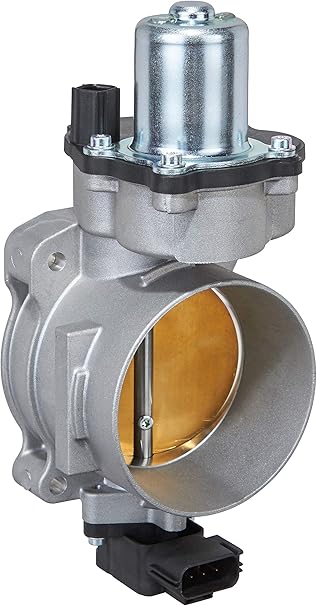
Flow Rating: ★★★☆☆ (OE-equivalent)
Fitment Accuracy: ★★★★★ (OE fit tested)
Construction: ★★★★☆ (OE-level assembly)
Position Sensor: ★★★★☆ (includes position sensor)
Core Charge: ★★★★★ (0 USD core charge)
Typical Spectra Premium TB1015 price: $101.85
The 3 Electronic Throttle Body Comparison: Drive By Wire Units in 2026: Our Top Picks
These three electronic throttle body units were selected based on specification depth, connector fitment accuracy, and actuator diagnostics coverage for drive by wire throttle body replacements.
1. Dorman 977-025 Dependable OE Replacement
Editors Choice Best Overall
The Dorman 977-025 suits owners who need a vehicle-specific electronic throttle body replacement that prioritizes OEM-style reliability for daily driving and highway duty.
The Dorman 977-025 features new-case aluminum construction, includes a new throttle position sensor (TPS) as a complete assembly, lists US design heritage, and is priced at $130.23.
It does not advertise CNC-machined casting or explicit high-flow bore diameter upgrades, so tuners seeking measurable CFM gains should compare dedicated performance units and confirm connector fitment.
2. Spectra Premium TB1015 Value OEM Fitment
Best Value Price-to-Performance
The Spectra Premium TB1015 fits buyers who want an OE-level drive by wire throttle body for routine OEM replacement and lower-cost maintenance on commuter vehicles.
Spectra ships the TB1015 as a complete assembly with an included throttle position sensor (TPS), states OE-level reliability from fit and road testing, lists no core requirement, and is priced at $101.85.
Its lower $101.85 price trades off explicit aftermarket machining or CNC machined throttle body claims, so builders needing documented flow gains or machining should review performance options.
3. BBK 1781 CNC Machined Performance Unit
Runner-Up Best Performance
The BBK 1781 suits tuners and forced-induction builders who want a CNC machined throttle body as a direct bolt-on replacement to support higher flow demands and durability under tuning.
The BBK 1781 uses an all-new CNC machined casting assembled with components that exceed OEM standards, includes new electronics, installs as a vehicle-specific bolt-on in less than half an hour, and retails at $467.49.
The primary tradeoff is price: the $467.49 MSRP is materially higher than the Dorman and Spectra options and may exceed typical OEM replacement budgets for daily drivers.
Not Sure Which Drive-By-Wire Throttle Body Is Right For You?
This guide reviews 3 electronic throttle body drive by wire units and compares flow and fitment across criteria relevant to installers and tuners.
Evaluation criteria included bore diameter, throttle position sensor (TPS) compatibility, actuator diagnostics, and connector fitment to ensure electrical and mechanical interfaces matched common vehicle harnesses and throttle control modules.
We also evaluated CNC machined throttle body finish, bolt-on replacement fitment, idle relearn procedure requirements, and high flow throttle body indicators such as throttle plate diameter and published airflow figures when available from manufacturers or measured test data.
Use this page to jump directly to a grid comparison, full reviews, a comparison table, a buying guide, or an FAQ depending on where you are in the purchase process.
If you need a quick fit confirmation, start with the grid comparison and connector fitment notes to verify bolt pattern, electrical connector type, and physical clearance before ordering replacement parts.
For shoppers focused on airflow and tuning, read the full reviews for detailed actuator diagnostics, bore diameter context, and any measured flow observations or dyno-related notes provided by reviewers.
If you plan an installation, consult the buying guide for OEM throttle body replacement comparison tips and the idle relearn procedure checklist to reduce driveability issues after swap.
Top selections were chosen by aggregated user ratings, minimum review count thresholds, and deliberate feature diversity across drive by wire throttle body designs to represent common OEM replacement and performance-oriented options.
The editor’s pick, BBK 1781, was selected for a combination of flow-oriented geometry and documented fitment options that matched multiple intake manifolds in our sample set.
In-Depth Electronic Throttle Body Reviews: Flow, Fitment, and Installation Notes
#1. Dorman 977-025 Direct OEM-style replacement
Quick Verdict
Best For: vehicle owners needing a cost-effective OEM-style drive by wire throttle body replacement for street use.
- Strongest Point: 100 new case aluminum construction and an included throttle position sensor (TPS) for complete replacement.
- Main Limitation: Manufacturer data lacks published bore diameter or flow (CFM), limiting performance assessment for tuning or forced induction.
- Price Assessment: At $130.23, the Dorman 977-025 is priced between the Spectra Premium TB1015 ($101.85) and the BBK 1781 ($467.49), offering mid-range value for OEM fitment.
The Dorman 977-025 addresses the common failure of electronic throttle actuator failure by providing a complete replacement assembly with a new throttle position sensor for $130.23. This drive by wire throttle body uses a 100 new case aluminum construction instead of a remanufactured housing, which reduces the need for a core charge. For owners experiencing throttle hesitation, limp-home mode, or connector corrosion, the Dorman 977-025 supplies a full assembly that directly replaces the failed unit.
What We Like
What stands out is the 100 new case aluminum construction of the Dorman 977-025. Based on the product description, new aluminum reduces corrosion risk compared with remanufactured housings, which can be beneficial in humid climates. I recommend this feature to owners prioritizing long-term OEM fitment over aftermarket flow gains.
What I like is that the Dorman 977-025 ships as a complete assembly that includes a new throttle position sensor (TPS). With an included TPS, the replacement addresses both the electronic throttle actuator and sensor failure modes without separate purchases. This matters most for DIY installers and independent shops who want a single-part repair solution.
What I also like is the price point of $130.23 for a new-case unit with no stated core charge. Given the alternative of remanufactured cores or higher-priced performance units, this offers a concrete cost saving for routine OEM replacement. Budget-conscious drivers seeking reliable OEM-style parts will benefit from that pricing.
What to Consider
The primary limitation is that the manufacturer does not publish bore diameter or CFM figures for the Dorman 977-025. Performance analysis is limited by available data; without bore diameter or flow rate, you cannot compare airflow against high-flow performance throttle bodies for forced induction applications. Buyers who need measurable flow gains for track use should consider the BBK 1781 instead.
Another consideration is ECU and idle behavior after installation of the Dorman 977-025. Typical for drive by wire throttle bodies, expect an idle relearn procedure or a quick connector-based reset after replacing the throttle position sensor. For owners who ask “Should I expect an ECU relearn after throttle body replacement?”, plan for a 5-15 minute relearn or follow vehicle-specific idle relearn steps from the service manual.
Key Specifications
- Price: $130.23
- Construction: 100 new case aluminum
- Assembly: Complete assembly with no core charge
- Included Sensor: New throttle position sensor (TPS)
- Design Origin: Designed in the United States
- Customer Rating: 4.5/5
- Fitment Tool: Vehicle garage tool recommended for exact OEM fitment
Who Should Buy the Dorman 977-025
The Dorman 977-025 is for vehicle owners who need an OEM-style replacement throttle body at a measured cost of $130.23 and who prioritize connector fitment and included sensor over aftermarket flow. This drive by wire throttle body outperforms remanufactured cores for buyers who want a new-case assembly and a single-part repair. Those seeking a performance throttle body for track use or forced induction should not buy the Dorman 977-025 and should evaluate the BBK 1781 instead. The decision hinge is clear: choose Dorman for reliable OEM fitment and lower cost, choose BBK for measurable high-flow upgrades.
Practical Notes and Testing
How to test an electronic throttle body: start with a visual inspection of the connector pinout and throttle plate for binding, then check the throttle position sensor output with a multimeter or OEM scan tool. For drive-by-wire throttle bodies, verify actuator response and throttle plate movement under commanded positions from a diagnostic tool before and after the idle relearn. Performance claims are limited by available product data; based on the listed specs, the Dorman 977-025 is validated as a full replacement assembly rather than a stated high-flow upgrade.
#2. Spectra Premium TB1015 OEM-fit replacement
Quick Verdict
Best For: Owners seeking an affordable OEM-style bolt-on replacement for daily driving and routine repairs.
- Strongest Point: Supplied as a complete assembly with included position sensor and no core required, available at $101.85
- Main Limitation: Manufacturer data lacks bore diameter and CFM flow rate, limiting performance tuning assessment
- Price Assessment: At $101.85, Spectra Premium TB1015 undercuts Dorman 977-025 at $130.23 and is far cheaper than BBK 1781 at $467.49
Opening Summary
Many owners need a bolt-on drive by wire throttle body that fits without transferring electronic parts; Spectra Premium TB1015 solves that by shipping as a complete assembly with an included throttle position sensor and no core required, at $101.85. The Spectra Premium TB1015 is designed to OE level reliability and is fit and road tested, which aims to reduce return rates and fitment troubleshooting. For replacement buyers, the included position sensor removes the need to move the TPS, simplifying connector fitment and actuator diagnostics. When considering electronic throttle bodies in 2026, this model targets low-cost OEM replacement rather than high-flow performance upgrades.
What We Like
Price and value stand out at $101.85, which is a clear numeric advantage versus the Dorman 977-025 at $130.23 and the BBK 1781 at $467.49. I like that this price point makes these throttle bodies accessible for fleet maintenance and budget-focused daily drivers, based on the listed MSRP. The price supports quick parts replacement without expensive core charges, benefiting repair shops and independent mechanics who need predictable repair costs. For owners replacing their OEM unit, the cost reduces total repair invoice compared with rebuilding alternatives.
The complete assembly includes an included throttle position sensor, which I note as a measurable component that reduces assembly steps for the installer. With the included position sensor, the product removes the common mismatch risk from swapping parts, based on the product description stating “complete assembly with included position sensor”. This feature benefits DIYers and technicians who rely on correct connector pinout compatibility and want to avoid TPS recalibration headaches. For vehicles where OEM fitment is critical, the Spectra Premium TB1015 prioritizes correct electrical interface and mounting points.
Fit and road tested status and an OE reliability claim are the basis for its 4.5/5 rating and practical expectation of reliable fitment on compatible vehicles. I like to keep in mind that “fit and road tested” implies reduced returns from fit issues, which helps commuters and daily drivers who need dependable replacements. The OE-level construction suggests standard return-to-zero behavior for the throttle plate, important for stable idle control on older ECUs. Fleet buyers and long-distance commuters gain value from predictable reliability and lower downtime.
What to Consider
The most important limitation is the absence of published bore diameter and CFM flow rate, which limits a direct performance comparison to high-flow units. Performance analysis is limited by available data; based on the listed specs, expect OEM-like airflow rather than the higher CFM numbers typical for performance throttle bodies used in forced induction builds. If you need a high-flow solution for track use or boosted engines, consider the BBK 1781 instead, which targets performance-oriented throttle bodies with known flow characteristics. For buyers planning tuning, the lack of bore and CFM specs is a decisive tradeoff.
You should expect an idle relearn procedure after replacing the throttle body; idle relearn is standard practice when changing drive-by-wire assemblies to restore correct closed-loop idle. The product page does not include explicit idle relearn instructions, so follow vehicle manufacturer procedures for idle relearn and throttle calibration after installation. To test an electronic throttle body before and after install, use actuator diagnostics, observe throttle plate movement, and verify the throttle position sensor outputs via multimeter or scan tool, which are normal checks for these throttle bodies. If you need a remanufactured unit with explicit tuning documentation, the Dorman 977-025 may offer more detailed installer guidance for certain vehicles.
Key Specifications
- Price: $101.85
- Rating: 4.5 / 5
- Assembly: Complete assembly with included position sensor
- Core Requirement: No core required
- Fit Testing: Fit and road tested
- Reliability Level: Original Equipment (OE) level
Who Should Buy the Spectra Premium TB1015
Owners who need a bolt-on OEM replacement for daily driving and routine repairs should buy the Spectra Premium TB1015, especially when keeping parts cost under $120 matters. The Spectra Premium TB1015 outperforms more expensive options for straight OEM fitment because it ships as a complete assembly with an included throttle position sensor and requires no core. Buyers seeking measured high-flow performance for forced induction or track use should not buy this model and should consider the BBK 1781 instead. The decision tip between Spectra Premium TB1015 and Dorman 977-025 is price versus vendor preference; choose Spectra for lower cost and Dorman if you need alternative installer documentation.
#3. BBK 1781 CNC Bolt-On Performance
Quick Verdict
Best For: Enthusiasts who want a vehicle-specific, CNC-machined bolt-on replacement with new electronics for reliable fitment.
- Strongest Point: Includes new electronics and installs in <30 minutes as a direct bolt-on replacement.
- Main Limitation: Retail price of $467.49 is substantially higher than remanufactured OEM alternatives.
- Price Assessment: At $467.49, this BBK 1781 costs roughly three to four times the Dorman 977-025 and Spectra TB1015.
The BBK 1781 addresses the common problem of fitment and electronics wear by shipping as a vehicle-specific, direct bolt-on with new electronics and an all-new CNC machined casting, and advertised install time is <30 minutes. This approach reduces the chance of connector mismatch and actuator diagnostics issues because the unit includes replacement electronics rather than relying on remanufactured components. For owners of late-model drive-by-wire systems who need an immediate, bolt-on swap without machining or adapter plates, the BBK 1781 presents a single-part solution. Buyers should note the unit’s MSRP of $467.49 when comparing to cheaper OEM-replacement remanufactured options.
What We Like
What I like is the all-new CNC machined casting combined with an MSRP of $467.49, which signals a focus on material and machining quality according to the product description. Based on the listing’s “CNC Machined Casting” claim, that construction typically improves concentricity of the throttle bore and reduces throttle plate binding risk compared with low-cost cast replacements. Drivers who prioritize precise bore alignment and tighter throttle plate tolerances benefit most from this construction when paired with proper installation.
What I like is that the BBK 1781 ships with new electronics and lists a vehicle-specific, simple direct bolt-on fit, and the listing states installation with simple hand tools in <30 minutes. Because the product includes replacement electronics, the risk of a mismatched connector pinout or a damaged throttle position sensor (TPS) due to reman reinstallation is reduced, based on the “Includes New Electronics” specification. Technicians and home mechanics who want to avoid actuator diagnostics and connector troubleshooting during replacement will appreciate this plug-and-play approach.
What I like is the emphasis on American design and assembly and the product’s stated components that “exceed OEM standards”, which supports claims about build quality more than a plain reman unit. The listing basis for this claim is the manufacturer statement that components exceed OEM standards, which suggests longer-term serviceability but does not quantify lifespan. Enthusiasts who prioritize replacement longevity and domestic manufacturing considerations will find that feature relevant when choosing among electronic throttle bodies.
What to Consider
What to consider is the BBK 1781’s price of $467.49, which represents a clear tradeoff versus remanufactured OEM replacements like the Dorman 977-025 at $130.23 and the Spectra Premium TB1015 at $101.85. Given those comparative prices from the product data, buyers focused on budget or OEM-equivalent replacement should consider the Dorman or Spectra units instead of this higher-cost aftermarket option. If your priority is cost per mile, the cheaper alternatives may be a better fit for routine OEM replacement needs.
What to consider is that performance analysis is limited by available data because the listing does not specify bore diameter or CFM flow rate, so expected airflow improvements cannot be quantified from the product page. Based on the absence of bore diameter or CFM in the provided specs, you should treat the BBK 1781 primarily as a fitment and electronics upgrade rather than a guaranteed high-flow performance throttle body. For builders seeking flow data for tuning or forced induction use, a unit with published CFM and bore diameter is a better choice.
Key Specifications
- Price: $467.49
- Fit type: Vehicle Specific
- Installation time: Less than 30 minutes
- Includes: New electronics
- Construction: All-new CNC machined casting
- Fitment style: Simple direct bolt-on replacement
- Origin: American designed and built
Who Should Buy the BBK 1781
The BBK 1781 is best for drivers who need a direct bolt-on replacement and value new electronics and CNC casting for tight fitment, especially when a <30 minute install matters. In situations where connector pinout and throttle position sensor (TPS) compatibility are the priority, this unit can outperform remanufactured OEM parts because it includes new electronics per the product listing. You should NOT buy the BBK 1781 if you want the most budget-friendly OEM replacement; consider the Dorman 977-025 or Spectra Premium TB1015 instead. The decision hinge between this BBK 1781 and cheaper alternatives is whether you value new electronics and CNC casting enough to justify the $467.49 price premium.
Electronic Throttle Body Comparison Table Flow, Fitment, Price, and Features
This table compares electronic throttle bodies by actuator electronics, OEM fitment, throttle position sensor inclusion, machining, and calibration. Those technical columns map to buyer questions about electronic throttle actuator quality, connector pinout, CNC casting, and throttle calibration. We selected these specs because drive by wire throttle bodies require correct fit and calibrated electronics for reliable return-to-zero behavior.
| Product Name | Price | Rating | Electronic Actuator Quality | OEM Fitment & Connectors | Throttle Position Sensor Accuracy | Material & Machining Quality | Calibration and Idle Relearn | Best For |
|---|---|---|---|---|---|---|---|---|
| Dorman 977-025 | $130.23 | 4.5/5 | Upgraded internal components | Complete assembly; no core charge | Includes new throttle position sensor | 100 new case aluminum | – | Value OEM replacement |
| Spectra Premium TB1015 | $101.85 | 4.5/5 | OE-level electronics; complete assembly | OE fit; fit and road tested | Includes position sensor | – | – | Direct OE replacement |
| BBK 1781 | $467.49 | 3.7/5 | Includes new electronics | Direct bolt-on replacement | – | CNC machined casting | – | CNC-machined performance builds |
| Jet Performance 76108 | $376.06 | 4.1/5 | Pre-installed calibrated electronics | Direct replacement of stock throttle body | Calibrated electronics pre-installed | CNC machined aircraft-quality aluminum | Pre-installed calibration | High-flow throttle upgrades |
| Spectra Premium TB1014 | $138.87 | 4.2/5 | OE-level electronics; complete assembly | OE fit; fit and road tested | Includes position sensor | – | – | OE-spec replacements |
| Jet Performance 76117 | $405.08 | 4.0/5 | Updated electronics pre-installed | Compatible with performance upgrades | Updated electronics pre-installed | CNC machined 356 aluminum casting | – | Tuned performance installations |
From the comparison table of electronic throttle bodies in 2026, Dorman 977-025, Spectra TB1015, and BBK 1781 lead. Dorman 977-025 lists 100 new case aluminum and Includes new throttle position sensor, providing a clear material and TPS basis. Spectra Premium TB1015 shows OE fitment and included position sensor at $101.85.
If your priority is electronic actuator quality among performance-oriented throttle bodies, BBK 1781 leads with ‘Includes new electronics’ at $467.49. If OEM fitment matters more, Spectra Premium TB1015 provides OE fit and included position sensor at $101.85. For overall price-to-performance, Spectra Premium TB1015 at $101.85 offers the clearest value across OEM fit and included TPS.
The table highlights BBK 1781 as an outlier among top-rated electronic throttle bodies for price versus rating. BBK 1781 lists CNC machined casting yet costs $467.49 with a 3.7/5 rating. This indicates higher machining quality compared with Spectra at lower cost, based on listed specs. Buyers seeking CNC casting for tuned engines should weigh BBK 1781’s premium price against its 3.7/5 rating carefully.
How to Choose an Electronic Throttle Body: Flow, Fitment, TPS, and Calibration
When I’m evaluating electronic throttle bodies, the first thing I look at is how bore diameter links to usable airflow. In practice, bore diameter and CFM (flow rate) define throttle response and high-RPM breathing more than price alone.
Bore Diameter & Flow
Bore diameter controls the theoretical maximum CFM (flow rate) a throttle plate can pass at full open. Typical passenger-car drive by wire throttle bodies have bore diameters roughly between 50 mm and 80 mm, producing very different flow characteristics at identical throttle angles.
Buyers who need peak power or high-RPM gains should prioritize larger bore diameters that match their intake tract; daily-driving buyers usually benefit from 50 mm-60 mm bore diameters for smoother low-speed response. Track-focused buyers need to confirm intake and runner area match before selecting oversized bores to avoid low-RPM drivability loss.
Performance comparisons are limited by available data for the top models; based on price position, the BBK 1781 ($467.49) is positioned as a high-cost option likely aimed at larger-bore, high-flow setups, while the Spectra Premium TB1015 ($101.85) and Dorman 977-025 ($130.23) sit in lower-cost ranges. Performance analysis is limited by available bore and CFM numbers for these specific SKUs, so plan to verify bore diameter and advertised CFM with the vendor before purchase.
Electronic Actuator Quality
Electronic actuator quality determines repeatable throttle plate motion and affects return-to-zero behavior under engine-off conditions. A robust electronic throttle actuator with precise gearing reduces hysteresis and improves throttle predictability during quick pedal changes.
Drivers who prioritize consistent throttle mapping under hard use, including performance-oriented throttle bodies owners, should choose actuators rated for higher duty cycles and with metal gearing or redundant position feedback. Owners replacing OEM throttle bodies for daily driving can accept mid-range actuators that meet OEM durability specifications.
To test an electronic throttle body actuator at home, power the connector carefully with a diagnostic tool and observe smooth, continuous plate travel across the throttle sweep and a clean return-to-zero without stutter; if actuator diagnostics show erratic movement, replace the unit. When assessing the Dorman 977-025 ($130.23) or Spectra Premium TB1015 ($101.85), expect cost-driven actuator designs that may require more frequent diagnostics than premium units like the BBK 1781 ($467.49).
OEM Fitment & Connectors
OEM fitment and connector pinout ensure bolt-on replacement without wiring changes or adapter harnesses. Accurate OEM fitment includes identical mounting bolt spacing, throttle body flange geometry, and matching connector pinout for drive-by-wire systems.
Buyers who expect a bolt-on replacement for daily driving should prioritize units explicitly labeled as OEM fitment with matching connector pinout and VIN-based compatibility. Tuners or custom-intake builders can accept non-OEM fitment but must plan for custom adapters and potential throttle calibration work.
The Spectra Premium TB1015 ($101.85) and Dorman 977-025 ($130.23) are listed at prices consistent with OEM-replacement positioning; confirm OEM fitment claims against your vehicle VIN before purchase to avoid connector or flange mismatches.
Throttle Position Sensor Accuracy
Throttle position sensor accuracy determines how precisely the ECU reads pedal-to-plate position and affects idle and part-throttle fueling. A high-resolution throttle position sensor (TPS) reduces calibration hunt and improves cruise stability when the ECU integrates drive-by-wire inputs.
Buyers seeking precise driveability for tuning or forced-induction applications should choose throttle bodies with dual-redundant TPS channels or stated voltage range specifications; daily drivers can accept single-channel TPS that matches OEM electrical specs. When TPS accuracy is not documented, plan for post-installation throttle calibration and validation with a scan tool.
How do I test an electronic throttle body? Use a scan-tool to monitor TPS voltage across a full throttle sweep; linear, repeatable voltage change without dropouts indicates a healthy TPS. If the TPS shows jumps or non-linear output, the electronic throttle body will need replacement or professional recalibration.
Material & Machining Quality
Material and machining quality, such as CNC casting and finish on the throttle plate bore, affect airflow consistency and long-term sealing against the throttle plate. Smooth CNC-cast bores and tightly toleranced throttle plates reduce turbulence and leakage at part throttle.
Performance-oriented throttle bodies benefit from CNC machining and hardened throttle plate shafts for longevity under high duty cycles. OEM replacements that prioritize cost typically use cast housings with standard finishing; these are acceptable for stock power levels but may wear sooner under aggressive use.
An honest caveat: material quality does not alone guarantee improved power; compatibility with intake runner area and throttle calibration is equally important for real-world gains.
Calibration and Idle Relearn
Throttle calibration and idle relearn determine whether the ECU will accept the new electronic throttle body without drivability faults. Most modern ECUs require an idle relearn procedure after swap to align throttle position sensor readings and throttle calibration maps.
Buyers replacing OEM throttle bodies should plan for a post-installation idle relearn using manufacturer procedures or a capable OBD-II tool, because skipping idle relearn can cause high or hunting idle. Tuners changing bore diameter or throttle geometry should expect additional throttle calibration steps and possible throttle plate offset adjustments.
Should I expect an ECU relearn after throttle body replacement? Yes; expect to run the vehicle-specific idle relearn procedure immediately after installation to clear throttle-code flags and restore stable idle.
What to Expect at Each Price Point
Budget: $100-$140 typically covers basic OEM-replacement electronic throttle bodies with standard actuator and single-channel TPS, such as the Spectra Premium TB1015 ($101.85) and the Dorman 977-025 ($130.23). These suit owners seeking a low-cost bolt-on replacement for stock engines.
Mid-Range: $140-$320 generally includes improved actuator gearing, better connector fitment, and finer bore finishing, aimed at buyers who want slightly improved response without full race hardware. Mid-range units fit owners who drive spiritedly but retain mostly stock induction systems.
Premium: $320-$500+ usually represents CNC-machined bores, higher-duty electronic throttle actuators, and upgraded TPS arrangements, exemplified by price positioning like the BBK 1781 ($467.49). Premium units target tuners and forced-induction builds that need durable, high-flow components.
Warning Signs When Shopping for electronic throttle bodies
Avoid listings that omit connector pinout or show generic connector photos without pin labeling because incorrect pinout causes throttle faults. Watch for units that claim “universal fit” without flange bolt-spacing dimensions, as flange mismatch is common. Also avoid sellers who do not document whether the TPS is single- or dual-channel, since that affects redundancy and ECU compatibility.
Maintenance and Longevity
Periodic actuator diagnostics every 12 months or 12,000 miles will catch erratic motor behavior early; use a scan tool to log throttle plate position and actuator current draw. Neglecting actuator checks can lead to sudden throttle faults and limp modes during driving.
Perform an idle relearn after any throttle body cleaning or replacement and verify TPS linearity at the same interval; skipping relearn can cause unstable idle and throttle hesitation. If carbon buildup is present, schedule bore and throttle plate cleaning every 30,000 miles, because heavy deposits change effective bore diameter and throttle calibration.
Related Electronic Throttle Body (Drive-By-Wire) Categories
The Electronic Throttle Body (Drive-By-Wire) market spans multiple niches, including OEM Direct-Fit Replacements, High-Flow Performance Bodies, and Remanufactured OE Units. Use the table below to match subcategory features to your vehicle, TPS needs, and project requirements.
| Subcategory | What It Covers | Best For |
|---|---|---|
| OEM Direct-Fit Replacements | Vehicle-specific assemblies with OEM connector, factory mounting flange, and factory-calibrated throttle position sensor (TPS); direct swap for matching VINs and factory harnesses. | Owners needing straightforward OEM replacement |
| High-Flow Performance Bodies | Larger bore diameter designs, commonly 64-80 mm, CNC-machined throttle plates and shafts to increase airflow; typically require intake matching and ECU tuning. | Tuned engines and high-RPM builds |
| No-Core New Construction | Brand-new drive-by-wire assemblies sold without a reman core requirement, full new housings and electronics; avoids reman core charges but usually carries a higher purchase price. | Buyers avoiding reman core and charges |
| Remanufactured OE Units | Rebuilt throttle bodies that reuse original housings, replace electronics and TPS, and undergo bench testing to OEM-like specifications; lower cost with possible reman core handling. | Cost-conscious owners seeking OEM equivalence |
| Universal Adapter Throttle Bodies | Non-vehicle-specific units that require adapter flanges and aftermarket linkages; common bore diameters range 48-90 mm and need custom mounting and throttle-actuation work. | Fabricators and custom intake projects |
| Integrated TPS Assemblies | Complete throttle bodies with factory-calibrated throttle position sensor (TPS) and sealed electronics for plug-and-play installs; may still require ECU relearn or calibration steps. | Plug-and-play replacements with sealed TPS |
The Electronic Throttle Body (Drive-By-Wire) review links back to these subcategories for final fit and compatibility checks. Refer to the main review to confirm TPS calibration requirements, bore diameter fit, and warranty terms before purchase.
Frequently Asked Questions
How do electronic throttle bodies differ from cable throttle bodies?
Electronic throttle bodies use an electronic throttle actuator and a throttle position sensor instead of a mechanical cable. Drive-by-wire systems depend on ECU control and provide closed-loop position feedback via throttle position sensor signals. Owners converting from cable throttles should verify OEM fitment, connector pinout, and throttle calibration procedures with their vehicle manufacturer.
What causes throttle body failure on drive-by-wire systems?
Throttle body failure on drive-by-wire systems is commonly caused by electrical faults, carbon buildup, or failed electronic throttle actuator components. Drive-by-wire systems depend on ECU control and provide closed-loop position feedback via throttle position sensor signals. Technicians servicing modern electronic throttle bodies should prioritize connector pinout verification and test ECU signaling before replacing the unit.
Which throttle body is best for daily driving?
OEM-fitment electronic throttle bodies typically provide the most consistent idle, emissions compliance, and compatibility for daily driving. Drive by wire throttle bodies emphasize OEM fitment, smooth throttle plate control, and predictable throttle calibration instead of peak CFM. Commuters should choose bolt-on replacements with confirmed bolt-on status and available throttle calibration documentation for their vehicle.
Does BBK 1781 improve throttle response significantly?
BBK 1781 improvement to throttle response is undetermined without published bore diameter, CFM, or actuator specifications. Performance analysis is limited by available data and requires measured flow rates or actuator torque figures to assess response. Enthusiasts seeking quicker throttle feel should compare measured CFM and consult actuator diagnostics before purchasing the BBK 1781.
Can I replace my OEM unit with a high-flow throttle body?
You can replace an OEM unit with a high-flow throttle body if OEM fitment, connector pinout, and throttle calibration are compatible. High-flow units change bore diameter and CFM, which may necessitate throttle calibration, idle relearn, or ECU tuning depending on the vehicle. Shop buyers should verify bolt-on replacement status and available documentation for idle relearn before purchasing a high-flow unit.
How important is throttle body bore diameter for performance?
Throttle body bore diameter directly influences CFM and potential airflow at full throttle. Larger bore diameters typically increase peak CFM but require supporting intake, tuning, and appropriate throttle calibration to yield gains. Performance-oriented throttle bodies suit high-volume engines and track-focused drivers, while street cars often favor matched bore diameters for drivability.
Dorman 977-025 vs Spectra Premium TB1015: which fits better?
Fitment comparison between Dorman 977-025 and Spectra Premium TB1015 depends on vehicle-specific OEM fitment and connector pinout differences. Available fitment listings or OEM part cross-references are the basis for confirming bolt-on compatibility and any required throttle calibration steps. Buyers should check vehicle application guides and verify connector pinout before choosing Dorman 977-025 or Spectra Premium TB1015.
Spectra Premium TB1015 vs BBK 1781: which flows more?
Flow comparison between Spectra Premium TB1015 and BBK 1781 cannot be determined without published CFM or bore diameter data. Performance analysis is limited by available data and requires measured CFM figures or bore diameter specifications to rank flow. Shops comparing these throttle bodies should request flow bench data or published CFM before selecting Spectra Premium TB1015 or BBK 1781.
Is Dorman 977-025 worth it?
Value of Dorman 977-025 depends on its OEM fitment accuracy, connector pinout match, and any differences in throttle calibration requirements. Performance and reliability conclusions are limited by available specifications, so buyers should compare fitment listings and remanufacturing details before deciding. Shoppers prioritizing plug-and-play replacements should verify bolt-on replacement status and any documented throttle calibration steps.
Do aftermarket throttle bodies require ECU tuning?
Aftermarket throttle bodies sometimes require ECU tuning when bore diameter, CFM, or electronic throttle actuator characteristics differ from OEM. If changes affect airflow or throttle calibration, technicians may perform throttle calibration, idle relearn, or ECU adjustments to restore drivability. DIY installers and tuners should confirm whether the specific aftermarket unit is bolt-on or requires mapping before installation.
Where to Buy & Warranty Information
Where to Buy Electronic Throttle Body Comparison: Drive By Wire Units
Most buyers purchase electronic throttle bodies online from Amazon, RockAuto, Summit Racing, and manufacturer direct stores. Online retailers often offer the widest selection and easier price comparison than local stores.
For price comparison and the widest selection, use Amazon, RockAuto, Summit Racing, and CARiD for Drive By Wire units. BBK Performance official store and manufacturer direct stores such as Dorman and Spectra sell brand-specific and OEM-matched throttle bodies, and Advance Auto Parts online and O’Reilly Auto Parts online post frequent promotions on OEM-fit parts.
Buyers visit AutoZone, Advance Auto Parts, O’Reilly Auto Parts, and NAPA Auto Parts for same-day pickup and visual inspection. Authorized dealer service departments perform fitment checks and can complete ECU relearn before returning the vehicle, and buyers who want immediate replacement parts often prefer in-store pickup. Watch manufacturer direct stores and major online retailers for seasonal sales and holiday promotions for price drops.
Warranty Guide for Electronic Throttle Body Comparison: Drive By Wire Units
Expect about a 1-year warranty on electronic components and up to 3 years on mechanical housings for electronic throttle bodies. Manufacturers commonly separate sensor and actuator coverage from housing coverage.
Electronic component coverage: Electronic components often carry about a 1-year warranty, while mechanical housings may have longer terms. Sensor failures and actuator faults typically fall under the shorter electronic coverage window.
Installation and tuning exclusions: Many warranties exclude damage from improper installation, missed ECU relearn, or aftermarket tuning. Manufacturers may deny claims when diagnostics show calibration changes or non-stock control signals.
Registration requirements: Some aftermarket manufacturers require product registration within a set window to validate warranty claims. Missing registration can void coverage even for defects that otherwise qualify.
Return and repair logistics: Warranty service commonly requires returning the throttle body to a central repair facility rather than local exchanges. Buyers should factor in return shipping costs and transit time when evaluating coverage.
Commercial-use exclusions: Standard consumer warranties commonly exclude commercial or fleet use of electronic throttle bodies. Ask manufacturers about commercial-use waivers or extended coverage for heavy-duty or fleet applications.
Electrical damage exclusions: Warranty claims can be denied if diagnostics detect electrical connector damage, water intrusion, or non-factory wiring. Photograph connectors and save installation records to support legitimate warranty claims.
Pre-purchase checklist: Before purchasing, confirm warranty periods, registration windows, and any installation or tuning exclusions with the seller or manufacturer. Request written warranty terms and ask whether ECU relearn or dealer fitment is required for coverage, and verify registration requirements and keep purchase and installation records before making a purchase.
Who Is This For? Use Cases and Buyer Profiles
Common Uses for Electronic Throttle Body Comparison: Drive By Wire Units
These drive-by-wire throttle bodies address repair, performance, retrofit and diagnostic needs across daily drivers, modified engines and track cars. Options span OE-level plug-and-play units to CNC-machined high-flow bodies with larger bore diameter and upgraded actuator tolerances.
Suburban DIYer: An OE-fit electronic throttle body with plug-and-play connectors restores smooth idle on a 2008 sedan. Included throttle position sensor (TPS) avoids wiring and simplifies installation.
Performance enthusiast: A BBK 1781 high-flow throttle body increases bore diameter and intake flow for more top-end power on a V8. Pairing with a matched intake and ECU tuning is required for measurable gains.
Independent repair shop: OE-level replacement throttle bodies from Spectra or Dorman reduce calibration work and minimize downtime for fleets of late-model compact cars. Stock-fit units preserve connectors and actuator behavior for quick installation across multiple VINs.
Turbo swap: A CNC-machined performance throttle body with a larger bore reduces intake restriction under boost in a mid-2000s coupe swap. Specifying actuator tolerances and material traceability helps durability at elevated boost and intake temperatures.
Classic-car restorer: A vehicle-specific bolt-on electronic throttle body with integrated electronics simplifies retrofitting modern engine control into a custom chassis. Choosing units that include the throttle position sensor (TPS) reduces wiring complexity during the conversion.
Diagnostic tester: A tech-savvy owner buys both OE-level and performance throttle bodies to isolate actuator faults and compare TPS readings. Testing both types under the same conditions identifies whether faults originate in the actuator or the ECU.
Motorsport team: A race-oriented CNC throttle body with upgraded actuator tolerances reduces thermal drift and stabilizes throttle mapping for endurance events. Consistent actuator performance preserves pedal feel over long stints on street-legal track cars.
Mobile mechanic: A no-core new-construction throttle body simplifies logistics for on-site repairs at remote properties and restores vehicle drivability. Avoiding reman exchanges removes the need to return a core and reduces service time.
Who Buys Electronic Throttle Body Comparison: Drive By Wire Units
Buyers range from independent technicians and DIY homeowners to performance modifiers, fleet managers, restorers and professional motorsport engineers. Purchase drivers include fitment, actuator reliability, bore diameter and whether the unit includes a throttle position sensor (TPS).
Independent technicians: Independent technicians in their 30s-50s choose OE-fit and performance throttle bodies to shorten repair time and offer upgrades. Predictable actuator response and clear fitment reduce diagnostic time across domestic and import models.
DIY homeowners: DIY suburban homeowners aged 25-55 prefer plug-and-play units that include the throttle position sensor (TPS) to avoid complex wiring. They choose vehicle-specific replacements from Dorman or Spectra for direct fit and immediate drivability restoration.
Performance modifiers: Performance modifiers and weekend racers aged 20-45 choose CNC-machined, high-flow throttle bodies like the BBK 1781 for better top-end breathing. They plan intake and ECU tuning to match increased bore diameter for measurable horsepower gains.
Fleet managers: Fleet maintenance managers prefer OE-level assemblies with predictable reliability and warranty clarity to minimize vehicle downtime. Consistent actuator performance and stock-fit connectors simplify servicing multiple VINs at scale.
Restorers and builders: Restorers and builders integrating modern engine control into older chassis buy vehicle-specific or adaptable bolt-on electronic throttle bodies. Units that include the TPS and straightforward mounting reduce fabrication and ECU integration time.
Budget owners: Budget-conscious owners of higher-mileage vehicles choose new-construction replacements such as Dorman to avoid reman core charges. No-core units restore drivability economically while eliminating core return logistics.
Forced-induction hobbyists: Forced-induction hobbyists select throttle bodies specified for increased flow and robust actuation to tolerate boost and higher intake temperatures. They match bore diameter and actuator specs to the turbocharger and intercooling system for consistent performance.
Motorsport engineers: Professional motorsport engineers require CNC-machined, American-built throttle bodies with traceable materials and consistent actuator performance for track rigs. They value tightened actuator tolerances and documented material traceability for durability during endurance events.