When shopping for a car AC compressor replacement, the most load-bearing terms are those describing physical dimensions, pressure ratings, and specific manufacturing standards. These technical specifications dictate whether a part will physically fit your engine bay and function safely under high-pressure loads. Conversely, terms like “high-performance,” “heavy-duty,” or “premium” are often marketing vocabulary used to describe the same standard components. You should prioritize verifiable data—such as bolt patterns and shaft diameters—over descriptive adjectives to ensure the part works for your specific vehicle.
AC Compressor Technical Specifications
AC compressor technical specifications define the mechanical limits and performance capabilities of the unit. These numbers ensure the compressor can handle the specific load required by your vehicle’s cooling system.
- Pressure Rating – This is the maximum internal pressure the compressor can withstand before seal failure. You need a rating that meets or exceeds your vehicle’s original equipment (OE) requirements to prevent catastrophic leaks.
- Displacement – This measures the volume of refrigerant the compressor moves per cycle, usually in cubic centimeters (cc). A larger displacement generally moves more refrigerant, but you must match the manufacturer’s specific volume for your engine size.
- Refrigerant Type (e.g., R134a, R1234yf) – This identifies the specific chemical gas the compressor is designed to compress. You must match the refrigerant type specified on your vehicle’s under-hood sticker exactly, as mixing types can damage the system.
- Duty Cycle – This refers to the amount of time the compressor can run continuously before needing to cool down. For automotive use, the compressor must be rated for a 100% duty cycle to provide constant cooling while driving.
Where these choices show up in our reviews
These 3 have their own full review on this site, and run from $174.99 to $281.98.
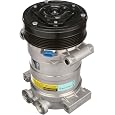
ACDelco Gold 15-22124A Air Conditioning Compressor
$281.98 price checked August 2026
Read our full ACDelco 15-22124A Compressor review
If you own a Dodge minivan, see our top-rated Dodge Grand Caravan compressor options.

RYC Automotive Air Conditioning Compressor AEG271
$174.99 price checked August 2026
Read our full AEG271 Compressor review
Owners of this specific Chevy model can find our top-performing Chevrolet Cruze compressor list.

AC Compressor Physical Compatibility
AC compressor physical compatibility ensures the unit aligns with your car’s existing hardware. Even if a compressor is the “correct” model for your car, a mismatch in these physical dimensions will prevent installation.
You can also learn about different types of automotive AC compressors to understand your options.
- Bolt Pattern – This is the specific spacing and number of mounting holes on the compressor housing. A mismatch here means the compressor cannot be bolted to the engine bracket.
- Shaft Diameter – This is the thickness of the drive shaft where the pulley attaches. If the shaft is even a few millimeters off, the pulley will not seat correctly, leading to slippage or mechanical failure.
- Pulley Groove Profile – This describes the shape and number of grooves on the compressor pulley. The pulley must match the shape of your vehicle’s serpentine belt to ensure it grips and turns the compressor.
- Housing Orientation – This refers to the direction in which the inlet and outlet ports face. Even if the bolts line up, the hoses may not reach the compressor if the housing is rotated 180 degrees compared to the original.
AC Compressor Manufacturing Standards
AC compressor manufacturing standards describe where the part sits in the supply chain and how it is produced. Understanding these tiers helps you weigh the trade-offs between cost and reliability.
- OE (Original Equipment) – These are the exact parts used by the vehicle manufacturer during the original assembly. They are the benchmark for fitment and reliability.
- Aftermarket – These are third-party parts produced by companies like R&Y or ECCPP. They are often more affordable than OE parts but can vary in build quality.
- Denso or Sanden Reference – These are the primary global manufacturers that produce the majority of compressors for the automotive industry. Many aftermarket brands source their units from these two companies to ensure standard quality.
- Clutch Assembly Inclusion – This indicates whether the compressor comes with the pulley and electromagnetic clutch pre-installed. Some listings provide just the compressor body, requiring you to purchase the pulley separately.
Commonly Confused AC Compressor Terms
Several terms in the AC compressor category are often confused by shoppers, leading to incorrect orders. Understanding these distinctions ensures you order the correct component for your repair.
Compressor vs. Clutch Assembly
A compressor is the internal pump that moves refrigerant, while the clutch assembly is the external component that engages or disengages the pump from the engine’s belt. Some listings sell the compressor only, while others include the clutch; you must confirm if the pulley is included in your specific order.
R134a vs. R1234yf
These are two different types of refrigerants. R134a is the older standard, while R1234yf is the newer, more environmentally friendly standard used in many cars made after 2015. These compressors are not interchangeable; you must buy the one that matches your vehicle’s system.
Aftermarket vs. Remanufactured
An aftermarket compressor is a brand-new unit made by a third-party company. A remanufactured compressor is a used unit that has been disassembled, cleaned, and rebuilt to work like new. Remanufactured units are often cheaper but may have different warranties than new aftermarket parts.
For a deeper dive, explore how a car AC compressor functions mechanically.
What to Confirm Before Ordering
Before ordering an AC compressor replacement, you must verify three specific measurements on your current unit or vehicle. Because fitting the compressor is a job for a qualified installer wherever local rules require one, having these facts ready prevents the need for returns.
Shaft and Bolt Verification
Confirm the shaft diameter and the distance between the mounting bolt holes. Because many manufacturers use similar-looking compressors with slightly different bolt spacings, these measurements are the most reliable way to ensure the part will bolt onto your engine bracket.
Pulley Compatibility
Check the number of grooves and the width of the pulley on your existing unit. If the replacement compressor comes with a pulley, it must match your vehicle’s serpentine belt profile exactly to avoid belt slippage or noise.
Refrigerant Specification
Locate the refrigerant type sticker, usually found under the hood or inside the cabin. If your vehicle uses R1234yf, you cannot use a standard R134a compressor, as the internal pressures and seals are designed for different chemicals.