Muffler core diameter refers to the internal measurement of the primary exhaust pipe’s cross-section within the rear muffler assembly. Your specific vehicle’s engine displacement, exhaust flow requirements, and desired noise profile determine which diameter is appropriate for your setup.
Which Muffler Core Diameter Suits My Situation?
| If this is you | The Muffler Core Diameter that suits you | Why |
|---|---|---|
| Driving a standard economy car or a small-displacement commuter vehicle. | 1.5 in to 2.0 in | Smaller engines produce lower exhaust volume; these diameters maintain proper backpressure to ensure efficient combustion. |
| Operating a mid-sized sedan or a standard SUV with a 4-cylinder or V6 engine. | 2.0 in to 2.5 in | These dimensions provide a balance between flow capacity and the muffler’s ability to dampen the specific decibel range of a mid-sized engine. |
| Modifying a high-performance truck or a V8 engine with significant aftermarket tuning. | 2.5 in to 3.0 in | Higher displacement and increased turbo or supercharger boost require larger internal diameters to prevent flow restriction. |
| Running a dedicated track vehicle or a high-horsepower drag racing build. | 3.0 in and above | Maximum flow is prioritized over noise suppression in these scenarios to accommodate extreme exhaust gas velocities. |
Where these choices show up in our reviews
3 reviewed options, $118.90 to $659.99, with the full write-up behind each name.
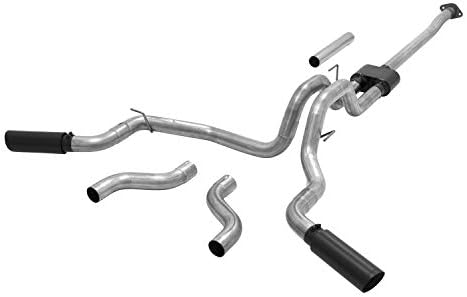
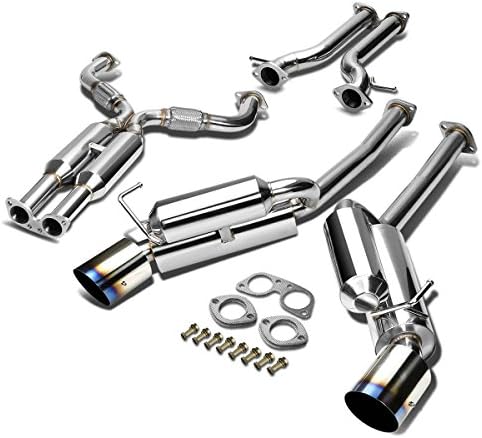
Auto Dynasty 370Z Dual Burnt Muffler Tip Exhaust
If you own a Lexus or Toyota, you can compare the best cat back exhaust system for toyota is300 options available.
$118.90 price checked August 2026

DNA MOTORING CBE-HC922-NRT Stainless Steel Cat Back Exhaust
$133.99 price checked August 2026
Read our full CBE-HC922-NRT Exhaust review
Truck owners can find our guide on finding the best cat back exhaust system for ford f-150 models.
How Do I Determine My Correct Muffler Core Diameter?
To determine the correct Muffler Core Diameter, you must identify the diameter of the factory exhaust piping leading into the rear muffler. Most manufacturers specify this dimension in the vehicle’s service manual or the technical specifications of the OEM exhaust system.
Consulting the Service Manual
The most accurate method is to locate the official service manual for your specific year, make, and model. Look for the exhaust system diagrams or “Specifications” section, which typically lists the pipe diameter in inches or millimeters.
Measuring the Existing Pipe
If a manual is unavailable, you can measure the exterior diameter of the exhaust pipe just before it enters the muffler housing. Use a digital caliper to get a precise reading of the outer diameter, then subtract the wall thickness of the metal to find the internal core diameter.
Common Industry Standards
If you cannot find a specific measurement, the Muffler Core Diameter is often tied to the vehicle’s engine class. A 2.25 in core is a common “middle ground” for many modern 3.0L to 5.0L engines, while 2.5 in is a standard for most heavy-duty applications.
What Happens if the Muffler Core Diameter is Too Small or Too Large?
Choosing a Muffler Core Diameter that does not match your engine’s output leads to specific mechanical and auditory issues. The correct size ensures that exhaust gases exit the engine with the correct velocity and pressure.
The Effects of a Diameter That Is Too Small
A Muffler Core Diameter that is too small creates excessive backpressure. This occurs when the exhaust gas cannot exit the system fast enough to keep up with the engine’s output. In a daily driver, this can lead to sluggish acceleration and a noticeable loss of power at high RPMs.
Understanding the metal quality is vital, so learn about the material grade for cat-back exhausts before buying.
In high-performance applications, a small diameter can cause the engine to run hotter because the heat remains trapped in the exhaust manifold and headers longer. This creates a risk of heat-related component failure or reduced engine longevity.
The Effects of a Diameter That Is Too Large
A Muffler Core Diameter that is too large results in a loss of exhaust velocity. When the pipe is oversized for the engine’s displacement, the gas spreads out and loses the momentum needed to clear the system efficiently. This often results in a “lazy” engine feel where the power band feels disconnected from the throttle input.
Additionally, a Muffler Core Diameter that is too large often produces a hollow, echoing drone. Because the gas is not moving fast enough to be effectively muffled by the internal baffles, the exhaust note can become irritating at sustained highway speeds.
What Should I Do if My Requirements Fall Between Two Diameters?
When your requirements fall between two standard Muffler Core Diameter options, the decision depends on whether your priority is power retention or noise suppression. There is no single “correct” answer, but choosing a direction helps predict the outcome.
Choosing the Larger Diameter
If you are running a forced-induction setup, such as a turbocharger, you should generally lean toward the larger Muffler Core Diameter. High-pressure systems require the path of least resistance to prevent the turbine from being choked by the exhaust system.
Choosing the Smaller Diameter
If you are looking for a subtle, quiet upgrade on a naturally aspirated engine, the smaller Muffler Core Diameter is often the better choice. A tighter fit allows the muffler’s internal geometry to interact more effectively with the gas flow, resulting in a more refined and dampened sound.
Consulting a SpecialistBecause fitting a cat-back exhaust system involves specific pipe bending and welding, you should confirm your final choice with a qualified exhaust installer. A professional can verify the flow requirements of your specific engine configuration and ensure the chosen Muffler Core Diameter aligns with the available mounting brackets and pipe lengths.