When shopping for a replacement car gearbox, you will encounter a mix of critical mechanical specifications and marketing fluff. Load-bearing terms are those that dictate physical fitment, gear ratios, and material standards; these are the numbers you must verify before ordering. Marketing vocabulary often describes “smoothness” or “durability” without providing a measurable metric. You should ignore vague adjectives and focus on the specific standards, measurements, and ratios that ensure the unit will physically mate with your vehicle’s drivetrain and provide the intended performance.
Physical and Mechanical Gearbox Specifications
- Housing Bolt Pattern – This is the specific arrangement of holes used to secure the gearbox to the engine or subframe. You must match the bolt pattern exactly to your original unit to ensure the gearbox can be physically mounted.
- Input Shaft Diameter – The thickness of the shaft where the gearbox connects to the engine’s output. A mismatch here prevents the gearbox from sliding onto the engine, making this a critical measurement for compatibility.
- Output Shaft Diameter – The thickness of the shaft that sends power to the driveshafts or wheels. Like the input shaft, this must match your vehicle’s requirements to ensure the driveshafts can be secured.
- Casing Material – The metal used to construct the gearbox housing, such as cast iron or aluminum alloy. Aluminum often offers a lighter weight for performance, while cast iron is a standard for heavy-duty durability.
- Gearbox Weight – The total mass of the unit in kilograms or pounds. You should choose a weight similar to your original unit to maintain the vehicle’s balanced weight distribution and handling characteristics.
- Oil Capacity – The volume of lubricant the internal system holds, usually measured in liters or quarts. You need this figure to ensure you purchase the correct amount of transmission fluid during installation.
Where these choices show up in our reviews
These 3 have their own full review on this site, and run from $140.59 to $340.
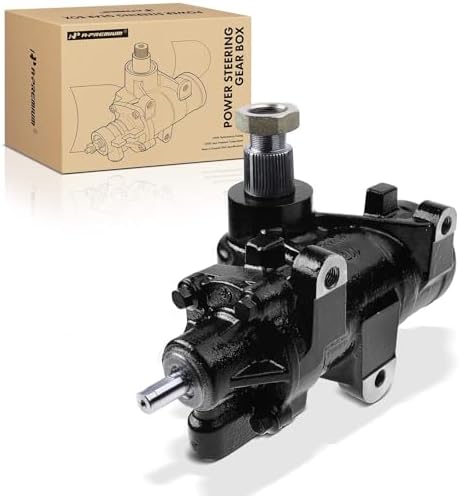
Power Steering Gear Box for Silverado Sierra 2500
$288 price checked August 2026
Read our full Power Steering Gear Box for Silverado Sierra 2500 review
If you own a Jeep Wrangler TJ, see our top-rated replacement steering gearbox options.
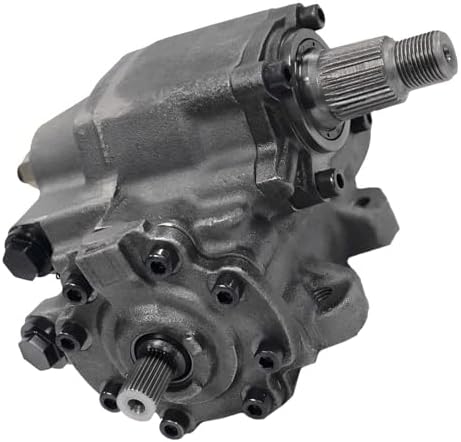
Detroit Axle Front Gear Box Kit Jeep Wrangler
$340 price checked August 2026
Read our full Detroit Axle Front Gear Box Kit Jeep Wrangler review
Owners of heavy-duty trucks can view the best steering gearbox assembly for chevrolet silverado 2500 3500 hd for heavy towing.
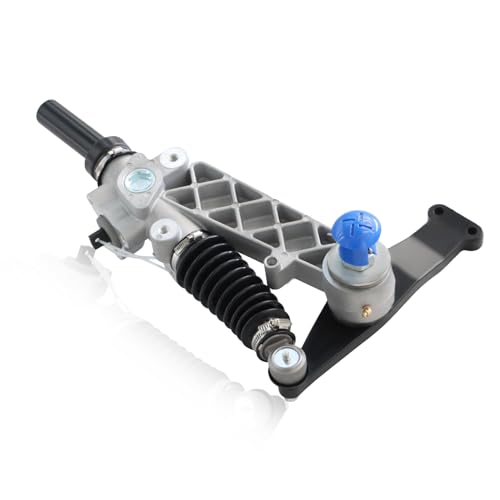
TXT Medalist Golf Cart Steering Gearbox Assembly
$140.59 price checked August 2026
Read our full TXT Medalist Steering Gearbox review
To better understand the different mechanical configurations available, compare the various types of gearboxes currently on the market.
Performance and Capability Gearbox Terms
- Gear Ratio – The numerical relationship between the number of teeth on the input gear versus the output gear. A lower numerical ratio (e.g., 3.42) provides higher top speeds, while a higher ratio (e.g., 4.10) provides more torque for acceleration.
- Final Drive Ratio – The gear ratio of the differential, which works in tandem with the gearbox. You must ensure the gearbox and final drive are compatible to achieve the desired speed and torque balance.
- First Gear Ratio – The specific ratio for the lowest gear, which determines the vehicle’s “off-the-line” pulling power. A higher number here provides more torque for heavy loads or steep inclines.
- Syncro Type – The mechanism used to match the speeds of the gears during shifting, such as constant mesh or synchromesh. Modern drivers typically prioritize synchromesh for smoother, faster gear transitions.
- Spline Count – The number of teeth on the splines of the input or output shafts. This must match your existing driveshafts or engine output exactly to allow the components to lock together.
- Torque Rating – The maximum amount of twisting force the gearbox can handle before mechanical failure. You need a rating that exceeds the maximum torque output of your engine to ensure long-term reliability.
Compatibility and Reference Standards
- OEM (Original Equipment Manufacturer) – The standard for parts built to the exact specifications of the vehicle manufacturer. These units provide the highest level of precision for metallurgy and tolerances.
- Remanufactured (Reman) – A unit that has been professionally inspected, stripped down, and rebuilt to original specifications. These are a standard for reliability and often include a certified warranty.
- Metric vs. SAE Threading – The standard for bolt threads, measured in millimeters or inches. Using the wrong standard will prevent bolts from threading into the housing or mounting points.
- Rack and Pinion vs. Recirculating Ball – While primarily steering terms, these dictate the mechanical layout of the front end. You must ensure the gearbox sits correctly in relation to these steering components.
- Housing Clearance – The amount of space available around the gearbox for surrounding components like the exhaust or suspension. You must confirm that the gearbox housing does not interfere with these parts.
Commonly Confused Gearbox Terms
Final Drive vs. Gearbox Ratio
The gearbox ratio refers to the internal gears between the engine and the output shaft, while the final drive ratio refers to the gears in the differential. You need to understand both because they multiply together to determine the vehicle’s final drive behavior.
Input Shaft vs. Output Shaft
For a deeper look at the internal mechanics, learn how a gearbox functions to transmit power.
The input shaft is the “entry” point where the engine connects to the gearbox, and the output shaft is the “exit” point where power goes to the wheels. Confusing these can lead to ordering a gearbox with the wrong shaft orientation or diameter.
Gear Ratio vs. Torque Multiplier
A gear ratio is a fixed mechanical measurement (the number of teeth), whereas torque multiplication is the result of that ratio. A higher gear ratio results in a higher torque multiplier, but they are different concepts: one is a spec, the other is a result.
Browse our other Car Gearbox pages
- Choosing the Best Golf Cart Steering Gearbox Assembly for Smooth Handling
- The Power Steering Gear Boxes That Work Best for GMC Sierra 2500 3500 HD
- Which Steering Gearbox Assembly Is Best for Polaris?
- Best Replacement Power Steering Gearbox Assembly for Jeep Wrangler TJ
- Heavy Duty Steering Gearbox Assemblies for Chevrolet Silverado 2500 3500 HD Compared