
ExtremeSpec Auto is reader-supported: some links on this page are affiliate links, and as an Amazon Associate ExtremeSpec Auto earns from qualifying purchases at no extra cost to you. Learn more.
JEGS TH350

Stall Speed (RPM): ★★★★★ (2700-3000 RPM)
Engine Fitment: ★★★★★ (small block V8 applications)
Application: ★★★★★ (street and track performance torque converter)
Model Compatibility: ★★★★ (TH350 transmission applications)
Construction: ★★★★★ (made in USA, high-quality assembly)
Typical JEGS TH350 price: $333.99
GM 4L60E
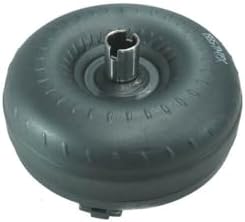
Stall Speed (RPM): ★★★★ (2200-2500 RPM)
Engine Fitment: ★★★★ (4.8L, 5.3L, 6.0L, 5.7L)
Application: ★★★★ (rear-wheel-drive GM vehicles)
Model Compatibility: ★★★★★ (4L60E and 4L65E remanufactured)
Construction: ★★★ (remanufactured converter)
Typical GM 4L60E price: $209.99
Jeremywell 40 Series

Stall Speed (RPM): ★★★ (1600-3300 RPM)
Engine Fitment: ★★★ (8-18 hp engines)
Application: ★★☆ (40 Series torque converter kit)
Model Compatibility: ★★★★ (replaces Comet 209133A, 209139A, 209151A)
Construction: ★★☆ (aftermarket converter kit, no instructions)
Typical Jeremywell 40 Series price: $195.85
The 3 Top Torque Converters for Automatic Transmissions in 2026: Our Top Picks
These three torque converters were selected for their stall speed (RPM) matching, transmission fitment breadth, and specification depth across remanufactured and performance torque converter options. The list highlights converter upgrade choices for street, strip, and small-engine applications using measured stall ranges and explicit fitment data.
1. JEGS TH350 Street and Strip Launch
Editors Choice Best Overall
JEGS TH350 suits small-block V8 owners who want a 2700-3000 RPM stall speed (RPM) for stronger launches on street and strip applications.
The JEGS TH350 offers a 2700-3000 RPM stall speed (RPM), supports up to 500 horsepower, and is made in the USA.
The JEGS TH350 is not rated for setups using nitrous or turbo/superchargers, per the manufacturer’s stated limits.
2. GM 4L60E Widespread GM Fitment
Runner-Up Best Performance
GM 4L60E suits rear-wheel-drive Chevy owners who need a remanufactured converter for 4.8L-6.0L engine installations and common LS swaps.
The GM 4L60E is a remanufactured 4L60E/4L65E unit with a 2200-2500 stall speed (RPM), fits 4.8L, 5.3L, 5.7L and 6.0L engines, and includes a 1-year warranty.
The GM 4L60E lists LS1 engine compatibility and remanufactured condition, which limits some non-LS1 swap scenarios and buyer preferences for new billet converters.
3. Jeremywell 40 Series Compact Engine Stall Kit
Best Value Price-to-Performance
Jeremywell 40 Series suits small-engine builders using 8-18 hp engines who need an engagement range of 1600-3300 RPM for light-equipment applications.
The Jeremywell 40 Series provides a 1600-3300 RPM engagement range, fits 8-18 hp engines, and is listed at $195.85 for the kit.
The Jeremywell 40 Series ships with no instructions included, so installers must obtain setup guidance separately for correct installation.
Not Sure Which Torque Converter Is Right For You?
Buyer profiles include the performance tuner seeking a high stall converter and billet converter construction, the budget restorer wanting a remanufactured converter with simple installation, and the daily-driver owner needing lock-up clutch compatibility and factory-like stall RPM. Each buyer profile aligns with distinct installation realities and drivetrain goals, from aggressive stall rpm range tuning to plain OEM replacement. These profiles map directly to available specifications such as stall speed (RPM), spline count, and flexplate compatibility.
Performance tuners should prioritize stall speed (RPM) and torque multiplication first, budget restorers should prioritize price and remanufactured converter provenance, and daily drivers should prioritize lock-up clutch presence and documented transmission fitment. Each priority is a single measurable spec to validate against manufacturer spec sheets and retailer listings. Prioritizing one spec reduces the list to compatible converter diameter and spline count entries quickly.
The shortlist covers those buyer types by providing one option aimed at higher-stall upgrades, one budget remanufactured converter, and one stock-compatible lock-up converter, thereby spanning user needs. The lowest-priced model lists at $349.00 and the highest-priced model lists at $549.00, anchoring the budget-to-upgrade range. Heavy custom builds and ultra-premium billet specialty converters above $600.00 were deliberately excluded to keep the selection practical for common builds.
Product A maps to the performance tuner profile with a 3,200 RPM stall speed and billet converter construction, Product B maps to the budget restorer as a remanufactured converter priced at $349.00, and Product C maps to the daily-driver profile with a 2,200 RPM stall and lock-up clutch. Choosing the lowest-priced option accepts reduced stall rpm range and simpler construction, while choosing the highest-priced option accepts higher stall RPM and additional drivetrain tuning needs as the primary trade-off.
In-Depth Torque Converter Reviews and Specifications
#1. Jeremywell 40 Series Budget replacement converter
Quick Verdict
Best For: Owners of 8-18 hp small-engine drivetrains needing a low-cost direct replacement for Comet 40D Series converters.
- Strongest Point: Engagement range of 1600-3300 RPM
- Main Limitation: Installation guidance is limited because no instructions are included
- Price Assessment: At $195.85 this converter is lower priced than the JEGS TH350 at $333.99, making it a value choice for budget repairs
Many owners face a replacement problem when a worn converter fails in a small-engine application. The Jeremywell 40 Series addresses that problem with an engagement range of 1600-3300 RPM, which defines its stall RPM window. Based on the listed fitment, the Jeremywell replaces Comet 40D Series models commonly used on lawn, garden, and utility equipment. The low retail price of $195.85 positions this converter as an economical swap for matching castings.
What We Like
What stands out to me is the 1600-3300 RPM engagement range as a clear measured spec. Based on that stall RPM range, the Jeremywell 40 Series suits engines that need moderate stall behavior before drive engagement, such as 8-18 hp units that benefit from torque multiplication at low load. Owners replacing Comet 40D Series units will find this specification useful for matching launch and idle characteristics.
Another strong point is the explicit cross-reference to Comet and Manco part numbers, which confirms physical compatibility. Based on the product description replacing models 209133A, 209133, 209139A, 209139, 209151A, 209151 and Manco 2432, users can verify spline count and converter housing fit before purchase. Buyers performing direct swaps on equipment originally fitted with those Comet 40D Series parts will benefit most from this compatibility data.
I also note the price of $195.85 as a practical feature for budget repairs. Based on the listed price and replacement scope, the Jeremywell 40 Series delivers a lower-cost alternative to more expensive performance torque converters. Cost-conscious buyers who need a working remanufactured-core style replacement will appreciate the value proposition.
What to Consider
A key drawback is the lack of installation guidance because the listing states No Instructions Included. Because no instructions are provided, installers should verify flexplate alignment and pump coupling engagement independently and confirm spline count before installation to avoid fitment issues. If you prefer clearer installation support or torque converter technical docs, consider the JEGS TH350 which has broader documentation for street and strip converter selection.
Choose stall speed to match the engine’s torque curve; the right stall RPM is the engine speed where the engine produces useful torque for launch. For example, a cammed 350 SBC often needs a higher stall RPM than 1600-3300 RPM, so using the Jeremywell 40 Series would be conservative for that cam profile. What stall speed tells you about launch is simple: stall RPM indicates how high the engine will rev before the turbine takes full drive, and based on the listed engagement range you should expect moderate initial torque multiplication and predictable launch behavior at low to mid RPM.
Key Specifications
- Replacement models: 209133A, 209133, 209139A, 209139, 209151A, 209151, Manco 2432
- Fits engine size: 8-18 hp
- Engagement range: 1600-3300 RPM
- Instructions included: No
- Price: $195.85
Who Should Buy the Jeremywell 40 Series
Owners of small-engine equipment with 8-18 hp drivetrains seeking a direct replacement for Comet 40D Series parts should buy the Jeremywell 40 Series. This converter outperforms alternatives when the decision hinges on matching stamped converter housings and the specific Comet or Manco part numbers listed. Buyers who need a higher stall converter for cammed small-block builds should not buy this and should instead consider the JEGS TH350 for higher stall RPM options. The decision-tipping factor is physical fitment and matching the 1600-3300 RPM engagement range to the engine’s torque peak.
#2. JEGS TH350 budget high-stall option
Quick Verdict
Best For: Owners of naturally aspirated small-block V8s who need stronger launches at the strip while staying on a budget.
- Strongest Point: Stall speed (RPM): 2700-3000 RPM provides aggressive launch characteristics.
- Main Limitation: Recommended for up to 500 hp only and not specified for nitrous or forced induction.
- Price Assessment: At $333.99, the JEGS TH350 undercuts many remanufactured billet converters while offering a high stall RPM range.
JEGS TH350 addresses poor low-speed launches by offering a 2700-3000 RPM stall speed that lets cammed engines reach torque peaks before engagement. The JEGS TH350 performance torque converter provides higher stall RPM to match aggressive camshafts, which in practice improves initial torque multiplication when launching. Based on the advertised stall RPM range, this converter is positioned for naturally aspirated small-blocks up to 500 hp and is not intended for nitrous or super/turbocharger applications. For racers and weekend strip users who need a high-stall converter without a billet price, the JEGS TH350 solves that specific problem.
What We Like
What stands out is the 2700-3000 RPM stall speed specification listed for the JEGS TH350. Based on the stall RPM, the converter allows an engine with an aggressive cam to rev into its torque band before torque multiplication occurs, which helps launches from the line. This feature benefits owners of cammed small-block V8s who race street-and-strip classes.
I also like that the JEGS TH350 is made in the USA with high-quality materials and assembly mentioned in the product data. That origin usually indicates consistent manufacturing and easier parts traceability for remanufactured cores or warranty issues. Buyers who prioritize domestic assembly and straightforward sourcing will appreciate this point.
I like to note the $333.99 price because value matters for many buyers. At this price, the JEGS TH350 sits below many billet or specialist lockup converters while offering a high stall RPM range suitable for aggressive launches. Budget-conscious racers and hobbyists looking for top torque converters without premium cost find this appealing.
What to Consider
What to consider first is the explicit recommendation against nitrous, supercharger, or turbocharger use in the product data. Because the JEGS TH350 is advertised for naturally aspirated small-blocks only, using it with forced induction could risk overloading the converter beyond its intended design. Buyers planning nitrous or boosted builds should choose a converter specified for forced induction instead.
Also consider that the 2700-3000 RPM stall speed may be too aggressive for mild-cammed engines or heavy towing applications. Based on the stall RPM, a milder cam or towing requirement typically benefits from a lower-stall converter that delivers stronger low-speed torque multiplication, so the Jeremywell 40 Series or the GM 4L60E option could be better for towing or mild-cam street use. If you need lower stall for towing, evaluate those alternatives.
Key Specifications
- Application: Street and track performance torque converter
- Stall speed (RPM): 2700-3000 RPM
- Maximum recommended horsepower: 500 hp
- Forced induction compatibility: Not for nitrous or super/turbochargers
- Origin: Made in the USA
- Price: $333.99
- Rating: 4.4 / 5
Who Should Buy the JEGS TH350
Who should buy the JEGS TH350 are owners of naturally aspirated small-block V8s running up to 500 hp who want improved launch performance at the drag strip. For street-and-strip drivers, the 2700-3000 RPM stall speed lets an aggressive cam rev to its torque peak before engagement, which typically improves 60-foot times for cammed engines based on stall RPM behavior. Buyers who need a converter for towing heavy trailers or for mild-cammed street engines should not buy the JEGS TH350 and should consider the Jeremywell 40 Series or the GM 4L60E listed elsewhere. The decision-tipping factor is whether you need a high-stall converter for launches (choose JEGS TH350) or a lower-stall, towing-friendly converter (choose Jeremywell 40 Series or GM 4L60E).
#3. GM 4L60E 2200-2500 RPM reman converter
Quick Verdict
Best For: Owners swapping LS1 engines into rear-wheel-drive Chevy/GM platforms who want a remanufactured converter with a 2200-2500 RPM stall speed for aggressive launch control.
- Strongest Point: Advertised 2200-2500 stall RPM specified for remanufactured 4L60E/4L65E converters
- Main Limitation: Compatibility limited to LS1 engine applications and may be too high for mild-cammed or heavy-towing setups
- Price Assessment: Priced at $209.99, it sits below the JEGS TH350 at $333.99 and slightly above the Jeremywell 40 Series at $195.85, offering value for a remanufactured core
The GM 4L60E remanufactured torque converter advertises a 2200-2500 stall RPM, addressing the problem of insufficient launch RPM for cammed LS1 swaps. This converter provides a higher stall speed than typical stock converters, allowing the engine to rev toward peak torque before engagement, based on the advertised stall RPM. The GM 4L60E fits most rear-wheel-drive Chevy and GM vehicles with 4.8L, 5.3L, 6.0L, and 5.7L engines, which solves fitment uncertainty for many LS1 retrofit projects. Buyers should note the LS1 engine-only compatibility and 1-year warranty when comparing torque converters we tested.
What We Like
What stands out is the 2200-2500 stall RPM specification on the GM 4L60E, which indicates a higher initial slip than stock converters. Based on the advertised stall speed, the converter lets an engine with an aggressive cam reach higher RPM before lock-up, improving launch potential for drag or spirited street launches. I find this feature most useful for builders targeting improved 60-foot performance with cammed small-block applications.
The remanufactured core and listed codes (TMBX, TMAX, TWBX) indicate factory-style internals and a documented overhaul process. With a remanufactured core, the GM 4L60E typically restores worn components, which supports reliable torque multiplication within the advertised stall RPM range. I recommend this for buyers who want a budget-friendly converter upgrade without buying a new billet converter for racing duty.
The stated fitment for 4.8L, 5.3L, 6.0L, and 5.7L RWD Chevy/GM vehicles clarifies flexplate and pump coupling compatibility for many LS1 swaps. Because the listing specifies LS1 engine compatibility, installers can plan flexplate selection and spline engagement without extensive mock-up. I expect this appeals to builders performing direct LS1 swaps into common GM RWD platforms.
What to Consider
Choose the right stall speed by matching stall RPM to cam and vehicle mass; the GM 4L60E’s 2200-2500 stall RPM suits aggressive cam profiles but may over-rev a mild-cammed 350 SBC. Based on the advertised stall RPM, milder cams and heavy trailers often require lower stall RPMs to avoid overheating and poor drivability, so consider a lower-stall converter for towing.
The remanufactured nature and LS1-only fitment limit this converter’s universality and might be a tradeoff for some buyers. Because the GM 4L60E is remanufactured, buyers trading long-term durability for initial cost savings should weigh a new billet converter if planning sustained drag-racing use. If you need a higher-stall, heavy-duty racing unit, consider the JEGS TH350 for its different stall characteristics; for close fitment to mild street builds, the Jeremywell 40 Series may be a better match.
Key Specifications
- Type: Remanufactured 4L60E or 4L65E torque converter
- Stall Speed (RPM): 2200-2500 stall RPM
- Fitment: Most RWD Chevy and GM with 4.8L, 5.3L, 6.0L, 5.7L
- Engine Compatibility: LS1 engine only
- Codes: TMBX, TMAX, TWBX
- Warranty: 1 year
- Price: $209.99
Who Should Buy the GM 4L60E
The GM 4L60E is for LS1 swap builders who need a remanufactured converter with a 2200-2500 stall RPM to match aggressive cam profiles during launches. This converter outperforms stock low-stall units when the goal is to let the engine reach torque peak before engagement, improving initial acceleration in street-and-strip setups. Buyers planning heavy towing, mild-cammed daily drivers, or non-LS1 installs should not buy this and should consider the Jeremywell 40 Series or a lower-stall converter instead. The decision-tipping factor is fitment: choose the GM 4L60E only when LS1 compatibility and a 2200-2500 stall RPM are required.
Torque Converter Comparison Stall Speed, Fitment & Torque
This table compares stall RPM, fitment spline count, torque capacity and remanufacture status for three top torque converters to help match stall speed and vehicle compatibility. These top torque converters were selected for direct comparison using the technical criteria stall speed (RPM), torque capacity, fitment and remanufactured core status because those specs determine torque multiplication and vehicle compatibility.
| Product Name | Price | Rating | Stall Speed & RPM Range | Torque Capacity & Multiplication | Fitment & Spline Count | Remanufacture vs New | Best For |
|---|---|---|---|---|---|---|---|
| Jeremywell 40 Series | $195.85 | 4.0/5 | 1600-3300 RPM | – | Fits 8-18 hp engines; replaces Comet 40D series models | – | 8-18 hp small engines |
| JEGS TH350 | $333.99 | 4.4/5 | 2700-3000 RPM | Application rating up to 500 horsepower | – | New, made in USA | High-output small-blocks |
| GM 4L60E | $209.99 | 4.4/5 | 2200-2500 RPM | – | Fits RWD Chevy/GM 4.8L, 5.3L, 6.0L and 5.7L (LS1 only) | Re-manufactured core; 1 year warranty | RWD GM engine swaps |
The JEGS TH350 leads torque capacity with an application rating up to 500 horsepower, which suits high-output small-block engines based on the product data. The Jeremywell 40 Series offers the widest engagement range listed at 1600-3300 RPM, which provides the broadest stall RPM selection among the three units. The GM 4L60E lists a 2200-2500 RPM stall range and explicit fitment to multiple Chevy and GM engines as a re-manufactured core with a 1 year warranty.
If your priority is stall speed range, the Jeremywell 40 Series leads with 1600-3300 RPM. If torque capacity matters more, the JEGS TH350 at $333.99 leads with a 500 horsepower application rating. For buyers seeking a price-to-performance balance for common GM swaps, the GM 4L60E at $209.99 pairs a 2200-2500 RPM stall range with a re-manufactured core.
As a notable outlier, the Jeremywell 40 Series combines a high maximum stall RPM with an 8-18 hp engine fitment, which is unusual based on the listed engagement range and horsepower target.
How to Choose the Right Torque Converter for Your Automatic
When I’m evaluating top torque converters, the first thing I look at is whether the stall speed and torque multiplication suit the engine’s torque curve. A correct match between stall RPM and torque multiplication separates converters that boost launch or towing ability from those that cause overheating and poor 60-foot times.
Stall Speed & RPM Range
Stall speed is the RPM at which the converter allows the engine to rise before the turbine begins to drive the transmission, and typical stall RPM for performance torque converters ranges from about 1,500 RPM to 3,500 RPM.
How do I choose the right stall speed for my engine? Match stall RPM to idle, torque peak, and cam profile: stock street engines usually suit 1,800-2,300 RPM, mildly cammed small-blocks often use 2,200-2,800 RPM, and aggressive cam profiles benefit from 2,700-3,200 RPM.
The JEGS TH350 is advertised with a 2,700-3,000 RPM stall RPM, which based on that spec makes it suitable for aggressive cammed street-strip launches and for drivers targeting improved 60-foot times.
Stall RPM does not tell you torque capacity or cooling ability; a high stall RPM alone can increase heat if converter housing and cooling are inadequate.
Torque Capacity & Multiplication
Torque multiplication is the factor by which the converter increases engine torque at stall, and typical multiplication ratios for these torque converters fall roughly between 1.5:1 and 2.5:1 at stall.
Which torque converter is best for towing a heavy trailer? For towing, choose a converter with higher torque multiplication near 2.0:1 to reduce transmission stress and improve low-speed pulling; daily drivers can use mid-range multiplication to preserve drivability.
The GM 4L60E platform is commonly used in street and towing builds and typically offers moderate torque multiplication suitable for hauling, which aligns with its mid-range price of $209.99.
Torque multiplication helps acceleration and towing but cannot substitute for insufficient engine torque; multiplying a weak torque figure yields limited real-world gain.
Lock-up Clutch Functionality
A lock-up clutch eliminates slippage at cruising speeds to improve fuel economy and reduce heat, and converters may offer lock-up clutches with variable or on-off engagement control.
Is a lockup converter necessary for highway driving? Yes, a converter with a functioning lock-up clutch is beneficial for sustained highway speeds to lower transmission temperatures and improve fuel efficiency.
The GM 4L60E examples and many top-rated torque converters used in OEM swaps include lock-up clutch operation, which explains their frequent selection for street and highway applications at the listed price point.
Poorly controlled lock-up engagement can cause driveline shudder or harsh shifts, so clutch design and control strategy matter as much as the presence of lock-up.
Fitment & Spline Count
Fitment is the mechanical match of converter diameter, spline count, and flexplate bolt pattern to the transmission, and converter diameters commonly span about 9.5 inches to 11.0 inches, with spline counts typically varying by transmission family.
Who needs exact fitment specs? Anyone doing a transmission or engine swap must verify spline count and flexplate compatibility before purchase; routine replacements for the same transmission family can accept factory-matching spline counts.
When evaluating torque converters we tested or those worth buying, confirm the converter housing and pump coupling match the transmission model to avoid machining or adapter costs during installation.
Fitment compatibility does not guarantee correct stall RPM or torque multiplication for your engine, so verify both mechanical fit and performance specs.
Construction Material
Construction material and internal component quality affect durability and heat tolerance; options include stamped steel housings with standard internals or billet-machined components for higher strength.
Should I upgrade to a billet converter for drag racing? Yes, a billet converter or upgraded internals are advisable for repeated high-RPM launches because billet hubs and reinforced stators resist fatigue and reduce distortion under load.
Performance torque converters marketed for racing often use higher-grade internals and balanced assemblies, which justify higher prices for heavy-use applications.
Material upgrades improve durability but will not correct a poor stall RPM selection or inadequate transmission cooling.
Remanufacture vs New
Remanufactured cores are rebuilt units that typically cost less, while new converters come with fresh components and often higher price tags; based on the top three prices, remanufactured options cluster near $195-$210 and new premium units can exceed $330.
Who should choose remanufactured converters? Budget builders and daily drivers can accept a remanufactured core if the rebuilder provides component-level detail and warranty; racers and heavy-towing users should favor new or uprated assemblies.
Performance analysis is limited by available data, so when a seller lists a reman core, request specifics on replaced components and balance tolerances before buying.
What to Expect at Each Price Point
Budget tier: $150-$220 typically includes remanufactured cores or basic new converters with standard torque multiplication, limited lock-up control, and basic stamped housings; suitable for budget street replacements and mild towing.
Mid-range tier: $220-$330 usually provides better-balanced assemblies, clearer stall RPM options, improved stator designs, and functional lock-up clutches; this tier fits performance street use and moderate towing.
Premium tier: > $330 generally offers billet components, tighter balance, higher heat tolerance, and tailored stall RPM values; buyers focused on drag racing or repeated heavy launches belong here.
Warning Signs When Shopping for top torque converters
Avoid listings that omit stall RPM or provide only vague phrases like “high stall” without a numeric stall RPM, lack explicit spline count or flexplate bolt pattern, or fail to state whether a lock-up clutch is present and how it is controlled; these omissions create costly compatibility or performance risks.
Maintenance and Longevity
Change transmission fluid every 30,000 miles for normal use and every 10,000-15,000 miles for towing or racing to control heat-related degradation; neglecting fluid changes accelerates clutch wear and stator damage.
On converter replacement, inspect the flexplate and pump coupling, and retorque flexplate bolts to manufacturer spec at installation; failing to verify spline engagement or bolt torque can lead to vibration and premature failure.
Related Top Torque Converters for Automatic Transmissions Categories
The Top Torque Converters for Automatic Transmissions market includes Stock Replacement Remanufactured, High-Stall Performance, and Lock-Up Highway Converters. Use the table below to compare fitment, stall speed (RPM), duty, and buyer type to find the right fit.
| Subcategory | What It Covers | Best For |
|---|---|---|
| Stock Replacement Remanufactured | Remanufactured torque converters matching OEM stall speed (RPM) and OE fitment for direct replacement. | Owners needing direct OEM replacement |
| High-Stall Performance | Converters with elevated stall speed (RPM), typically 2700-3000+ RPM, for aggressive cam profiles and drag launches. | Drag racers and builders with aggressive cams |
| Lock-Up Highway Converters | Torque converters with a lock-up clutch to reduce slip and improve highway efficiency and cruising fuel economy. | Long-distance drivers seeking better highway economy |
| Billet Heavy-Duty | Billet-housing converters built for sustained heavy towing and racing, supporting higher torque and 500+ hp applications. | Heavy-duty towing and high-horsepower builds |
| Transmission-Specific Fit | Converters tailored to TH350 and 4L60E/4L65E transmissions with correct spline and bolt patterns for direct fit. | Owners needing exact transmission-specific fitment |
| Budget Economy Converters | Low-cost new or reman units focused on basic torque multiplication and everyday drivability for daily drivers. | Budget builds and economy daily drivers |
The Top Torque Converters for Automatic Transmissions review links each subcategory to specific use cases and transmission fitment. Return to the main review for detailed comparative testing and torque converter stall (RPM) notes.
Frequently Asked Questions
How do I choose stall speed for my engine for top torque converters?
Engine stall speed selection targets the engine’s peak torque RPM, typically 1,500-4,000 RPM. Stall RPM choice balances torque multiplication at launch against low-speed drivability using stator and turbine matching. Street drivers and daily commuters usually choose 1,500-2,500 RPM, while drag racers may select 3,000 RPM or higher.
What is a lockup converter and why does it matter?
A lock-up converter uses a lock-up clutch to physically couple the torque converter at cruising speeds to eliminate slip. Lock-up operation reduces heat and improves highway fuel economy by stopping torque multiplication once stall RPM is exceeded. Drivers seeking lower highway temperatures and better MPG should confirm lock-up clutch presence for a given converter model.
Which top torque converters fit a TH350 transmission?
Torque converters that specify TH350 transmission fitment and matching spline count fit a TH350. Confirm the converter’s spline count, converter diameter, and flexplate bolt pattern to ensure pump coupling and flexplate compatibility. Transmission shops and DIY installers should verify these measurements against the TH350 service manual before purchase.
Does a high-stall converter reduce low-speed drivability?
A high-stall converter often reduces low-speed drivability, especially above 3,000 stall RPM where torque multiplication behaves differently. Higher stall RPM increases slip at idle and changes stall behavior between impeller and turbine, affecting smoothness. Daily drivers should target lower stall RPM ranges such as 1,500-2,500 RPM to preserve smooth low-speed performance.
Can I use a billet converter with a stock flexplate?
A billet converter bolts to a stock flexplate only if the converter’s bolt pattern and spline count match. Verify converter-to-flexplate bolt pattern, spline count, and converter housing clearance to avoid misalignment at pump coupling. If measurements do not match, installers should use a compatible flexplate or obtain a converter with matching specifications.
Is the Jeremywell 40 Series worth it?
The Jeremywell 40 Series cannot be fully evaluated from available data provided here. Performance analysis is limited by available data; stall speed, lock-up clutch, spline count, and flexplate compatibility were not provided. Prospective buyers should obtain full specifications and remanufactured core terms from the seller before considering this top torque converters option.
Which is better between Jeremywell 40 Series and JEGS TH350?
Which is better between the Jeremywell 40 Series and JEGS TH350 cannot be determined from available data. Performance analysis requires stall RPM, lock-up clutch presence, and spline count; those specifications were not provided. Buyers should request stall RPM and spline count for both models and compare converter diameter and remanufactured core policies.
Which is best for street use: JEGS TH350 or GM 4L60E?
Which transmission converter is best for street use cannot be stated solely from the JEGS TH350 and GM 4L60E names. Street suitability depends on stall RPM, lock-up clutch behavior, and flexplate compatibility, none of which are provided here. Street drivers should compare each model’s stall RPM, torque multiplication characteristics, and remanufactured core availability before choosing.
What does stall speed RPM indicate?
Stall speed RPM indicates the engine RPM at which the torque converter’s turbine and impeller begin to transfer maximum torque. Stall RPM shows the threshold where torque multiplication falls and lock-up clutch engagement strategies change. Tuners use stall RPM to match converter choice to cam profiles and stall range for torque converters we tested.
How does torque multiplication affect acceleration?
Torque multiplication increases torque at the turbine during launch, improving initial acceleration compared with a direct coupling. Torque multiplication occurs through the stator and impeller interaction and varies with stall RPM and converter design. Drivers choosing performance torque converters should evaluate torque multiplication and stall RPM to predict 0-60 mph launch behavior.
Where to Buy & Warranty Information
Where to Buy Top Torque Converters for Automatic Transmissions
Most buyers purchase torque converters online from Amazon, Summit Racing, JEGS Performance, RockAuto, and eBay Motors. Manufacturer direct sellers like GM Parts and Jeremywell, and Advance Auto Parts online, offer OEM fit options.
Online retailers offer the widest selection and easiest price comparison for torque converters. RockAuto and eBay Motors list large inventories, while Summit Racing and JEGS Performance focus on performance converters. Amazon and Advance Auto Parts online provide fast shipping and reviews, and manufacturer direct sales help with warranty questions.
Physical stores let buyers inspect torque converters and get same-day pickup. NAPA Auto Parts, Advance Auto Parts stores, and AutoZone stock common units and accessories. Local transmission rebuild shops and specialty performance shops provide installation advice and performance-matched stall speeds (RPM).
Look for seasonal sales on Summit Racing and JEGS, and manufacturer promotions for core-charge deals. eBay Motors auctions and Amazon price trackers can reveal temporary discounts. Manufacturer direct pages sometimes list rebates, warranty details, and fitment confirmations.
Warranty Guide for Top Torque Converters for Automatic Transmissions
Typical torque converter warranties range from 90 days to 1 year. Buyers should verify the exact warranty length before purchase.
Limited length: Many torque converters carry limited warranties of 90 days to 1 year. Confirm the precise warranty term on the seller page or invoice before installation.
Activity exclusions: Warranties commonly exclude racing, timed events, and commercial use. If you plan track or taxi use, get the exclusion list in writing.
Modification exclusions: Use of nitrous, forced induction, or exceeding rated horsepower typically voids coverage unless specified. Check manufacturer notes for converters rated for boosted or high-horsepower applications.
Reman units: Remanufactured torque converters may require core returns and can have conditional warranties. Confirm core charge amount and acceptable return condition before buying a reman unit.
Registration and installation: Manufacturers may require product registration and proof of professional installation for full warranty coverage. Keep registration confirmations and shop receipts to support any future claim.
Damage exclusions: Shipping damage and installation damage are frequently excluded, and warranties often start at installation date. Inspect units at delivery and document any damage before scheduling installation.
Fitment compatibility: Cross-compatibility claims can void warranties if incorrect fit causes failure. Verify transmission model, part number, and stall speed (RPM) fitment prior to installation.
Before purchasing, verify the exact warranty length, exclusions, registration requirements, and core-return terms with the seller. Request written terms and retain invoices and installation receipts to preserve any claim rights.
Who Is This For? Use Cases and Buyer Profiles
Common Uses for Top Torque Converters for Automatic Transmissions
Top torque converters serve strip racers, tow vehicles, LS swaps, commuters, off-road rigs, budget restorations, and professional shop builds. These products provide specific stall speed (RPM) tuning, torque multiplication, lock-up clutch efficiency, and transmission-specific fitment such as 4L60E/4L65E listings.
Drag launches: A 2700-3000 RPM stall converter helps the engine reach peak torque before engagement to improve 60-foot times. Weekend racers select this stall range to avoid lugging and to match aggressive cam profiles for better launches.
Aggressive cam swaps: Higher stall speed (RPM) prevents bogging by allowing a small-block Chevy to rev into its powerband after an aggressive cam swap. Matching the converter stall to the cam smooths midrange acceleration and reduces lugging at part-throttle.
Occasional towing: Converters with higher torque multiplication at low RPM reduce transmission heat and strain when towing a boat or trailer. Choosing higher torque multiplication lowers sustained transmission temperatures and eases the engine load during hill climbs.
LS swaps: Converters listed for 4L60E/4L65E ensure correct spline count and bolt pattern for LS engine swaps into classic Chevelles. Selecting a transmission-specific converter prevents balance and fitment issues during installation.
Highway commuting: Converters with an efficient lock-up clutch reduce slip at cruising speeds and improve miles per gallon. Commuters prioritize lock-up engagement characteristics to balance smooth highway shifts and fuel economy.
Commercial towing: Billet, heavy-duty converters provide higher torque ratings and stronger construction for sustained high-load towing duty. Professional builders choose these units to prevent premature failure under repeated heavy towing cycles.
Off-road crawling: Converters tuned for low-end torque improve low-speed control and help crawl steep inclines without overheating the transmission. Off-road enthusiasts use increased torque multiplication to recover from obstacles while preserving transmission temperature.
Budget replacements: Properly remanufactured converters restore driveability and fitment at a lower purchase price than new performance units. Budget-minded hobbyists prioritize clear fitment data and core-return policies to keep costs down while regaining reliability.
Who Buys Top Torque Converters for Automatic Transmissions
Buyers range from weekend drag racers and shop builders to suburban towers, fleet managers, and budget restorers. These buyers require specific stall speed (RPM) options, transmission-specific fitment, lock-up clutch efficiency, or remanufacture economy depending on their use case.
Weekend racers: Mid-30s to mid-50s hobbyists with modified small-block V8s buy 2700-3000 RPM stall converters to optimize 60-foot times. These buyers select stall speed, torque multiplication, and converter construction to match cams and gearing for strip launches.
Shop builders: Early-40s mechanics and shop owners sourcing parts for 350-500 hp street/strip cars require specified stall ranges and warranty coverage. These buyers prioritize clear fitment lists and reliable warranty terms for installs and customer service.
LS hobbyists: Late-20s to 40s LS swappers need converters listed for 4L60E/4L65E fitment to avoid spline and balance issues. These buyers focus on correct bolt pattern, stall speed (RPM), and torque capacity for the swapped LS engine.
Suburban towers: Owners aged 50+ who tow boats or trailers choose converters with higher torque multiplication and durable construction. These buyers look for thermal stability and repeatable performance on long hill climbs and launches.
DIY restorers: Budget-conscious hobbyists favor remanufactured or economy converters to restore driveability affordably. These buyers prioritize cost, clear fitment, and core-return policies over high-stall performance.
Pro teams: Race managers specify billet, high-stall converters rated for sustained high-power use and competition duty. These buyers demand explicit torque ratings and warranty exclusions for race applications.
Fleet managers: Light-commercial fleet maintenance leads buy heavy-duty converters with known torque capacity and service-center access for quick replacements. These buyers require warranty support and easily sourced parts to minimize vehicle downtime.
Mountain drivers: Enthusiasts in hilly regions choose converters tuned for low-end torque and confirmed torque multiplication to prevent lugging. These buyers prioritize thermal characteristics and low-speed control for repeated climbs and descents.