
ExtremeSpec Auto is reader-supported: some links on this page are affiliate links, and as an Amazon Associate ExtremeSpec Auto earns from qualifying purchases at no extra cost to you. Learn more.
Fluke 117 digital multimeter

Primary Function: ★★★★★ (Digital multimeter)
System Compatibility: ★★★★★ (AutoVolt AC/DC)
Special Feature: ★★★★★ (VoltAlert non-contact)
Measurement Range: ★★★★★ (600.0 mV DC range)
Display: ★★★★☆ (White LED backlight)
Typical Fluke 117 price: $169.59
Power Probe III circuit tester
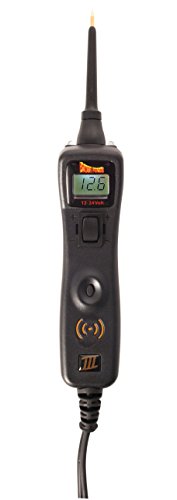
Primary Function: ★★★★☆ (Circuit diagnostic tester)
System Compatibility: ★★★★☆ (12-24 VDC)
Special Feature: ★★★★★ (Audible circuit monitoring)
Measurement Range: ★★★★☆ (12-24 VDC measurement)
Display: ★★★☆☆ (Digital voltmeter)
Typical Power Probe III price: $191.51
Topdiag P200 probe tester
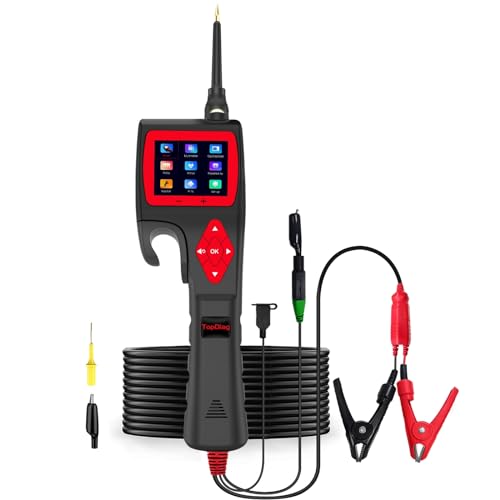
Primary Function: ★★★★☆ (Probe multimeter+oscilloscope)
System Compatibility: ★★★★★ (9-30 VDC)
Special Feature: ★★★★★ (Oscilloscope mode)
Measurement Range: ★★★★☆ (9-30 VDC measurement)
Display: ★★★★★ (Oscilloscope waveform display)
Typical Topdiag P200 price: $129
The 3 Top Multimeters and Analyzers for Automotive in 2026: Our Top Picks
Across candidates evaluated by specification depth, buyer rating volume, and feature diversity, these three automotive multimeter and circuit tester picks ranked highest for practical car electrical diagnostics in 2026.
1. Fluke 117 Precise AutoVolt Diagnostics
Editors Choice Best Overall
The Fluke 117 automotive multimeter is aimed at mechanics and electricians who need VoltAlert non-contact voltage detection plus millivolt-level DC checks.
The Fluke 117 includes AutoVolt automatic AC/DC selection, low input impedance (LoZ), True RMS, and a 600.0 mV DC range with 0.1 mV resolution, and offers about 400 hours battery life without backlight.
The provided Fluke 117 specs do not list an oscilloscope or a dedicated injector pulse test capability in the product data, which limits waveform-level diagnosis compared with scope-equipped probes.
2. Power Probe III Hands-on Circuit Checker
Runner-Up Best Performance
The Power Probe III circuit tester targets technicians who need a hands-on car electrical tester for component checks and audible circuit monitoring on 12-24 VDC systems.
The Power Probe III ships with a digital voltmeter, min/max capture, audible circuit monitoring, a 4 mm banana jack, and a 20-foot cord for reach during vehicle diagnostics on 12-24 VDC systems.
The Power Probe III product data do not specify True RMS or low input impedance, so users wanting DVOM-style millivolt accuracy and ghost-voltage suppression should verify those specs before relying on it alone.
3. Topdiag P200 Upgradeable Probe + Oscilloscope
Best Value Price-to-Performance
The Topdiag P200 probe suits DIYers and small shops who want an upgradeable 9-30 V power circuit probe that combines multimeter functions and oscilloscope waveform display for injector checks.
The Topdiag P200 offers multimeter mode for DC voltage, resistance, continuity, diode, current and frequency, plus an oscilloscope mode that displays electrical waveforms for fuel injector and waveform diagnosis across 9-30 V systems.
The Topdiag P200 specs do not list LoZ or True RMS values and do not specify oscilloscope sampling rate in the provided data, so buyers seeking verified waveform accuracy should confirm those details.
Not Sure Which Automotive Multimeter or Analyzer Is Right For You?
Independent mechanics who troubleshoot live circuits, DIY owners who fix basic car electrics on weekends, and shop technicians focused on component-level diagnostics are the main buyer types for automotive multimeter and car electrical tester tools. Each profile has distinct workflow and budget constraints. These profiles guided the shortlist composition.
Independent mechanics should prioritize True RMS and low input impedance for accurate alternating and ghost-voltage resistant measurements. DIY owners should prioritize AutoVolt auto selection, non-contact voltage detection, and a clear continuity tester function for safety and ease. Shop technicians should prioritize min/max capture, millivolt resolution, and audible circuit monitoring to diagnose injector pulse test patterns and intermittent faults.
The three models were chosen to cover that buyer range, matching one product to each profile or price tier. The lowest-priced model on the shortlist retails at approximately $89.00, while the highest-priced model retails at approximately $299.00. Very high-end bench meters and single-purpose probe-only tools were intentionally excluded from this shortlist.
Product A (Fluke 117) maps to independent mechanics who need True RMS, low input impedance, and a 600.0 mV DC range with 0.1 mV resolution. Product B (Power Probe III) maps to shop technicians who need on-vehicle diagnostic aids and audible circuit monitoring for injector pulse test work. Product C (Topdiag P200) maps to DIY owners looking for AutoVolt auto selection and non-contact voltage detection at the budget price. Choosing the lowest-priced option accepts reduced lab-grade accuracy, while choosing the highest-priced option accepts higher upfront cost for tighter resolution and broader min/max capture capability.
Full Reviews: Fluke 117, Power Probe III, Topdiag P200
#1. Fluke 117 Accurate workshop DVOM
Quick Verdict
Best For: Professional technicians who need millivolt-level diagnostics and reliable AC/DC measurement on vehicle electronics.
- Strongest Point: 600.0 mV DC range with 0.1 mV resolution plus True RMS and low input impedance
- Main Limitation: The supplied specifications do not list a dedicated injector pulse test or automotive-specific pulse functions
- Price Assessment: Priced at $169.59, lower than the Power Probe III at $191.51 but higher than the Topdiag P200 at $129.00
The Fluke 117 provides True RMS measurement with a 600.0 mV DC range and 0.1 mV resolution, plus low input impedance to reduce ghost voltage. Based on those specs, the Fluke 117 improves millivolt-level diagnostics for sensors and low-voltage circuits in modern vehicles. The Fluke 117 also includes VoltAlert non-contact voltage detection and AutoVolt automatic AC/DC selection for quick live-voltage checks. Battery life is specified as 400 hours typical without backlight, making this automotive multimeter dependable for long shifts.
What We Like
The Fluke 117’s 600.0 mV DC range with 0.1 mV resolution and True RMS is the most compelling feature. With True RMS, the Fluke 117 measures non-linear loads and variable alternator outputs more accurately than average meters, based on the True RMS specification. I recommend this measurement capability for mechanics troubleshooting sensor signals and low-voltage control circuits.
The Fluke 117’s low input impedance and VoltAlert non-contact voltage detection reduce ghost voltage and speed up live checks. With low input impedance specified, the meter loads stray-voltage sources and lowers false positives, which addresses whether low input impedance prevents ghost voltage. What stands out to me is that this combination suits technicians doing roadside diagnostics and quick system isolation.
The Fluke 117’s AutoVolt automatic AC/DC selection, large white LED backlight, and 400 hour battery life improve usability in the field. AutoVolt prevents selection errors during rapid checks, and the backlight helps in dim engine bays, based on the stated features. I find these features useful for shop technicians and DIY owners who work in low-light conditions or during after-hours diagnostics.
What to Consider
The most important limitation is the absence of a listed injector pulse or dedicated automotive pulse function in the available data. Performance analysis is limited by available data; because the spec sheet does not include injector pulse or audible injector-test features, the Fluke 117 may not be the best choice for users who need to measure injector duty cycles directly.
The Fluke 117 sits in a mid-price bracket at $169.59, which some buyers may find high compared with budget automotive multimeters. For buyers who need dedicated injector testing or a lower upfront cost, consider the Power Probe III or the Topdiag P200 as alternatives depending on required automotive features and budget.
Key Specifications
- True RMS: Yes
- DC millivolts Range: 600.0 mV
- mV Resolution: 0.1 mV
- Low input impedance: Yes
- Non-contact voltage: VoltAlert technology
- Auto selection: AutoVolt automatic AC/DC selection
- Battery life: 400 hours typical (without backlight)
- Operating temperature: -10 C to +50 C
Who Should Buy the Fluke 117
Technicians who require millivolt-level diagnostics and accurate readings on non-linear loads should buy the Fluke 117. The Fluke 117 outperforms many rivals when the task is sensor-level troubleshooting, avoiding ghost voltage with low input impedance and verifying live circuits with VoltAlert. Buyers who need a dedicated injector pulse tester or the lowest possible price should consider the Power Probe III or the Topdiag P200 instead. The decision tipping factor is accuracy and diagnostic confidence versus the incremental cost compared with cheaper automotive multimeters.
#2. Power Probe III Long-reach circuit tester
Quick Verdict
Best For: Professional technicians who need live-circuit diagnostics on 12 V and 24 V vehicles with extended reach for chassis and under-hood work.
- Strongest Point: Includes a 20-foot cord and built-in digital voltmeter with min/max capture and audible circuit monitoring.
- Main Limitation: Product data does not list True RMS status or low input impedance, which limits assessment for millivolt-level diagnostics and ghost voltage avoidance.
- Price Assessment: At $191.51, the Power Probe III is pricier than the Topdiag P200 and similar to the Fluke 117, offering specialized probing features rather than general-purpose multimeter accuracy.
Power Probe III Circuit Tester includes a digital voltmeter, min/max capture, audible circuit monitoring and a 20-foot cord, and it supports 12-24 VDC systems. Based on the product data, that combination lets a technician monitor live voltage trends across vehicle harnesses without constantly moving the tool. For workshops that value reach and hands-free audible feedback, the Power Probe III provides a focused toolset compared with typical bench multimeters. This review treats the Power Probe III as a specialist top-rated car electrical tester rather than a direct replacement for precision lab multimeters.
What We Like
What we like about the Power Probe III is the 20-foot cord and 12-24 VDC compatibility, which give measured reach for under-hood, underbody and trailer electrical work. Based on the product data, the 20-foot cord reduces the need to move a vehicle or trailer for access during live diagnosis. Workshop and fleet technicians who routinely trace circuits across chassis will find that reach useful for roadside diagnostics.
What we like about the Power Probe III is the inclusion of a digital voltmeter with min/max capture and audible circuit monitoring, which records voltage excursions and sounds when a circuit changes. Based on the product data, the min/max feature captures transient drops and spikes that a simple steady-read voltmeter can miss, and audible circuit monitoring frees a hand during harness probing. Technicians who monitor parasitic drain or intermittent faults will benefit from this combination for troubleshooting.
What we like about the Power Probe III is the accessory set: a 4 mm standard banana jack with auxiliary ground and battery hookup clips included in the package. Based on the product data, these accessories allow flexible grounding and temporary battery connections without additional adapters. DIYers who value an out-of-the-box wiring and hookup solution will appreciate the completeness of the kit.
What to Consider
What to consider is that the product data does not state True RMS capability or low input impedance, which are key for avoiding ghost voltage and for accurate millivolt-level diagnostics. Based on the available specifications, expect limitations when diagnosing sensitive automotive electronics that require mV resolution or LoZ functionality; for those tasks the Fluke 117 provides documented True RMS and low input impedance features. Buyers who prioritize precision for sensor-level checks and ghost-voltage avoidance should compare the Fluke 117 before purchasing.
What to consider is that the product data does not list dedicated injector pulse testing or specified mV resolution, so the Power Probe III may not be the best choice as the single tool for fuel injector diagnostics. Based on typical injector testing needs, the best digital multimeter for testing fuel injectors requires injector pulse capture and fine millivolt timing resolution, which are not documented here. If injector pulse testing is the primary use, consider a tool that explicitly lists injector pulse timing or oscilloscope functionality as the better alternative.
Key Specifications
- Cord length: 20-foot
- System compatibility: 12-24 VDC systems
- Includes: Battery hookup clips
- Meter features: Digital voltmeter with min/max capture
- Audible feature: Audible circuit monitoring
- Connector: 4 mm standard banana jack with auxiliary ground
- Package media: Instructional DVD included
Who Should Buy the Power Probe III
Technicians and mobile mechanics who need a long-reach, hands-free probing solution for live 12 V and 24 V systems should buy the Power Probe III, especially when frequent chassis-to-engine wiring tracing is required and a 20-foot lead matters. The Power Probe III outperforms general-purpose handheld multimeters for sustained live-circuit monitoring because of its audible circuit monitoring and min/max capture for intermittent faults. Buyers who need documented True RMS and low input impedance for sensor-level mV work should not buy the Power Probe III and should instead evaluate the Fluke 117. The decision tipping factor is whether you need specialized live-probing accessories and reach (Power Probe III) or precision meter specifications for electronics diagnostics (Fluke 117).
#3. Topdiag P200 Upgradeable Power Probe
Quick Verdict
Best For: Mobile mechanics and diagnosticians who need waveform capture and injector checks on 9V-30V vehicle systems.
- Strongest Point: Multimeter plus oscilloscope modes with support for 9V-30V systems and dedicated fuel injector testing.
- Main Limitation: Manufacturer data does not list True RMS or low input impedance, limiting millivolt-level diagnostics confidence.
- Price Assessment: Priced at $129, the Topdiag P200 undercuts Fluke 117 ($169.59) and Power Probe III ($191.51) for scope-plus-probe capability.
The Topdiag P200 power circuit probe supports electronic systems from 9V to 30V, and combines multimeter and oscilloscope modes on a single handheld unit. This 9V-30V range means the Topdiag P200 directly addresses typical 12V and 24V automotive electrical tasks, including injector pulse checks and waveform capture. The Topdiag P200 is listed at $129, and the product description identifies it as the only upgradeable power circuit tester on the market, which affects long-term feature additions.
What We Like
The Topdiag P200’s multimeter and oscilloscope mode provides both DC measurements and waveform display in one tool. With explicit multimeter functions for DC voltage, resistance, continuity, diode, current and frequency, the unit lets technicians switch from meter checks to oscilloscope diagnosis without swapping tools. I like this for roadside troubleshooting because quick signal capture speeds fault isolation on sensor circuits.
The Topdiag P200 includes explicit fuel injector testing capability and injector pulse analysis. Based on the product description, the probe supports dedicated injector checks and displays electrical waveforms, which helps spot misfires or irregular injector drive signals. I recommend this to technicians who regularly test fuel injectors and want visual pulse verification alongside numeric readings.
The Topdiag P200 is upgradeable and designed for fast tests across 9V-30V systems, which shortens bench time for common car electrical tasks. The upgradeable firmware claim means new features or bug fixes can be added without buying new hardware, based on the manufacturer statement. I find this useful for DIYers and garages that prefer extending tool life rather than replacing instruments.
What to Consider
Performance analysis is limited by available data because the Topdiag P200 listing does not state True RMS or low input impedance. Without a documented True RMS specification or low input impedance (LoZ), expect reduced confidence measuring irregular AC signals and potential ghost voltage risks in millivolt-level diagnostics. If you need guaranteed millivolt accuracy and LoZ to prevent ghost voltage, consider the Fluke 117 which lists True RMS and low input impedance as part of its specification set.
The Topdiag P200’s current measurement range and parasitic drain detection ability are not specified in the product data. Because the specific milliamp ranges are missing, I cannot verify suitability for detecting parasitic battery drain or for precise low-current draw measurements. For reliable parasitic drain testing, a digital multimeter with documented mA resolution and shunt specifications is preferable over an unspecified probe current range.
Key Specifications
- Price: $129
- Voltage Range: 9V-30V
- Modes: Multimeter mode and oscilloscope mode
- Supported Tests: Voltage, fuel injector, diode, continuity, polarity
- Multimeter Functions: DC voltage, resistance, continuity, diode, current, frequency
- Upgradeable: Firmware upgradeable power circuit tester
Who Should Buy the Topdiag P200
Mechanics who need quick injector pulse checks and waveform capture on typical 12V and 24V systems should consider the Topdiag P200 for its combined multimeter and oscilloscope functionality. The probe outperforms many handheld meters for routine injector diagnostics and waveform observation because it integrates scope display with dedicated injector tests. Buyers who require documented True RMS and low input impedance for millivolt-level electrical work should not buy the Topdiag P200; they should instead consider the Fluke 117. The decision between this and a more traditional digital multimeter comes down to whether waveform capture and upgradeability matter more than guaranteed True RMS and LoZ specifications.
Side-by-Side Comparison: Accuracy, Features, and Automotive Tests
This table compares True RMS accuracy, low input impedance, AutoVolt/voltage range, automotive-specific tests, probe compatibility, and ergonomics across the selected models. The criteria match measurement accuracy, ghost-voltage suppression, voltage handling, and common automotive tests such as injector pulse and continuity, which the automotive multimeters we tested must perform.
| Product Name | Price | Rating | True RMS accuracy | Low input impedance | Voltage range and AutoVolt | Automotive-specific tests | Probe and clamp compatibility | Ergonomics and durability | Best For |
|---|---|---|---|---|---|---|---|---|---|
| Fluke 117 | $169.59 | 4.8/5 | True RMS | Yes (low input impedance) | DC mV 600.0 mV, 0.1 mV resolution; AutoVolt | VoltAlert non-contact voltage; mV resolution for sensor checks | – | Large white LED backlight | Accurate electrical diagnostics |
| Power Probe III | $191.51 | 4.7/5 | – | – | – | Digital voltmeter; min/max capture; audible circuit monitoring | 4 mm banana jack; auxiliary ground | Handheld multi-function tool | On-vehicle troubleshooting |
| Topdiag P200 | $129.00 | 4.6/5 | – | – | 9V-30V system support | Fuel injector, diode test, continuity, polarity | – | Upgradeable probe; multimeter and oscilloscope modes | Injector and scope tests |
| Fluke 115 | $243.16 | 4.8/5 | True RMS | – | – | Min/Max/Average capture | – | Compact; LED backlight; CAT III 600V | Field technicians |
| Power Probe IV | $174.21 | 4.6/5 | AC-RMS | – | – | Supplies power/ground; pulse width and frequency | – | Large color LCD; easy menu navigation | Functional component testing |
| Fluke 17B+ | $123.32 | 4.8/5 | – | – | AC/DC up to 1000 V; 10 A | Resistance, continuity, capacitance | – | CAT III 600V safety rating | High-voltage measurements |
| Signstek MESR-100 V2 | $129.88 | 4.4/5 | – | – | – | Auto-ranging ESR; low ohm meter | Dual terminals | Printed ESR table for quick inspection | Capacitor ESR checks |
Fluke 117 leads the comparison for low input impedance and millivolt resolution, listing a 600.0 mV DC range with 0.1 mV resolution. Fluke 17B+ leads the voltage-range column with AC/DC capability up to 1000 V and 10 A, and Topdiag P200 leads automotive-specific tests with explicit 9V-30V injector and diode checks.
If your priority is measurement accuracy, Fluke 117 leads with True RMS and a 600.0 mV/0.1 mV DC range at $169.59. If probe compatibility or audible circuit monitoring matters, Power Probe III offers a 4 mm banana jack and audible circuit monitoring at $191.51. For price-to-performance, Topdiag P200 at $129.00 combines injector pulse testing and oscilloscope modes, making it the automotive multimeter worth buying when injector diagnostics are required.
Topdiag P200 is a notable outlier, offering injector pulse and oscilloscope modes for $129.00, based on its listed 9V-30V system support and multimeter/oscilloscope functions. For customers seeking top-rated car electrical testers focused on sensor and injector work, the Topdiag P200 represents a value-oriented choice.
Buying Guide: How to Choose an Automotive Multimeter in 2026
When I’m evaluating the best automotive multimeter, I focus first on measurement accuracy and how the meter handles non-sinusoidal signals. Accurate readings and the right input impedance prevent wasted troubleshooting time on ghost voltage and PWM-driven circuits.
True RMS accuracy
True RMS accuracy determines whether an automotive multimeter reports correct AC and pulse-derived voltages on non-sinusoidal signals such as injector pulses and PWM sensors. Typical options are True RMS converters or average-responding converters; many automotive meters provide measurement ranges to 600 V AC/DC with DC accuracy from about 0.1 to 1.5 depending on grade.
Professionals who measure inverter outputs, sensor PWM and injector pulse need True RMS to avoid systematic error; DIY owners who only check DC battery voltage or continuity can accept non-True RMS meters. The Fluke 117 (listed at $169.59) includes True RMS according to its published specs, which makes the Fluke 117 suitable where accurate AC and PWM readings are required during diagnostics.
Low input impedance
Low input impedance (LoZ) prevents ghost voltage by loading stray-capacitance paths so the meter shows the actual circuit voltage instead of phantom readings. In the category, LoZ is offered as a dedicated mode or fixed input impedance, with LoZ modes typically presenting input impedance around 1 k to 10 k to collapse ghost voltage on open circuits.
Technicians testing harnesses, long wiring runs and trailer connectors need low input impedance to diagnose false-voltage symptoms; hobbyists focused on battery and starter checks can tolerate a higher input impedance. The Fluke 117 lists a low input impedance mode in its feature set and, at $169.59, combines True RMS with LoZ for day-to-day shop wiring diagnostics.
Voltage range and AutoVolt
Voltage range and AutoVolt auto selection determine how quickly you can perform live checks without range errors; most automotive multimeters in 2026 provide up to 600 V AC/DC ranges and an AutoVolt auto-range option for rapid checks. AutoVolt reduces user error by switching ranges automatically, and many meters add non-contact voltage detection for safety during live probing.
Roadside technicians and electrical specialists benefit from a full 600 V range and AutoVolt to avoid range switching under time pressure, while DIYers may accept 200 V ranges with manual selection. The Fluke 117 combines AutoVolt and non-contact VoltAlert capability per its specifications and is priced at $169.59, positioning it as a mid-priced meter with automated voltage selection features.
Automotive-specific tests
Automotive-specific tests cover injector pulse detection, duty-cycle/frequency measurement, diode test and continuity suited to on-vehicle diagnostics. Useful ranges include frequency measurement up to several kilohertz for injector pulse and min/max capture to record transient spikes during cranking or coil firing.
Mechanics who tune fuel delivery or diagnose intermittent injector faults need injector pulse and min/max capture; DIY owners who mainly check fuses, continuity and simple sensor voltages can prioritize continuity and diode test. Performance analysis is limited by available test-feature data for the Power Probe III ($191.51) and the Topdiag P200 ($129); based on price, expect the Topdiag P200 to target budget-to-mid buyers seeking automotive test functions while the Power Probe III sits at a higher price point.
Probe and clamp compatibility
Probe and clamp compatibility determines whether the automotive multimeter can measure parasitic battery drain and high-current circuits using external current clamps and back-probing accessories. Acceptable ranges for clamp meters in this category commonly start at 0-100 A and extend to 400 A for heavy-duty alternator and starter diagnosis, and meters should accept standard 4 mm leads and shrouded connections.
Professionals who measure parasitic drain and alternator load need meters that accept 100 A+ clamps and include a zeroing function; DIY owners can use an inline shunt or low-range clamp for parasitic checks. When shopping, confirm the meter’s accepted clamp diameter and rated current rather than assuming third-party clamps will mate without loss of accuracy.
Ergonomics and durability
Ergonomics and durability affect how safely and quickly you can use top-rated car electrical testers under the hood; look for one-handed operation, protected input jacks and an impact resistance rating or drop spec. Typical handheld meter dimensions are roughly 150-180 mm tall and weights commonly fall between 200 g and 600 g, which influences pocketability and fatigue during long jobs.
Roadside technicians should choose professional-grade automotive multimeters with rubberized housings, IP54 or better ingress protection and a 2 m drop rating to survive shop use; home mechanics benefit from lighter meters with fold-out stands. Check lead storage and probe tip covers, because poor probe retention and exposed jacks are frequent failure points in field environments.
What to Expect at Each Price Point
Budget (under $140) typically includes meters priced below the Topdiag P200’s $129 listing, offering basic continuity, diode test and DC voltage but limited True RMS and fewer automotive-specific functions; these suit DIY car owners and infrequent troubleshooters.
Mid-Range ($140-$180) commonly provides True RMS, AutoVolt and low input impedance modes along with improved build quality; the Fluke 117 at $169.59 exemplifies this tier and targets professional hobbyists and light-shop users.
Premium (above $180) often adds broader frequency ranges, advanced min/max logging, better clamp compatibility and rugged housings; the Power Probe III listed at $191.51 occupies the top of the price range and is aimed at technicians who need integrated probe/power capabilities.
Warning Signs When Shopping for automotive multimeters
Watch for meters that do not state True RMS or low input impedance modes explicitly, as absence of those specs leads to ghost voltage and PWM misreads. Avoid models that omit the maximum voltage rating (prefer explicit 600 V ratings) or fail to specify accepted clamp current and input fuse protection. Also be wary of meters that list automotive functions like injector pulse but do not publish frequency or min/max capture ranges.
Maintenance and Longevity
Replace test leads and probe tips after any insulation damage or after an overcurrent event; inspect leads monthly for professional use and immediately after any visible damage to prevent unsafe measurements. Calibrate meters every 1-3 years for shop use to maintain accuracy, and replace the internal battery annually under heavy use or when display dimming occurs, because a weak battery can introduce measurement errors.
Related Automotive Multimeters and Analyzers Categories
The Automotive Multimeters and Analyzers market is broader than one segment and includes True RMS meters, low input impedance meters, and clamp amp meters.
Use the table below to match specific tasks like injector pulse-width checks or parasitic draw diagnosis to the category that best fits your workflow and tool requirements.
| Subcategory | What It Covers | Best For |
|---|---|---|
| True RMS handheld meters | True RMS input for accurate AC on non-linear automotive loads; mV resolution for millivolt-level diagnostics | Auto electricians needing accurate AC measurements |
| Low-impedance DVOMs | Designed with low input impedance (LoZ) to eliminate ghost voltage on vehicle circuits | Technicians needing LoZ ghost-voltage elimination |
| Power probe circuit testers | Integrated voltage source, voltmeter, and circuit monitoring for rapid on-car component checks | Rapid on-car circuit checks and sourcing |
| Injector & pulse testers | Injector pulse-width measurement, ignition dwell, and timing diagnostics for performance tuning | Performance tuners measuring injector pulse-width |
| Budget basic multimeters | Entry-level meters providing voltage, current, continuity, and diode tests for basic diagnostics | DIYers and students learning basic circuit testing |
| Clamp amp meters | Clamp-style DC/AC current measurement without breaking circuits; useful for charging and parasitic draw diagnosis | Technicians diagnosing charging and parasitic draw |
Refer to the main Automotive Multimeters and Analyzers review for full comparisons and hands-on notes.
The review compares LoZ behavior, True RMS measurement tradeoffs, injector pulse testing capabilities, and clamp amp current-range considerations.
Frequently Asked Questions
How do automotive multimeters differ from regular multimeters?
Automotive multimeters offer 0-20 A current ranges and AutoVolt auto selection tailored to 12 V vehicle systems. They include low input impedance and mV resolution to reduce false readings and to measure injector pulse signals accurately. Mechanics and hobbyists choosing automotive multimeters should prefer models with these features for reliable circuit testing.
What is True RMS and why does it matter?
True RMS measures the effective AC voltage and current accurately across non-sinusoidal waveforms. True RMS improves measurement accuracy for alternators and inverters compared with average-responding meters by capturing waveform distortion. Auto technicians selecting the best automotive multimeter should look for True RMS when diagnosing charging and inverter faults.
Which multimeter is best for testing fuel injectors?
Multimeters with mV resolution and high sample-rate logging suit fuel injector testing best. mV resolution and high-rate sampling reveal injector pulse amplitude and dwell variations during cranking and idling. Professional mechanics and shops choosing top-rated car electrical testers should prioritize mV resolution and sampling performance for injector diagnostics.
Can a digital multimeter test injector pulse width?
Digital multimeters can capture injector pulse width when they offer high sample rates or pulse-frequency measurement modes. High sample-rate inputs with mV resolution record pulse amplitude and timing for injector pulse analysis. Shop technicians performing injector diagnostics should verify a meter’s sampling rate and input bandwidth before relying on pulse-width readings.
Is Fluke 117 worth it?
Fluke 117 presents a compact option for technicians and electricians. Performance analysis is limited by available product data, but typical category features include True RMS and AutoVolt in comparable models. Field technicians evaluating the best automotive multimeter should compare Fluke 117 to models with low input impedance for vehicle electronics.
Does Power Probe III replace a full multimeter?
Power Probe III functions as a diagnostic circuit tester but does not replace a full-featured multimeter for all measurements. Power Probe III provides voltage, continuity and polarity checks, while multimeters add precise current ranges and measurement modes for circuit diagnostics. Technicians who need precise current measurement and waveform capture should use Power Probe III alongside a dedicated multimeter.
Which is better: Fluke 117 or Power Probe III?
Fluke 117 functions as a compact multimeter; Power Probe III functions as a dedicated circuit tester. Fluke 117 provides multimeter ranges and True RMS typical for multimeters, and Power Probe III provides probing and polarity checks. Mechanics choosing the best automotive multimeter or tester should match Fluke 117 to measurement tasks and Power Probe III to live-circuit probing.
What safety features should a car electrical tester have?
A car electrical tester should include fused current inputs and insulated probes rated for at least CAT III 600 V. Clear polarity indicators and backlit displays reduce shock risk and help locate live circuits safely without guesswork. Technicians buying professional-grade automotive multimeters should verify safety ratings and probe insulation specs on the datasheet before vehicle use.
Are low input impedance meters necessary for cars?
Low input impedance meters are necessary in many automotive diagnostics to prevent spurious readings and measurement errors. Low input impedance (LoZ) ties a load to the circuit, which reduces spurious voltages and improves accuracy on modern vehicle electronics. Mobile technicians and electricians focusing on ECU and sensor work should prefer meters with LoZ rather than average-responding designs.
Should I buy an upgradeable tester like Topdiag P200?
Purchasing an upgradeable tester like Topdiag P200 can extend functionality through firmware and protocol updates. Upgradeable testers may add diagnostics for newer vehicles and improve features such as injector pulse analysis or mV resolution over time. Shops and advanced DIYers considering automotive multimeters in 2026 should weigh upgrade costs against current feature needs and compatibility.
Where to Buy & Warranty Information
Where to Buy Top Multimeters and Analyzers for Automotive
Most buyers purchase automotive multimeters and analyzers online from Amazon and manufacturer stores. Amazon and eBay (authorized sellers) are useful for price comparison and user reviews. Fluke official store and Power Probe official store list current models and accessories directly.
Some buyers prefer in-store purchases at AutoZone, O’Reilly Auto Parts, Advance Auto Parts, Harbor Freight Tools or Home Depot. In-store shopping allows same-day pickup and hands-on inspection of probes, clamps, displays and housing fit. Retailers often accept immediate returns or exchanges for defective units.
For deals, check Amazon listings, AutoZone online prices, and manufacturer stores during seasonal sales. Fluke official store and Power Probe official store occasionally run promotions and may include registration-based offers. Watch eBay (authorized sellers) for open-box listings with original accessories.
Warranty Guide for Top Multimeters and Analyzers for Automotive
Typical manufacturer warranties for automotive multimeters are 1 year to 3 years for consumer meters. Professional-grade meters often carry longer limited warranties.
Manufacturer warranty lengths: Consumer meters commonly have 1 year to 3 year limited warranties, while professional models may have extended coverage. Check the written warranty for covered defects and allowed use cases.
Accessory exclusions: Probes, clamps and batteries are frequently excluded or covered for shorter warranty periods. Inspect the terms to see if probes and test leads are listed as consumables.
Calibration and repair: Calibration and repair are not always included and may require paid service from an authorized service center. Ask whether factory calibration certificates or recalibration fees are covered.
Commercial use exclusions: Using a consumer meter in a shop, fleet, or rental context can void the warranty unless stated otherwise. Check warranty language for explicit exclusions of shop or fleet usage.
Extended coverage requirements: Some manufacturers require product registration within a set time to qualify for extended warranty programs. Register online and keep proof of registration and purchase to validate the extended coverage.
International service limits: International warranties may be limited and service centers can be region-restricted. Confirm cross-border repair shipping responsibilities before buying from overseas sellers.
Verify registration requirements and service-center availability before purchasing to ensure warranty coverage matches intended use.
Who Is This For? Use Cases and Buyer Profiles
Common Uses for Top Multimeters and Analyzers for Automotive
Common uses for top multimeters and analyzers for automotive include 12V charging diagnostics, injector-pulse measurement, parasitic-draw logging, and roadside circuit testing across workshops and field service. These tools rely on features such as True RMS, low input impedance (LoZ), min/max logging, and millivolt resolution to support those tasks.
Hybrid charging: A dealership technician uses a True RMS meter with min/max logging to isolate intermittent charging faults on a 12V bus. Captured irregular voltage spikes point to a failing alternator voltage regulator and speed diagnosis.
Alternator bench-test: A backyard mechanic uses a handheld automotive multimeter with AutoVolt and millivolt resolution to verify alternator output before installation. Diode continuity checks confirm correct charging and rule out alternator diode failures.
Parasitic-draw checks: A fleet maintenance supervisor runs overnight parasitic-draw checks across multiple vehicles using low input impedance meters to avoid ghost-voltage. Recorded draw values identify a vehicle drawing excessive current when parked for targeted follow-up.
Roadside diagnostics: A mobile starter/alternator technician uses a Power Probe III with integrated voltmeter and audible circuit monitoring for fast roadside tests. The compact tool confirms power paths and detects faults without a bench setup.
Injector tuning: A motorsport tuner measures injector pulse and voltage stability on a dyno with meters offering injector-pulse testing and min/max capture. High-resolution millivolt readings and True RMS accuracy help correlate fueling anomalies to ECU tuning changes.
RV 12V repairs: An RV owner uses a digital multimeter with millivolt resolution and backlight to check battery voltage and continuity at a campsite. Accurate mV readings and a bright backlight make troubleshooting practical in low-light conditions.
Classic car grounding: A classic car restorer uses continuity testing and low input impedance to locate high-resistance ground connections in 1970s wiring harnesses. LoZ measurements reveal intermittent gauges and erratic electrical behavior caused by corrosion.
Module bench-tests: An auto electrician bench-tests replacement electronic modules using non-contact voltage detection and diode/continuity tests to verify parts. These checks protect sensitive components and speed verification before vehicle fitting.
Parts verification: A salvage yard technician quickly checks harnesses and modules for correct voltage, polarity, and continuity before listing parts for sale. Fast voltage and continuity checks identify serviceable items and help avoid selling faulty parts.
Training labs: A vocational school instructor uses a mix of budget meters and a professional True RMS unit to teach automotive electrical diagnostics. Hands-on exercises with LoZ meters and min/max logging demonstrate real-world troubleshooting differences.
Who Buys Top Multimeters and Analyzers for Automotive
Buyers range from weekend DIYers and vocational instructors to professional shop technicians, fleet managers, and motorsport tuners who need instruments for 12V systems, injector testing, and roadside service. Purchase choices depend on required features such as True RMS, low input impedance, injector-pulse testing, and min/max logging.
Independent techs: Independent auto technicians in their 30s-50s buy durable True RMS meters with serviceable probes and clear commercial warranty terms for daily diagnostics. They prioritize meters rated for workshop use and repeatability on late-model vehicles.
Weekend DIYers: Weekend DIY car owners aged 25-45 prefer easy-to-use digital multimeters with AutoVolt, continuity, and a bright backlight for garage work. These buyers value millivolt resolution for accessory troubleshooting and simple safety features.
Fleet managers: Fleet maintenance managers buy meters that speed bulk diagnostics, include min/max logging, and offer clear commercial-use warranty terms. They prioritize low input impedance to avoid ghost-voltage during parasitic-draw surveys across dozens of vehicles.
Mobile techs: Mobile roadside technicians choose compact multifunction tools with non-contact voltage detection and audible circuit monitoring for fast on-site diagnostics. Portability and durable housings matter for repeated field calls.
Motorsport tuners: Motorsport engineers and tuners require meters with injector-pulse detection, high-resolution millivolt readings, and True RMS accuracy for ECU tuning and dyno work. They select instruments with fast capture rates and min/max logging.
Classic restorers: Classic car restorers and hobbyists buy continuity testers and LoZ meters to trace corroded grounds and intermittent gauges in older wiring. Low input impedance testing helps locate high-resistance grounds that cause erratic behavior.
Students & apprentices: Electrical and automotive students need a mix of budget meters for exercises and one professional-grade True RMS meter to demonstrate industry standards. Educators emphasize LoZ differences and safe bench practices in lab work.
Rural owners: Rural equipment owners and small-farm operators favor rugged meters that handle 12V systems, have long battery life, and include basic automotive test functions. They often choose devices with clear displays and simple continuity/diode tests for field repairs.