
ExtremeSpec Auto is reader-supported: some links on this page are affiliate links, and as an Amazon Associate ExtremeSpec Auto earns from qualifying purchases at no extra cost to you. Learn more.
TCP Global spray gun set

Nozzle Sizes: (1.0/1.4/1.8 mm)
Air Requirement: (not specified)
Cup Capacity: (not specified)
Adjustability: (pattern, fluid, air knobs)
Kit Includes: (mini gun, 3 stainless tips)
Typical TCP Global price: $194.52
Raptor bed liner kit
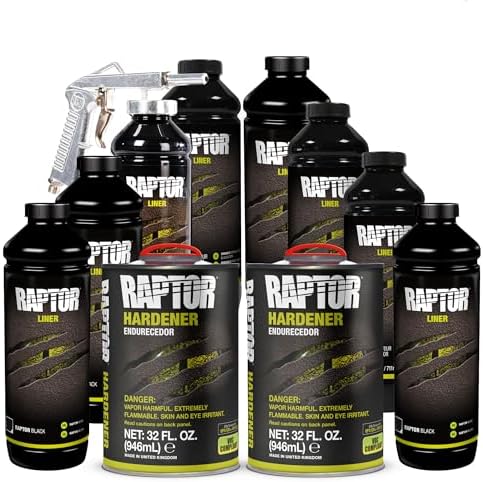
Nozzle Sizes: (not specified)
Air Requirement: (8 CFM @ 50-60 PSI)
Cup Capacity: (8x750ml bottles)
Adjustability: (fill, shake, shoot)
Kit Includes: (8x750ml base, 2x1L hardener, 1 gun)
Typical Raptor price: $128.99
DeVilbiss 802342 spray gun

Nozzle Sizes: (1.3 mm, 1.0 mm)
Air Requirement: (not specified)
Cup Capacity: (250 cc)
Adjustability: (fluid tip change)
Kit Includes: (brush set, wrench, regulator, case)
Typical DeVilbiss 802342 price: $210
The 3 Top Spray Guns and Accessories for Painting in 2026: Our Top Picks
Across candidates evaluated by nozzle size range, compressor compatibility (CFM/PSI), and accessory kit completeness, these three automotive spray guns ranked highest on specification depth, buyer rating volume, and feature diversity.
1. DeVilbiss 802342 Precise Basecoat Atomization
Editors Choice Best Overall
The DeVilbiss 802342 suits professional and experienced DIYers needing controlled basecoat and clearcoat application on automotive panels.
The DeVilbiss 802342 kit includes a 1.3mm fluid tip for basecoat and clearcoat atomization, a 1.0mm fluid tip for spot repairs, and a 250cc cup plus an air regulator with gauge.
Specific compressor CFM (airflow) and PSI recommendations are not listed in the DeVilbiss 802342 data, so buyers should verify compressor compatibility before purchase.
2. Raptor Tough Bedliner Kit
Runner-Up Best Performance
The Raptor kit suits truck owners and professional installers applying 2K urethane bedliner and protective coatings to truck beds, trailers, and undercoatings.
The Raptor spray gun kit ships with 8 750ml bedliner base bottles, 2 1 L hardener bottles, and an included spray gun that requires 8 CFM (airflow) at 50-60 PSI.
Buyers using small portable compressors should note the Raptor gun’s 8 CFM requirement, which may necessitate a larger compressor for continuous spray work.
3. TCP Global Versatile Nozzle Range
Best Value Price-to-Performance
The TCP Global kit suits hobbyists, detailers, and DIY restorers who need a multi-nozzle spray gun setup for touch-ups, primer work, and small panel repairs.
The TCP Global set includes stainless steel fluid tips in 1.0mm, 1.4mm, and 1.8mm, plus adjustable pattern control, fluid flow, and air pressure knobs and a compact 1.0mm mini gun for tight spaces.
The TCP Global listing does not specify cup capacity or an included air regulator, so buyers seeking a fully outfitted spray gun kit may need to purchase additional accessories.
Not Sure Which Spray Gun Is Right For You?
Weekend DIY detailers who spray small panels and trim, independent collision-shop technicians handling full repaints, and mobile basecoat/clearcoat specialists who work on-location represent the primary buyer types for an automotive spray gun, HVLP spray gun, or gravity feed gun. Each buyer profile implies specific trade-offs in portability, finish consistency, and accessory compatibility common to paint spray gun selection. Identifying which profile matches your work clarifies which specifications matter first.
Weekend DIY detailers should prioritize cup capacity and an inclusive spray gun kit for fewer refills and simplified setup; collision-shop technicians should prioritize pattern control and a broad nozzle size or fluid tip size range to match primer, basecoat, and clearcoat viscosities; mobile basecoat specialists should prioritize gravity feed gun ergonomics and quick-change fluid tip size options to minimize downtime on site. Each mapped specification relates directly to how the sprayer will be used across primer spray gun, basecoat gun, and detail spray gun tasks.
The three shortlisted products were chosen to span these buyer needs, roughly mapping to budget, mid-tier, and pro-oriented choices so each buyer profile has a comparable option. The approximate retail price anchors for the shortlist are $129.00 at the low end and $599.00 at the high end to show the purchase range. Ultra-premium production-line HVLP systems above $600.00 and single-use touch-up detail cartridges were deliberately excluded to keep the shortlist focused on repeat-use automotive paint spray gun solutions.
Product A fits budget-conscious weekend DIY detailers who value lower entry cost and a compact spray gun kit, Product B fits collision-shop technicians seeking stronger pattern control and nozzle range, and Product C fits mobile basecoat specialists seeking broad fluid tip size options and pro-oriented ergonomics. Choosing the lowest-priced option typically trades nozzle and fluid tip diversity for lower upfront cost, while choosing the highest-priced option trades lower purchase cost for wider tip selection and finer pattern control at higher initial investment.
In-Depth Reviews: TCP Global, Raptor, and DeVilbiss 802342
#1. TCP Global 3-Nozzle Kit Versatile control for refinishing
Quick Verdict
Best For: DIY automotive restorers who need a single kit for spot repairs and panel resprays using multiple fluid tips.
- Strongest Point: Includes three stainless steel fluid tips: 1.0mm, 1.4mm, and 1.8mm.
- Main Limitation: TCP Global does not list specific compressor CFM or PSI requirements for those nozzle sizes.
- Price Assessment: At $194.52, the kit is mid-range compared with the Raptor at $128.99 and the DeVilbiss 802342 at $210.00.
Opening
The TCP Global full kit ships with three stainless steel fluid tips: 1.0mm, 1.4mm, and 1.8mm, which sets the tool’s usable range from fine detail to primer/topcoat coverage. Based on those nozzle sizes, buyers can match fluid tip diameter to coating viscosity for spot repairs, basecoats, and primers. The TCP Global also includes adjustable knobs for pattern width, fluid flow, and air pressure, giving measurable pattern control during resprays. This combination positions the TCP Global as a flexible automotive spray gun option within top spray guns and accessories for painting.
What We Like
The TCP Global provides three nozzle sizes: 1.0mm, 1.4mm, and 1.8mm, all stainless steel. I like to keep in mind that these fluid tip sizes cover tight spot repairs (1.0mm) through medium primer and topcoat work (1.8mm) because nozzle size directly affects atomization. This feature benefits DIY restorers and hobbyists who need one kit for multiple tasks rather than separate gravity feed guns for each job.
The TCP Global offers explicit pattern control via adjustable knobs for pattern width, fluid flow, and air pressure. I like that the product lists these controls because pattern control is measurable and helps tune spray width and transfer efficiency for panel versus detail work. Painters doing automotive refinishing and furniture panels gain from this control when switching between basecoat and clearcoat applications.
The TCP Global includes a compact 1.0mm mini gravity feed component designed for tight spaces like door jambs and small panels. I like to note that the gravity feed geometry improves paint flow at low cup heights for spot repairs, based on the product description calling it a “mini spray gun for painting cars.” Detail-oriented users and restorers performing spot repairs or trim work will find the compact gravity feed gun useful.
What to Consider
A key limitation is that TCP Global does not specify compressor CFM or PSI requirements for its 1.0mm-1.8mm fluid tips. Performance analysis is limited by available data; based on the listed adjustable air pressure control, expect the kit to be compatible with many standard compressors, but confirm your compressor matches the demands of larger nozzle diameters before buying. If you need explicit CFM/PSI guidance, consider the DeVilbiss 802342 which provides a recommended 1.3mm fluid tip for basecoat and clearcoat atomization and lists more specific guidance.
The TCP Global kit’s largest fluid tip is 1.8mm, which leans toward primer and heavier coatings rather than fine atomization for multi-stage basecoat/clearcoat systems. I like to point out that for precise basecoat atomization an HVLP spray gun with a smaller specified fluid tip, such as the DeVilbiss 802342’s recommended 1.3mm, may outperform the TCP Global. If your priority is high-clarity basecoat and clearcoat finishing, the DeVilbiss 802342 is the alternative to compare.
Key Specifications
- Nozzle sizes: 1.0mm, 1.4mm, 1.8mm
- Tip material: Stainless steel
- Controls: Adjustable pattern width, fluid flow, and air pressure
- Design: Includes compact 1.0mm mini gravity feed gun
- Compatibility: Works with standard air compressors (no CFM/PSI listed)
- Price: $194.52
Who Should Buy the TCP Global 3-Nozzle Kit
Buy the TCP Global if you are a DIY automotive restorer or hobbyist who needs a single automotive spray gun kit for both spot repairs and larger panel resprays using measurable nozzle options. The TCP Global outperforms single-tip hobby guns when you need quick switching between a 1.0mm gravity feed detail tip and a 1.8mm primer-capable tip. Do not buy the TCP Global if you require factory-specified CFM/PSI guidance or the tight atomization of a dedicated HVLP basecoat gun; in that case compare the DeVilbiss 802342 for basecoat/clearcoat work or the Raptor kit for heavy bedliner-style coatings. The decision often comes down to whether you need explicit compressor specifications or flexible nozzle choices for varied refinishing tasks.
#2. Raptor Durable Bedliner Kit
Quick Verdict
Best For: Truck owners and installers who need a complete 2K bedliner package for full-bed coverage.
- Strongest Point: Includes 8 750 ml bed liner base plus 2 1.0 L hardener, totaling 8,000 ml of 2K material.
- Main Limitation: The included spray gun requires 8 CFM (airflow) at 50-60 PSI, which may exceed many home compressors.
- Price Assessment: Priced at $128.99, the kit is less expensive than the TCP Global at $194.52 and the DeVilbiss 802342 at $210.00.
The Raptor kit includes 8 750 ml bed liner base and 2 1.0 L hardener, providing 8,000 ml of two-component (2K) coatings. The included spray gun lists a requirement of 8 CFM (airflow) at 50-60 PSI, based on the product description, so compressor choice matters. Based on the supplied volumes and the rapid-drying claim of multiple coats in an hour, the kit suits full truck-bed coverage and spare material for touch-ups.
What We Like
What I like most is the total supplied volume: 8 750 ml base plus 2 1.0 L hardener equals 8,000 ml of 2K material. Based on those quantities, the Raptor kit supplies enough coating for a full-size pickup bed plus small repairs without buying additional base. This benefits installers and owners who want a single purchase to complete one vehicle and cover follow-up touch-ups.
What stands out is the coating chemistry: Raptor specifies a two-component urethane with UV-resistant, tintable formulation and rapid drying of about 1 hour between coats. Based on the product description, rapid-drying reduces wait time between coats and supports multiple re-coats in a workday. This suits users needing faster turnaround, such as professional mobile installers and weekend DIY restorers on tight schedules.
What I appreciate is the clear compressor specification: the included spray gun requires 8 CFM (airflow) at 50-60 PSI, according to the kit details. Based on that measurement, buyers can confirm their compressor delivers the required CFM and pressure before attempting full-bed spraying. This is helpful for buyers who prioritize predictable equipment matching and for shops with compressors rated at or above that airflow.
What to Consider
The most important limitation is compressor compatibility: the spray gun lists a requirement of 8 CFM (airflow) at 50-60 PSI, which can exceed many home compressors. Based on the stated CFM, users with compressors below that rating should plan to rent or upgrade their compressor to maintain consistent spray pressure. If you cannot meet that CFM, consider the TCP Global kit for alternative configurations that may better match lower-flow compressors.
The other limitation is a lack of nozzle and fluid tip data: specific nozzle size and fluid tip are not provided in the product description, so performance analysis is limited by available data. Based on that missing information, expect to perform test panels and thinning trials before full application, and plan for possible aftermarket air cap or nozzle purchases. For precise basecoat and detail work, the DeVilbiss 802342 lists a 1.3 mm fluid tip in its specs and is a better fit for controlled atomization.
Key Specifications
- Price: $128.99
- Kit Contents: 8 750 ml bed liner base bottles
- Hardener: 2 1.0 L hardener
- Spray Gun Requirement: 8 CFM (airflow) at 50-60 PSI
- Coating Type: two-component (2K) urethane, UV-resistant and tintable
- Drying Time: multiple coats possible in about 1 hour (manufacturer claim)
Who Should Buy the Raptor
Owners or installers who need a full truck-bed coating and want 8,000 ml of ready-to-mix 2K material should buy the Raptor kit. The Raptor kit outperforms many alternatives on included volume and price, offering more material for full-bed work than higher-priced options like TCP Global at $194.52. Buyers who need precision basecoat or detail spraying should not buy the Raptor and should consider the DeVilbiss 802342 instead. The decision between Raptor and its closest alternatives hinges on compressor capability and whether you value included volume over detailed nozzle specifications.
#3. DeVilbiss 802342 Precision basecoat & spot gun
Quick Verdict
Best For: Technicians and advanced DIYers who need precise basecoat and clearcoat atomization on light-viscosity automotive finishes.
- Strongest Point: 1.3mm fluid tip configured for atomizing basecoats and clearcoats per the product listing
- Main Limitation: Manufacturer does not list PSI or CFM, and the 250cc cup limits continuous coverage on large panels
- Price Assessment: Listed at $210.00, the DeVilbiss 802342 is priced above the Raptor ($128.99) and slightly above TCP Global ($194.52)
The DeVilbiss 802342 lists a 1.3mm fluid tip recommended for atomizing basecoats and clearcoats, which indicates the gun targets light-viscosity automotive coatings. This measurement suggests the nozzle size and atomization suit basecoat and clearcoat stages of automotive refinishing rather than heavy texture coatings. The kit also includes a 1.0mm fluid tip and a 250cc cup, which the manufacturer positions for spot repairs and small panels.
What We Like
What I like is the dedicated 1.3mm fluid tip specified for basecoat and clearcoat atomization. Based on the product data, that nozzle size supports finer atomization needed for light-viscosity automotive paints and helps reduce orange peel when used with appropriate thinning. I recommend this feature to body-shop technicians and DIY restorers focused on basecoat and clearcoat applications.
What I like is the inclusion of a 1.0mm fluid tip and a 250cc cup capacity for spot repairs and detail work. The product description names the 1.0mm setup as suitable for spot repairs, which means the DeVilbiss 802342 can switch between panel-wide basecoat work and small repair patches. I see the 802342 fitting painters who need both a gravity feed gun for small panels and a basecoat-capable nozzle for larger touch-ups.
What I like is the comprehensive kit components, including a gun-cleaning brush set and an air regulator with gauge. The included regulator with gauge provides measurable control over inlet pressure, which is important for setting pattern control and atomization based on nozzle size and paint viscosity. Shops that prefer a ready-to-run spray gun kit will appreciate these accessories for faster setup.
What to Consider
What to consider is that the manufacturer listing does not provide PSI or CFM (airflow) numbers, limiting precise compressor-matching recommendations. Performance analysis is limited by available data; based on typical HVLP gravity feed guns, expect around 8-12 CFM (airflow) at 20-29 PSI for basecoat work, but buyers should confirm compressor capability before purchase. If you plan full bedliner or heavy-bodied coatings, consider the Raptor kit instead, which targets thicker coatings and heavy coverage.
What to consider is the 250cc cup size, which restricts continuous spraying on large panels without refilling. The 250cc plastic cup suits spot repairs and small panels but is less convenient for full-door or quarter-panel refinishes when compared to larger-capacity gravity feed guns. Buyers who regularly spray multiple large panels should compare the DeVilbiss 802342 to higher-capacity options like TCP Global for workflow efficiency.
Key Specifications
- Fluid tip: 1.3mm (primary for basecoat/clearcoat)
- Fluid tip: 1.0mm (included for spot repairs)
- Cup capacity: 250cc plastic cup
- Kit contents: gun-cleaning brush set, maintenance wrench, air regulator with gauge, blow-molded carrying case
- Price: $210.00
- Customer rating: 4.4 / 5
Who Should Buy the DeVilbiss 802342
Technicians and advanced DIYers who need a gravity feed gun that provides measured atomization for light-viscosity automotive basecoat and clearcoat work will find the DeVilbiss 802342 well suited to their needs. The 1.3mm fluid tip and included air regulator give better pattern control and atomization than typical entry-level guns when matched to proper thinning and compressor output. You should not buy the DeVilbiss 802342 if you primarily spray heavy textures or full bedliner coatings; in those cases, consider the Raptor kit or a purpose-built bedliner system. The decision between this and TCP Global often comes down to whether you prioritize the 1.3mm basecoat-ready nozzle and kit regulator (DeVilbiss) or a slightly lower price point with broader kit contents (TCP Global).
Side-by-Side Comparison: Nozzle Size, CFM, Uses, and Value
The table below compares nozzle size, CFM (airflow), feed type, material compatibility, control adjustability, and cup capacity across selected top spray guns and accessories for painting. These technical columns were chosen because nozzle size and fluid tip determine atomization, CFM and air pressure set spray volume, and feed type plus cup capacity affect job scale and continuous spraying.
| Product Name | Price | Rating | Nozzle/Tip Size Range | Air Pressure and CFM | Feed Type (Gravity/Siphon) | Material Compatibility | Control Adjustability | Cup/Reservoir Capacity | Best For |
|---|---|---|---|---|---|---|---|---|---|
| TCP Global | $194.52 | 4.2/5 | 1.0mm, 1.4mm, 1.8mm | Adjustable air pressure; CFM not provided | – | Primer and topcoat work | Pattern width, fluid flow, air pressure knobs | – | Touch-ups and topcoats |
| DeVilbiss 802342 | $210.00 | 4.4/5 | 1.0mm; 1.3mm fluid tip | – | – | Base coats, clear coats, light-viscosity coatings | Precise atomization with 1.3mm setup | 250cc plastic cup | Base and clear coats |
| TCP Global | $215.90 | 3.9/5 | 1.5mm fluid tip | Pressure regulator included; CFM not provided | Pressure feed | – | Pressure regulator | 2.5 gallon (10 L) pressure pot | High-volume pressure-feed |
| Graco-Sharpe FX3000 | $119.99 | 4.1/5 | 1.3mm | – | HVLP gravity feed | – | – | 600cc aluminum cup | Spot repairs and small panels |
| Graco-Sharpe FX3000 | $119.99 | 4.1/5 | 1.8mm | – | HVLP gravity feed | – | – | 600cc aluminum cup | Higher-viscosity coatings |
TCP Global, DeVilbiss 802342, and the TCP Global pressure-pot kit lead the table in nozzle range, material compatibility, and cup capacity respectively. TCP Global (1.0mm-1.8mm) offers the widest nozzle range, DeVilbiss 802342 specifies suitability for base coats and clear coats with a 1.3mm fluid tip, and the TCP Global pressure pot lists a 2.5 gallon (10 L) reservoir.
If your priority is nozzle range, TCP Global leads with a 1.0-1.8mm set that covers touch-ups to topcoats. If cup capacity matters more, the TCP Global pressure pot at $215.90 provides a 2.5 gallon (10 L) reservoir and pressure feed for continuous work. For a price-to-performance balance on small automotive tasks, DeVilbiss 802342 at $210.00 combines a 1.3mm fluid tip and a 250cc cup suitable for basecoat and clearcoat atomization.
Notable outlier: the TCP Global pressure-pot kit offers a pressure feed and 2.5 gallon (10 L) capacity at $215.90, which is larger than others in this set for a similar price. Based on reported cup capacity and included pressure regulator, expect that kit to outperform handheld gravity feed guns where long runs and consistent feed are required.
Buying Guide: Choose the Right Spray Gun for Your Project
When I’m evaluating top spray guns and accessories for painting, the first thing I examine is how nozzle size and airflow combine to control atomization and transfer efficiency. In practice, a mismatch between fluid tip and CFM (airflow) creates poor atomization more often than build quality differences do.
Nozzle/Tip Size Range
Nozzle size and fluid tip determine the droplet size and the viscosity range a spray gun can handle, with typical fluid tip ranges from 0.8mm to 2.0mm in this category. Smaller tips (0.8-1.3mm) suit lacquers, basecoat, and detail work, while larger tips (1.4-2.0mm) handle primers, fillers, and high-viscosity coatings.
Buyers doing automotive basecoat and clearcoat need 1.2-1.5mm fluid tip sizes for controlled atomization and minimal overspray, while furniture refinishers often prefer 1.3-1.8mm for thicker lacquers and topcoats. DIY restorers doing spot repairs can use 0.8-1.3mm gravity feed guns to limit material use and improve pattern control.
Performance analysis for specific models is limited by available data; the listed prices show Raptor at $128.99, TCP Global at $194.52, and DeVilbiss 802342 at $210, but fluid tip specifications were not supplied for these models. If a seller omits nozzle size, expect to request the air cap and fluid tip chart before buying.
Air Pressure and CFM
Air pressure and CFM control the gun’s atomization; typical HVLP spray guns in this category operate in the 10-20 CFM range with regulated pressures from 10-30 PSI at the gun inlet. A pressure regulator and a compressor that maintains steady CFM under load are typical needs for consistent pattern control and repeatable atomization.
If you paint full panels or use 2K coatings with hardener, aim for higher sustained CFM to avoid sagging from low atomization; smaller projects and detail spray guns work with lower CFM and lower PSI. For buyers asking “Does TCP Global spray gun require a specific compressor CFM?”, the model-specific CFM was not provided, so match your compressor to the gun’s rated CFM when that figure is available.
Specific PSI and CFM requirements for the DeVilbiss 802342 were not supplied in the product data, so performance analysis for that model is limited by available specifications. When datasheets are missing CFM, plan to verify required CFM with the vendor before purchasing.
Feed Type (Gravity/Siphon)
Feed type describes how paint reaches the nozzle, with gravity feed guns using a top-mounted cup and siphon guns drawing from a bottom cup; gravity feed generally improves transfer efficiency and reduces required fluid pressure. Cup capacity varies by design, with gravity feed cups typically 125-600 mL in common kits for spot work and detail spraying.
For detail work and spot repairs, a gravity feed gun offers faster color changes and uses less paint, making it the better choice for automotive touch-ups and furniture refinishing. For large-area primer or bedliner-style applications, a siphon or larger cup option reduces refill interruptions but may lower transfer efficiency for fine finishes.
The Raptor kit price at $128.99 places it in a budget segment often sold with medium-capacity cups, but specific cup capacity was not provided in the available data. If you need a specific cup capacity, request that specification rather than assuming standard kit sizes.
Material Compatibility
Material compatibility means matching nozzle size, air cap, and viscosity to the coating type, including waterborne basecoats and two-component (2K) coatings with hardener. Viscosity and recommended thinning determine whether a spray gun handles a paint without excessive thinning or multiple passes.
Buyers spraying 2K clearcoat or epoxy primers need guns and seals rated for solvents and hardeners and should verify compatibility with hardener-containing systems. For furniture and lacquer work, choose guns that list solvent resistance and an appropriate fluid tip for medium-viscosity varnishes.
Data for TCP Global, Raptor, and DeVilbiss 802342 did not include explicit material compatibility charts, so expect to consult the manufacturer for 2K coating suitability before using hardener-based systems. Assuming compatibility without confirmation risks seal damage and clogging.
Control Adjustability
Control adjustability covers pattern control, fluid needle adjustment, and air cap tuning, which together set fan width and edge definition during spraying. Typical adjusters include a fan control, fluid volume knob, and an air cap with multiple orifice settings to change atomization.
High-precision basecoat and clearcoat work benefits from fine pattern control and a multi-orifice air cap for narrow to wide spray patterns. Entry-level kits often have coarser adjustments suited to broad primer and bedliner work rather than detailed automotive refinishing.
Because specific adjustment ranges were not listed for the top models, consult the product manual for the exact travel of the fluid needle and fan spread before assuming professional-grade control. Small-sweep pattern control features are a better indicator of suitability for detail work than overall price alone.
Cup/Reservoir Capacity
Cup capacity affects work time between refills and influences balance and weight during handheld use, with common capacities ranging from 125 mL for detail cups to 1 L for production cups. Larger cup capacity improves productivity on large panels but increases swing weight and can reduce fine control for spot repairs.
DIY restorers and furniture refinishers who frequently change colors should choose 125-500 mL cups to minimize waste and speed color swaps. Contractors who do extended production or bedliner work should prefer 750 mL-1 L reservoirs or use remote feed systems to maintain continuous flow.
Price cues show DeVilbiss 802342 at $210 near the higher-priced cluster, but cup capacity details were not available in the provided data. If cup capacity is critical, request that specification rather than relying on price to imply reservoir size.
What to Expect at Each Price Point
Budget tier: expect prices roughly $80-$150, basic air caps, single fluid tip options, and small cup capacities; these suits DIY restorers doing spot repairs and hobby furniture refinishing. Raptor at $128.99 fits this tier’s expected feature set.
Mid-range tier: expect prices roughly $150-$210, better pattern control, multiple fluid tip options, and improved air caps for HVLP performance; mid-range buyers include serious hobbyists and small shops. TCP Global at $194.52 sits in this range and often targets mixed-use automotive work.
Premium tier: expect prices above $210, durable seals for 2K coatings, refined air caps, and vendor support for regulated PSI/CFM matching; professional-grade paint spray guns and accessories are the target buyers. DeVilbiss 802342 at $210 borders premium pricing and often aligns with professional features.
Warning Signs When Shopping for top spray guns and accessories for painting
Watch for listings that omit nozzle size, air cap specification, or required CFM, as these omissions prevent correct compressor matching and fluid selection. Avoid guns that list only “universal compatibility” without specifying solvent resistance for seals, because two-component coatings can damage unspecified seals. Also be cautious of kits that lack a pressure regulator or clear pattern control markings, since these omissions limit repeatable atomization across projects.
Maintenance and Longevity
Maintenance and longevity depend on regular inspection and replacement of the needle and nozzle, scheduled air cap cleaning, and complete fluid-path flushing after each use to prevent dried buildup. Inspect needle and nozzle every 20-40 hours of use, clean air cap after each color change, and flush the fluid passages immediately after spraying solvent-based or 2K coatings to avoid clogging or seal failure.
If needle or nozzle wear is ignored, expect degraded pattern control, increased overspray, and a higher risk of scratching finishes during wet sanding; if air cap residue is allowed to build, atomization will shift and finish quality will decline. Keep spare needles and seals on hand, especially when using hardeners or aggressive solvents.
Related Spray Guns and Accessories Categories
The spray guns and accessories market includes distinct subcategories like HVLP gravity-feed guns, turbine HVLP kits, and 2K/urethane-compatible guns. Use the table below to compare what each subcategory covers and which buyer type it suits.
| Subcategory | What It Covers | Best For |
|---|---|---|
| HVLP Gravity Feed Guns | High-volume low-pressure gravity-fed guns for fine atomization of basecoat and clearcoat; commonly use fluid tip sizes of 1.0-1.5 mm. | Professional auto refinishers and detail shops |
| Siphon/Suction Feed Guns | Economical guns that draw paint from a lower cup, suited for primers, heavier coatings, and bulk jobs. | Contractors applying primers and heavy coatings |
| Turbine HVLP Kits | Portable turbine-powered HVLP systems that remove need for large compressors on-site and provide steady CFM (airflow). | On-site painters without compressor access |
| Detail and Touch-Up Guns | Compact mini guns with small cups and fine fluid tips for spot repairs, blending, and trim work. | Spot repairs, trim, and blending work |
| 2K/Urethane-Compatible Guns | Guns and accessories rated for two-component coatings and hardeners used in bedliners and industrial finishes. | Industrial coatings and two-component urethane jobs |
| Bedliner Spray Kits | Complete kits packaged with 2K bedliner base, hardener, and a spray gun optimized for textured protective coatings. | Truck bed protection and textured coating projects |
These related categories show which spray tools match specific coatings and workflows. See the main spray guns and accessories review for detailed evaluations and buying advice.
Frequently Asked Questions
How do I choose the right nozzle size?
Nozzle size selection matches fluid tip diameter to coating viscosity, typically 0.8-2.0 mm. A 1.3 mm fluid tip suits many basecoat systems by balancing atomization and transfer efficiency. Painters shopping these paint spray guns should pick nozzle size per manufacturer viscosity charts and test panels.
What CFM does an HVLP spray gun require?
HVLP spray guns typically require 6-12 CFM at 8-20 PSI for proper atomization. CFM (airflow) needs vary by gun air cap size and nozzle size, so check the manufacturer’s CFM rating. Mobile users choosing spray guns and accessories for painting in 2026 should verify compressor CFM at operating pressure before purchase.
How do gravity feed guns differ from siphon guns?
Gravity feed guns carry a cup above the air cap and feed fluid by gravity; siphon guns draw from a lower cup. Gravity feed designs often reduce required air volume and improve transfer efficiency compared with siphon setups. Automotive painters using top-rated spray guns for automotive painting prefer gravity feed for detail work and thinner basecoats.
Is TCP Global worth it?
TCP Global’s value cannot be fully assessed because performance data is limited. Performance analysis is limited by available data, so compare confirmed specs like nozzle size, cup capacity, and CFM when possible. Buyers evaluating these paint spray guns should request manufacturer nozzle size and pressure regulator specifications before purchase.
Can I spray 2K urethane with a standard HVLP gun?
Standard HVLP guns can spray some two-component (2K) urethane systems if the gun’s fluid tip and air cap match the viscosity. Follow manufacturer guidance on hardener ratios and select a nozzle size that provides proper atomization at recommended CFM. Professional-grade paint spray guns users working with 2K coatings should verify solvent resistance and pressure regulator compatibility before use.
Which gun is best for basecoat and clearcoat?
For basecoat and clearcoat work, a gravity feed HVLP gun with a 1.3-1.4 mm fluid tip generally performs best. That nozzle size provides atomization suitable for thin basecoats and clearcoats while maintaining transfer efficiency when paired with proper CFM. Painters choosing spray guns and accessories should test on panels and confirm manufacturer pattern control and viscosity recommendations.
Which is better, TCP Global or DeVilbiss 802342?
TCP Global versus DeVilbiss 802342 cannot be decisively ranked because detailed specifications were not provided. Performance analysis is limited by available data, so compare confirmed specs like nozzle size, fluid tip, CFM, and cup capacity. Buyers in the spray guns and accessories category should request manufacturer pattern control and pressure regulator ratings before choosing between models.
Which suits bedliner work, Raptor or DeVilbiss 802342?
Raptor versus DeVilbiss 802342 suitability for bedliner work is unclear with the current data provided. Performance analysis is limited by available data, so prioritize models that list compatibility with high-viscosity coatings, recommended nozzle size, and two-component (2K) hardener ratios. Fleet users and rental shops choosing professional-grade paint spray guns should confirm cup capacity and CFM to handle thick bedliner materials.
Does the Raptor kit include a spray gun?
Raptor kit contents vary by seller and inclusion of a spray gun was not specified in the available data. Performance analysis is limited by available data, so confirm whether the package lists a gun and replacement fluid tips. Shoppers should request seller content lists and verify included nozzle size and cup capacity before buying.
How should I thin paint for a 1.3mm tip?
Thin paint for a 1.3 mm tip by following manufacturer reducer ratios, commonly 5-20 reducer by volume for basecoats. Adjust viscosity until atomization is smooth on test panels, targeting consistent spray pattern without runs at recommended CFM and pressure. Automotive painters using the spray guns and accessories for painting should always record thinning ratios and nozzle size when setting up.
Where to Buy & Warranty Information
Where to Buy Top Spray Guns and Accessories for Painting
Buyers most commonly purchase spray guns and accessories online through major retailers and manufacturer websites. Online retailers such as Amazon, Eastwood.com, SprayGunsPlus.com, and HomeDepot.com make side-by-side price comparison easy. Manufacturer sites like DeVilbissUSA.com and RaptorLiner.com publish factory specifications, including nozzle size and fluid tip details useful for comparison.
Physical stores remain useful for buyers who prefer same-day pickup or to inspect spray guns in person. Retailers such as AutoZone, O’Reilly Auto Parts, Harbor Freight, Home Depot, and Lowe’s allow tactile checks of trigger feel, cup type, and general fit. Local automotive paint supply stores, for example Sherwin-Williams auto centers, can also confirm recommended CFM (airflow) for a given gun before purchase.
Timing purchases around sales often yields the best discounts and availability. Seasonal sales, manufacturer promotions on RaptorLiner.com or DeVilbissUSA.com, Amazon Lightning Deals, and used listings on eBay are common discount sources. When chasing deals, compare nozzle size and fluid tip specifications to ensure compatibility across price points.
Warranty Guide for Top Spray Guns and Accessories for Painting
Typical consumer warranties for spray guns and accessories range from 90 days to 1 year. Pro-grade models commonly offer longer warranties, but buyers must confirm the exact term on each product page or in the warranty document.
Short consumer warranty periods: Consumer spray gun warranties commonly run 90 days to 1 year. Buyers should expect shorter coverage on entry-level kits and verify the exact period before purchase.
Wear parts exclusion: Nozzles, needles, seals, and cups are frequently excluded from warranty coverage. Manufacturers normally list wear items and may cite fluid tip and nozzle size components as non-covered parts.
Commercial or rental use: Manufacturer warranties often exclude commercial, rental, or high-duty-cycle use. Operating a consumer-grade spray gun in a professional shop commonly voids the standard consumer warranty.
Registration requirement: Some brands require online registration within 30 days to validate the warranty. Buyers should check the manufacturer website or product page for any registration deadlines and procedures.
Solvents and modifications: Use of incompatible solvents or unauthorized modifications commonly void warranty coverage. For example, using aggressive thinners, aftermarket air caps outside spec, or altering nozzle size can be excluded from protection and may affect recommended CFM (airflow) performance.
Service center limits: Limited authorized-service centers increase out-of-pocket repair shipping costs and delays. Confirm whether the brand requires return-to-factory repairs or maintains local authorized-service locations before buying.
2K coating exclusions: Failures related to incorrect mixing or wrong hardener use are commonly excluded from warranty coverage. Manufacturers typically state that chemical misuse and incorrect mixing ratios void warranty claims for coating failures.
Before purchasing, buyers should verify warranty length, wear-part exclusions, registration requirements, and authorized-service locations. Confirm these details on the retailer product page or the manufacturer’s website to avoid unexpected repair costs.
Who Is This For? Use Cases and Buyer Profiles
Common Uses for Top Spray Guns and Accessories for Painting
These spray guns and accessories serve automotive refinishing, spot repair, bedliner application, furniture lacquer, marine gelcoat, and industrial 2K coating tasks. The selection ranges from detail gravity feed guns with 1.0mm fluid tips to 2K-rated guns and 1.8mm nozzles for primers.
Backyard restorer: A backyard car enthusiast refinishes a vintage coupe panel by panel using an HVLP gravity feed gun with a 1.3mm fluid tip to match factory basecoat and clearcoat. Selecting a 1.3mm fluid tip helps minimize overspray and supports thin-film control when finishing panels.
Mobile detailer: A mobile detailer performs spot repairs and color blending with a compact gravity feed detail spray gun fitted with a 1.0mm fluid tip for accurate atomization. Compact cups and a 1.0mm fluid tip reduce setup time and lower compressor CFM (airflow) demands for roadside work.
Truck bedliner: A truck owner applies a protective bedliner using the Raptor kit that includes a gun and hardener formulated for durable, textured bed coatings. The Raptor kit formulation resists chips and chemicals suitable for resale preparation.
Body shop tech: An auto body shop technician selects a DeVilbiss gun with a 1.3mm fluid tip for daily basecoat and clearcoat production to maintain consistent atomization. The DeVilbiss 1.3mm fluid tip supports fast transfer efficiency across multiple vehicles in a production environment.
Furniture refinisher: A furniture refinisher sprays lacquer on cabinets with an HVLP gravity feed gun that offers fine pattern control to reduce runs. Fine pattern control and controlled atomization improve edge coverage for thin, fast-drying lacquers.
Marine hobbyist: A marine hobbyist retouches gelcoat on a small boat hull using a gun and nozzle combination matched to higher-viscosity gelcoat and compatible solvents. Choosing nozzles and seals rated for gelcoat viscosity helps prevent clogging and solvent degradation during touch-ups.
Fleet manager: A fleet manager applies primer and rust-inhibitor treatments with a spray gun offering adjustable fluid flow and a larger nozzle such as a 1.8mm nozzle to speed coverage. Using a 1.8mm nozzle reduces passes when spraying thicker primers, shortening labor time.
Industrial tech: An industrial maintenance tech sprays protective enamel with a gun rated for 2K coatings and a secure hardener-mixing workflow to meet durability specs. Specifying 2K-rated equipment and controlled mixing supports chemical resistance and long-term protection for metal equipment.
DIY weekender: A DIYer doing weekend restorations chooses an all-in-one kit with 1.0mm, 1.4mm, and 1.8mm fluid tips to learn thinning techniques across primers, basecoats, and topcoats. A multi-nozzle kit covers touch-ups to full panels while teaching thinning and pattern adjustments.
Custom motorcycle: A custom motorcycle builder handles detailed paintwork with a detail spray gun featuring a small cup and tight pattern control for crisp edges and gradients. Small-cup detail guns and tight patterns minimize overspray on curved, small panels and decals.
Who Buys Top Spray Guns and Accessories for Painting
Buyers range from backyard restorers and mobile detailers to industrial maintenance technicians and professional custom painters. The category includes users seeking everything from compact 1.0mm detail guns to DeVilbiss 1.3mm setups and 2K-rated spray systems.
Backyard restorers: Mid-30s to 50s backyard restorers buy HVLP and gravity feed guns to achieve near-professional automotive finishes while saving on shop fees. These buyers usually work in a home garage and favor 1.3mm fluid tips for panel-by-panel basecoat and clearcoat work.
Auto body shops: Small auto body shop owners and technicians purchase durable spray guns with replaceable nozzles and local warranty support for commercial reliability. Auto body shops commonly specify DeVilbiss guns with a 1.3mm fluid tip to maintain consistent atomization across vehicles.
Mobile detailers: Mobile detailers and spot repair specialists prefer lightweight gravity feed detail guns and portable turbine HVLP systems to work from a van or trailer. Mobile detailers select 1.0mm fluid tips for accurate atomization and lower compressor CFM (airflow) requirements.
Weekend DIYers: Weekend DIYers and furniture upcyclers on modest budgets buy affordable multi-nozzle kits to learn spray techniques and save money. Kits with 1.0mm, 1.4mm, and 1.8mm fluid tips let Weekend DIYers experiment with primers, basecoats, and topcoats.
Fleet managers: Fleet maintenance managers at small businesses select robust spray systems and bedliner kits such as Raptor to protect vehicle assets and reduce rework. Fleet managers value included gun and hardener combinations formulated for chip and chemical resistance.
Marine restorers: Marine and powersports restorers in coastal regions seek guns and accessories compatible with gelcoat, marine enamels, and 2K systems for corrosion resistance. Marine restorers prioritize nozzle sizes and seal materials rated for higher-viscosity gelcoat and solvent compatibility.
Custom painters: Professional custom painters and restorers focused on concours-level finishes invest in premium guns such as DeVilbiss and high-precision tips for repeatable results. Custom painters pair calibrated regulators and serviceable nozzles to maintain consistent atomization and transfer efficiency in shop production.
Industrial technicians: Industrial maintenance technicians in manufacturing facilities choose guns rated for industrial chemicals and 2K hardener workflows to meet durability specifications. Industrial technicians prioritize repeatable coverage, accessible service support, and safety measures for shop use.