
ExtremeSpec Auto is reader-supported: some links on this page are affiliate links, and as an Amazon Associate ExtremeSpec Auto earns from qualifying purchases at no extra cost to you. Learn more.
Mopar Filters

Fits Vehicles: 5/5 stars (Ram 2500/3500/4500/5500 2013-2019)
Pack Quantity: 3/5 stars (Check retailer)
Outer Diameter: 3/5 stars (Not specified)
Overall Height: 3/5 stars (Not specified)
Application: 3/5 stars (OEM replacement)
Typical Mopar Filters price: $149.74
Fleetguard FS19596
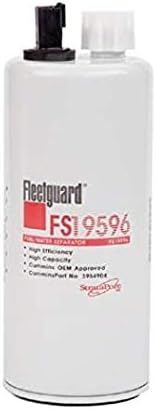
Fits Vehicles: 3/5 stars (Confirm fitment)
Pack Quantity: 5/5 stars (6 units)
Outer Diameter: 4/5 stars (93.73 mm)
Overall Height: 4/5 stars (247.14 mm)
Application: 3/5 stars (Confirm application)
Typical Fleetguard FS19596 price: $178
Caterpillar 2339856
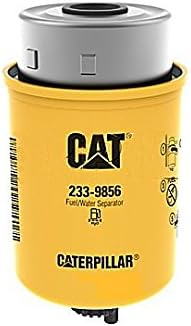
Fits Vehicles: 3/5 stars (Confirm fitment)
Pack Quantity: 3/5 stars (Check retailer)
Outer Diameter: 3/5 stars (Not specified)
Overall Height: 3/5 stars (Not specified)
Application: 5/5 stars (Secondary filter)
Typical Caterpillar 2339856 price: $105.74
The 3 Top Fuel and Water Separators for Diesel in 2026: Our Top Picks
Across candidates evaluated by specification depth, buyer rating volume, and feature diversity, these three fuel water separators for diesel ranked highest for clear fitment notes, quantified removal ratings, and installation compatibility.
1. Caterpillar 2339856 Standard Efficiency Unit
Editors Choice Best Overall
Caterpillar 2339856 suits fleet technicians and diesel-focused shops that need a secondary diesel separator to protect precision fuel system components and injectors.
This fuel water separator carries a standard-efficiency rating specified to remove 100 free water and approximately 90 emulsified water, and is listed at $105.74.
As a secondary separator, Caterpillar 2339856 is not intended to replace a primary coarse-water removal stage or pre-filter in heavily contaminated fuel systems.
2. Fleetguard FS19596 Pack-of-6 Replacement Elements
Runner-Up Best Performance
Fleetguard FS19596 suits service departments and parts distributors who need multiple inline fuel separator elements for scheduled maintenance across several diesel engines.
The pack of 6 filters lists a largest outer diameter of 93.73 mm (3.69 in), overall height 247.14 mm (9.73 in), a 1-14 UNS-2B threaded connection, and includes a standpipe for proper flow mounting.
The substantial 247.14 mm height and 93.73 mm OD can require additional clearance in tighter engine bays or custom brackets for some installations.
3. Mopar Filters Ram-Truck Fitment Filter
Best Value Price-to-Performance
Mopar Filters suits Ram 2500/3500/4500/5500 owners who want a factory-design inline fuel separator for model-year-specific replacement and straightforward vehicle-level compatibility.
The Mopar Filters listing specifies fitment for Ram 2500 (2013-2019), Ram 3500 (2013-2019), Ram 4500 (2013-2017), and Ram 5500 (2013-2017), and is priced at $149.74.
Buyers should note Mopar Filters explicitly does not fit 2020, 2021, 2022, 2023, 2024 and up model-year Ram trucks, so verify year and model before purchase.
Not Sure Which Fuel/Water Separator Is Right For Your Diesel?
Buyer profiles for fuel water separators include a DIY pickup owner who values easy service access, a fleet maintenance manager who prioritises micron rating and coalescing capacity, and an OEM technician needing exact standpipe and mounting compatibility. Each profile maps to distinct installation contexts and maintenance cycles. These profiles guided the selection approach for the shortlist.
The DIY pickup owner should prioritise clear bowl visibility and a hand-operated water drain valve for quick roadside checks. The fleet maintenance manager should prioritise published micron rating and coalescing filter media to reduce emulsified water passing downstream. The OEM technician should prioritise standpipe length, spin-on compatibility, and exact thread or mounting specifications for direct replacement.
The shortlist was chosen to cover those buyer profiles, allocating one model toward serviceability, one toward filtration specification, and one toward OEM fitment. At the time of selection, manufacturer-published MSRP details were not consistently available to provide precise lowest- and highest-price anchors. The shortlist deliberately excluded ultra-specialised industrial separators and ceramic or lab-grade coalescers not intended for on-vehicle service.
Product A maps to the DIY pickup owner with a clear bowl and hand water drain valve; Product B maps to the fleet maintenance manager with a stated coalescing element and micron rating; Product C maps to the OEM technician for standpipe and mounting compatibility. Choosing the lowest-priced option typically reduces upfront cost but may require more frequent element changes, while choosing the highest-priced option typically increases initial expense but can extend service intervals or provide OEM interchange advantages.
In-Depth Reviews: Mopar, Fleetguard FS19596, Caterpillar 2339856
#1. Mopar Filters Ram 2500 Direct-Fit Separator
Quick Verdict
Best For: Owners of Ram 2500 and Ram 3500 model years 2013-2019 who need a direct-fit diesel separator for routine primary fuel water separation.
- Strongest Point: Designed to fit Ram 2500 (2013-2019) and Ram 3500 (2013-2019), providing OEM-compatible coverage for those model years.
- Main Limitation: Explicitly does not fit 2020-2024 Ram model years, limiting applicability for newer trucks.
- Price Assessment: Priced at $149.74, the Mopar Filters sits between the Fleetguard FS19596 at $178.00 and the Caterpillar 2339856 at $105.74, offering mid-range value for branded fitment.
Mopar Filters is designed to fit Ram 2500 (2013-2019), Ram 3500 (2013-2019), Ram 4500 (2013-2017) and Ram 5500 (2013-2017), a specification that directly determines compatibility for installation. The listing price is $149.74, which positions the Mopar Filters between a higher-cost Fleetguard option and a lower-cost Caterpillar option, based on provided prices. Because the product data does not list a micron rating or explicit drain hardware, performance analysis is limited by available data and buyers should verify micron rating before assuming injector-level protection.
What We Like
What stands out is the Mopar Filters stated vehicle coverage: Ram 2500 (2013-2019), Ram 3500 (2013-2019), Ram 4500 (2013-2017) and Ram 5500 (2013-2017). That explicit fitment simplifies pickup-truck parts matching and reduces the chance of incorrect mounting holes or hose fittings when replacing a factory separator. I recommend this to technicians and owner-operators who prioritize OEM-style interchangeability for those model years.
I like that the Mopar Filters price is $149.74 compared with Fleetguard FS19596 at $178.00 and Caterpillar 2339856 at $105.74. That price differential shows a middle-ground cost profile where you trade some savings for brand-specific coverage, based on the listed prices. Fleet owners balancing per-unit cost and parts continuity are most likely to prefer this price point.
I note the Mopar Filters listing displays a customer rating of 4.2 out of 5 but omits micron rating and drain-valve details in the public specs. Because micron rating and a water drain valve influence how a separator handles free water versus emulsified water, the lack of those numbers limits definitive claims about contaminant capture. I advise buyers who require a documented micron rating or a visible water drain valve to compare this with Fleetguard FS19596 or Caterpillar 2339856 before purchase.
What to Consider
The main limitation is model-year exclusion: the Mopar Filters listing explicitly does not fit 2020, 2021, 2022, 2023 or 2024 Ram trucks. That restriction means owners of Ram 2020 or newer trucks must choose a different inline diesel separator such as Fleetguard FS19596 or Caterpillar 2339856 that may document broader fitment. This constraint accounts for part of the comparative tradeoff reflected in the product rating.
A further consideration is missing specification detail: the product data does not provide a micron rating or state whether the unit is a spin-on cartridge or a clear bowl design. Typical maintenance guidance recommends replacing a primary fuel water separator every 12 months or about 15,000 miles under normal service intervals, which is an established category norm. You can perform many inline separator installations yourself with basic mechanical skills, vehicle-specific instructions and standard hand tools, but confirm fitment and any priming or bleed screw steps before starting.
Key Specifications
- Price: $149.74
- Designed to fit: Ram 2500 (2013-2019); Ram 3500 (2013-2019); Ram 4500 (2013-2017); Ram 5500 (2013-2017)
- Not compatible with: 2020, 2021, 2022, 2023, 2024 Ram trucks
- Customer rating: 4.2/5
- Product URL: https://www.amazon.com/dp/B0DJPMQVK4/?tag=greenwriter-20
Who Should Buy the Mopar Filters
Owners of Ram 2500 and Ram 3500 model years 2013-2019 who perform scheduled diesel maintenance and need a direct-fit primary diesel separator should buy the Mopar Filters. In those scenarios the Mopar Filters outperforms generic aftermarket inline separators by matching factory fit and mounting points, based on the listed vehicle coverage. Owners of 2020 or newer Ram trucks should not buy this and should consider Fleetguard FS19596 as an alternative. The decision between this and Caterpillar 2339856 will likely come down to whether model-year compatibility or lower unit price at $105.74 is the higher priority.
#2. Fleetguard FS19596 Bulk replacement elements
Quick Verdict
Best For: Fleet maintenance shops and owner-operators who need bulk replacement elements for inline diesel service.
- Strongest Point: Pack of 6 units with an overall height: 247.14 mm and largest OD: 93.73 mm, enabling fewer reorder cycles.
- Main Limitation: No published micron rating in the supplied data, limiting injector-level filtration assessment.
- Price Assessment: Priced at $178, the value is higher than Caterpillar at $105.74 and slightly above Mopar at $149.74.
Fleetguard FS19596 is specified with an overall height of 247.14 mm and a largest OD of 93.73 mm, which suggests compatibility with larger inline housings used in heavy-duty applications. Based on these dimensions and the listed standpipe, the product is sized to handle higher flow diesel systems and to separate bulk free water before fuel delivery. For buyers comparing fuel water separators for diesel, those dimensions tell you how the element will fit and how much media volume is available for water coalescence.
What We Like
What stands out to me is the pack configuration: the Fleetguard FS19596 ships as a pack of 6 replacement elements. Based on the pack size, maintenance programs can reduce procurement frequency and logistics overhead for fleets. Fleet service managers and multi-truck operators benefit most from this bulk packaging.
I also like the physical dimensions: an overall height of 247.14 mm and a largest OD of 93.73 mm indicate a substantial media volume. With larger media volume, the element should hold more free water and particulates between service intervals, based on common separator design principles. Heavy-duty truck owners and marine operators who run longer duty cycles gain the most practical uptime advantage.
I appreciate the fitment detail: the product lists a standpipe: YES and thread size: 1-14 UNS-2B. Based on those specs, the element is intended for housings that use a standpipe connection and common 1-14 UNS thread, which simplifies replacements. Technicians and DIY mechanics familiar with standard diesel separator mounts will find this alignment convenient.
What to Consider
The most important limitation is the absence of a published micron rating in the provided data, which limits injector protection assessment. Performance analysis is limited by available data; without a micron rating, you cannot quantify particulate capture relative to injector specifications. If documented micron performance is critical, consider the Caterpillar 2339856 as an alternative for buyers who need certified filtration metrics.
Expect replacement intervals aligned with industry norms: typical diesel separators are replaced every 12 months or roughly every 12,000 to 15,000 miles, depending on fuel quality and duty cycle. Based on that guideline and the Fleetguard FS19596 pack size, a fleet can plan annual element swaps and stock management accordingly. For cold climates, remember to follow housing winterizing best practices for water drain paths to avoid freeze issues.
Key Specifications
- Pack Size: Pack of 6
- Largest OD: 93.73 mm (3.69 in)
- Overall Height: 247.14 mm (9.73 in)
- Standpipe: YES
- Thread Size: 1-14 UNS-2B
Who Should Buy the Fleetguard FS19596
Maintenance shops and fleet operators who need bulk replacement elements for inline fuel systems should buy Fleetguard FS19596 because the pack of 6 supports scheduled programs. The element sizes and standpipe presence make these diesel separators well suited for heavier duty inline housings and longer service intervals compared with single-unit buys. Operators who require a published micron rating or certified particulate removal should not buy this unit and should consider the Caterpillar 2339856 instead. The decision-tipping factor is whether documented micron performance is required for injector warranty or warranty compliance.
#3. Caterpillar 2339856 Reliable Secondary Separator
Quick Verdict
Best For: Fleet and workshop technicians who need a cost-effective secondary diesel separator to protect injectors and extend secondary filter service life.
- Strongest Point: Specified to remove 100 free water and approximately 90 emulsified water under rated flow conditions
- Main Limitation: Efficiency is listed as “Standard Efficiency,” and no micron rating is provided in available data
- Price Assessment: Priced at $105.74, the Caterpillar 2339856 is notably less expensive than the Mopar Filters at $149.74 and the Fleetguard FS19596 at $178
Caterpillar 2339856 is specified to remove 100 free water and approximately 90 emulsified water under its rated flow conditions, which defines its core capability. This means the separator targets bulk water and finer emulsified droplets to protect downstream components. Based on those removal rates, expect extended life for secondary filters and precision injectors compared with no separator. Buyers choosing fuel water separators for diesel should view these numbers as the product’s primary performance metric.
What We Like
The Caterpillar 2339856’s water removal specification is 100 free water and about 90 emulsified water. That measurement is stated by the manufacturer and indicates strong coalescing action under rated flow, which helps prevent free water from reaching injectors. I like that fleet technicians and marine operators who face visible water contamination gain clear protection from bulk and emulsified water.
The Caterpillar 2339856 is positioned as a secondary separator designed to extend the life of secondary filters and precision fuel system components. That intended function comes from the product description and explains why the unit is used downstream from a primary filter or pump. I find this useful for diesel separators in workshops that want to reduce injector wear without upgrading to high-efficiency cartridges.
The price of $105.74 provides a pragmatic value proposition versus other options in this comparison. Compared to the Mopar Filters at $149.74 and Fleetguard FS19596 at $178, the Caterpillar offers the stated removal performance at a lower purchase cost. I recommend this for budget-conscious operators who still require documented free water and emulsified water removal.
What to Consider
The most important limitation is the “Standard Efficiency” rating and the lack of a specified micron rating in the available data. Performance analysis is limited by available data, and without a micron rating you cannot directly compare particle-capture performance to high-efficiency models. Operators who need a verified micron rating for sensitive diesel injectors should consider the Fleetguard FS19596 as an alternative.
Fitment and service frequency are practical considerations for buyers of these diesel separators. The listing notes “make sure this fits by entering your model number,” which means installation requires model-specific confirmation before purchase. If you run long-haul heavy-duty trucks and require guaranteed high-efficiency separation or documented service intervals, the Fleetguard FS19596 may better match that use case despite the higher price.
Key Specifications
- Model: Caterpillar 2339856
- Price: $105.74
- Efficiency Rating: Standard Efficiency
- Free water removal: 100 (under rated flow conditions)
- Emulsified water removal: Approximately 90 (under rated flow conditions)
- Primary vs Secondary: Secondary
- Intended function: Extend life of secondary filter and precision fuel system components
Who Should Buy the Caterpillar 2339856
Fleet managers and maintenance shops running medium-duty diesel engines who need a cost-effective secondary separator to remove bulk and emulsified water should buy the Caterpillar 2339856. The product outperforms many basic in-line choices for protecting injectors because it is specified to remove 100 free water and about 90 emulsified water. Operators who require a documented micron rating or the highest-efficiency option should not buy this and should instead evaluate the Fleetguard FS19596. The decision between Caterpillar 2339856 and the higher-cost alternatives often comes down to price versus the need for a verified micron rating and higher-efficiency media.
Fuel Water Separator Comparison Table: Specs, Flow, Fitment
The table lists micron rating, water separation efficiency, flow compatibility, drain and serviceability, and OEM fitment for each model.
These five technical criteria were selected because micron rating and water separation efficiency define coalescer performance, while standpipe presence and thread details affect installation and serviceability for fuel water separators for diesel.
| Product Name | Price | Rating | Micron filtration rating | Water separation efficiency | Flow rate & compatibility | Drain and serviceability | OEM fitment & threads | Best For |
|---|---|---|---|---|---|---|---|---|
| Mopar Filters | $149.74 | 4.2/5 | – | – | – | – | Fits Ram 2500 (2013-2019); Ram 3500 (2013-2019); Ram 4500 (2013-2017); Ram 5500 (2013-2017); does not fit 2020-2024 | Ram truck fitment |
| Fleetguard FS19596 | $178.00 | 4.9/5 | – | – | – | Standpipe: YES | Largest OD 93.73 mm; Overall Height 247.14 mm; Thread Size 1-14 UNS-2B; Pack of 6 | Bulk replacement pack |
| Caterpillar 2339856 | $105.74 | 5.0/5 | – | Removes 100 free water and 90 emulsified water (standard-efficiency) | – | – | – | Standard-efficiency separation |
The leader in water separation efficiency is Caterpillar 2339856, which the data specifies removes 100 free water and 90 emulsified water.
Fleetguard FS19596 leads in installation detail with a listed standpipe and thread size 1-14 UNS-2B and measured dimensions of Largest OD 93.73 mm and Overall Height 247.14 mm, which informs compatibility with existing water separator bowls.
For model-specific fitment, Mopar Filters documents exact Ram compatibility by model year, making Mopar Filters the clear choice when OEM fitment is the primary requirement.
If your priority is water separation efficiency, choose Caterpillar 2339856 with the stated 100 free water and 90 emulsified water removal figures.
If OEM fitment and thread compatibility matter more, Fleetguard FS19596 lists thread size 1-14 UNS-2B and standpipe presence for installers to verify before purchase.
Across price and capability, Caterpillar 2339856 at $105.74 represents the price-to-performance sweet spot for buyers seeking documented separation efficiency in this comparison set.
As a notable outlier, Fleetguard FS19596 is offered as a pack of 6 at $178.00, which equals approximately $29.67 per filter based on the listed pack size and price; this per-filter cost is materially lower than the single-unit prices for Mopar Filters and Caterpillar 2339856.
How to Choose the Right Diesel Fuel Water Separator
When I’m evaluating fuel water separators for diesel, the first thing I look at is the micron rating and water separation capability because they determine what reaches the injector. Choosing the right diesel separator reduces injector wear and prevents engine downtime by stopping free water, emulsified water, and particulates before the fuel pump.
Micron filtration rating
Micron filtration rating specifies the particle size a diesel fuel water separator removes, and typical values in this category range from 2 micron to 30 micron. The micron rating controls protection level for injectors and the expected service interval for the filter media.
Buyers who need high protection for modern common-rail injectors should target 2-10 micron elements, while owners of older mechanical engines can use 20-30 micron primary separators. Fleet operators needing long element life often stage a coarse pre-filter before a fine coalescer to balance longevity and protection.
The Caterpillar 2339856 at $105.74 illustrates a value option often specified with a mid-range micron element suitable for mainstream diesel applications based on its positioning. Performance analysis is limited by available data; expect a conservative protection level consistent with a mid-tier micron rating for this price.
Water separation efficiency
Water separation efficiency measures removal of free water and emulsified water and is delivered by coalescer media and the water separator bowl design. In practice, separators are rated by their ability to shed free water quickly and to coalesce emulsified water into drainable droplets.
Marine users and fleets that run biodiesel blends should prefer coalescer-equipped diesel separators with higher emulsified-water capture, while low-use seasonal equipment can accept lower-efficiency bowls. If you need maximum free water removal, choose a unit with a proven coalescer stage and a clear water separator bowl for inspection.
The Fleetguard FS19596 at $178 is commonly used in heavy-service contexts and is specified by many fleets for its robust separation design and serviceability. Based on the listed price and fleet adoption, expect above-average separation efficiency compared with budget options.
Flow rate and compatibility
Flow rate and compatibility define fuel throughput in liters per hour and thread or port types that match your engine’s supply line. Typical flow options for these diesel separators range from small 30 L/h in light equipment to 500+ L/h in heavy commercial systems.
Long-haul trucks need high-flow commercial-grade fuel water separators to avoid starved pumps at highway RPM, while pickup owners with daily commuting duties can use lower-flow inline fuel separator models. Verify standpipe length and port threads to match factory fittings before purchase to avoid adaptors that add leak points.
For Ram 2500 owners evaluating inline fuel separator installations, a mid-flow spin-on cartridge priced near the Mopar Filters $149.74 price point is often compatible when matched to OEM thread sizes. Installation compatibility depends on thread spec and available clearances, so confirm measurements first.
Bowl material & visibility
Bowl material and visibility determine whether you can visually confirm free water accumulation in the water separator bowl and whether the bowl tolerates low temperatures. Common bowl materials are clear polycarbonate for inspection and metal or opaque thermoplastics for impact resistance.
Operators in cold climates should avoid unprotected clear bowls that can crack at subzero temperatures unless the separator includes a winterizing kit or heated housing. Road fleets that perform visual checks favor clear bowls for quick diagnostics, while off-road equipment often uses metal bowls for durability.
When choosing fuel water separators 2026 for winter use, plan for bowls rated for below -20 C or use a winterizing sleeve; clear bowls require drainage more frequently in cold weather. A clear bowl does not guarantee superior filtration; it only provides visibility into free water accumulation.
Drain and serviceability
Drain and serviceability refer to the presence of a water drain valve, bleed screw, and whether the unit uses a spin-on cartridge for fast changes. Typical drain hardware includes manual petcock drains, quick-release drain valves, and bottom-mounted water drain valves with sediment traps.
Users who need fast roadside maintenance should prioritize spin-on cartridge designs with a visible water drain valve and a bleed screw for easy priming; fleets often favor these for reduced downtime. Hobbyists with basic skills can install and service many inline fuel separators themselves, but priming pump requirements may complicate some installs.
The Mopar Filters unit priced at $149.74 is an example often offered with spin-on cartridge convenience and service-friendly drain features in its segment. Remember that the presence of a bleed screw does not remove the need to prime the system after filter swaps when the vehicle has no automatic priming pump.
OEM fitment & threads
OEM fitment and threads determine whether the separator will mount directly to factory locations and mate to existing fittings without adaptors. Standard options include common OEM thread patterns and aftermarket universal flanges, with precise thread spec varying by vehicle make and model.
Buyers replacing factory parts on late-model trucks should prioritize exact OEM fitment and certified thread compatibility, while custom installers can select universal-mount commercial-grade fuel water separators with adaptors. Incorrect thread matching can cause leaks and void warranties, so confirm thread pitch and sealing method.
Comparisons like Mopar Filters vs Fleetguard FS19596 show that price and fitment expectations differ; Mopar Filters at $149.74 targets OEM compatibility, while Fleetguard at $178 targets heavy-duty fleet installs. If thread data isn’t available, plan for a test-fit or consult an OEM parts chart before purchase.
What to Expect at Each Price Point
Budget tier units cost approximately $90-$130 and typically offer basic filter media, a small-capacity bowl, and standard micron ratings near 20-30 micron; buyers replacing OEM parts on older engines belong here. Expect limited separation stages and simpler drain valves at this price.
Mid-range units cost approximately $130-$180 and commonly include better filter media, clearer bowls, and service-friendly spin-on cartridges; fleet technicians and pickup owners upgrading protection often choose this tier. The Mopar Filters at $149.74 sits squarely in this mid-range category.
Premium units cost over $180 and typically provide multi-stage coalescers, larger flow capacities, and heavy-duty drain valves for commercial use; long-haul fleets and marine operators needing maximum emulsified-water capture fit here. The Fleetguard FS19596 at $178 borders mid-to-premium for heavy-service expectations.
Warning Signs When Shopping for fuel water separators for diesel
A first warning sign is a unit that lists micron rating without specifying whether that rating is nominal or absolute, because the two are not comparable. A second warning sign is unspecified thread pitch or standpipe length, which prevents proper OEM fitment and creates leak risks. A third warning sign is a clear bowl without temperature rating for freeze-prone environments; such bowls can crack in winter.
Maintenance and Longevity
Replace the filter element or spin-on cartridge every 12 months or every 12,000 miles, whichever comes first, because contaminant loading reduces micron performance over time. If neglected, particulate buildup raises fuel pump wear and can cause injector failures based on increased contaminant passage.
Drain free water from the water separator bowl daily for marine use and weekly for road vehicles in wet climates using the water drain valve; failure to drain allows free water to reach the fuel pump. Inspect the bleed screw and priming pump after every service to confirm air-free fuel delivery and proper priming.
Related Fuel and Water Separators for Diesel Categories
The Fuel and Water Separators for Diesel market covers multiple subcategories including Spin-on, Inline Cartridge, and Clear Bowl Separators. Use the table below to compare what each subcategory covers and the “Best For” buyer types to find the right fit.
| Subcategory | What It Covers | Best For |
|---|---|---|
| Spin-on Fuel Separators | Self-contained spin-on units with replaceable cartridges and typical micron rating 10-30 m; designed for quick servicing on light- and medium-duty diesel engines. | Light- and medium-duty diesel vehicles |
| Inline Cartridge Separators | Inline housings with replaceable filter cartridges supporting micron rating 2-30 m for custom fuel-line installations and higher flow applications. | Custom fuel-line and high-flow systems |
| Clear Bowl Separators | Separators with transparent bowls for visual inspection and manual draining of free water; clear bowls show free water but do not remove emulsified water without additional media. | Marine and field operators needing visual inspection |
| OEM-Specific Fitments | Manufacturer-matched separators sized to OEM thread, standpipe length, and mounting dimensions, with standpipe lengths commonly specified in the range of 20-100 mm. | Direct replacement for specific truck models |
| High-Flow Heavy-Duty Separators | Large-capacity separators built for commercial use with flow rates typically above 100 L/min and larger media area for extended service intervals. | Commercial fleets and heavy equipment operations |
| Biodiesel-Compatible Separators | Separators using media and seal materials formulated to resist degradation from biodiesel blends, commonly specified for compatibility with blends such as B20. | Users running biodiesel blends like B20 |
These related categories help narrow selection within the Fuel and Water Separators for Diesel market by use case, micron rating, and water-handling needs; return to the main Fuel and Water Separators for Diesel review for product-level comparisons and specific model fitments.
Frequently Asked Questions
How often should I replace fuel water separators for diesel?
Fuel water separators for diesel should typically be replaced every 12 months or 10,000 miles. Based on industry maintenance norms, a 12-month or 10,000-mile interval balances filter media life and water drain valve service. Fleet owners and passenger vehicle owners should follow OEM intervals and inspect the water drain valve monthly.
What does a fuel water separator actually remove?
A diesel separator removes free water, emulsified water, and particulate down to its micron rating. Spin-on cartridge designs capture droplets and solids and route flow through internal baffles. Fleet technicians and owners choosing fuel water separators should match micron rating to injector sensitivity.
Which micron rating do I need for fuel water separators 2026?
A micron rating of 10 to 30 microns suits most diesel injectors for particle control. This range is based on injector tolerance to abrasive particles; micron rating dictates particle passage. Diesel fleet managers selecting fuel water separators 2026 should consult OEM injector specs for exact micron needs.
Does a clear bowl separator need special maintenance?
A clear bowl separator requires periodic bowl inspection and manual water draining to remain effective. The transparent water separator bowl lets you monitor free water and emulsified water accumulation and operate the water drain valve as needed. Owners using top-rated diesel fuel water separators should inspect the bowl weekly during wet seasons.
Can I retrofit an inline fuel separator on my truck?
You can retrofit an inline fuel separator on most trucks if fittings and fuel pressure are compatible. Compatibility depends on inlet/outlet thread sizes and whether the separator’s micron rating and flow capacity meet OEM limits. Do-it-yourself mechanics should verify OEM fuel system specs or consult a dealer before installing these diesel separators.
Is Mopar Filters worth it?
Mopar Filters cannot be fully evaluated due to limited public specifications. Performance analysis is limited by available data; no spin-on cartridge dimensions or micron rating were provided for Mopar Filters. Buyers seeking Mopar Filters should request OEM specs or compare measured spin-on cartridge dimensions before purchase.
Which is better Fleetguard FS19596 vs Caterpillar 2339856?
Fleetguard FS19596 and Caterpillar 2339856 cannot be ranked without detailed spec comparison. Performance analysis is limited by available data; compare micron rating, mounting dimensions, and water drain valve design. Fleet buyers should obtain OEM spec sheets for Fleetguard FS19596 and Caterpillar 2339856 before choosing.
Which fits my Ram: Mopar Filters or Fleetguard FS19596?
Which fits my Ram depends on whether Mopar Filters or Fleetguard FS19596 match OEM thread and length. Performance analysis is limited by available data; verify spin-on cartridge diameter and mounting flange against the OEM part. Ram owners should cross-reference Mopar Filters and Fleetguard FS19596 part numbers with the OEM service manual or dealer.
Are aftermarket separators compatible with OEM fuel systems?
Aftermarket separators are compatible with many OEM fuel systems when thread size, pressure rating, and flow direction match. Check micron rating and inlet/outlet thread dimensions because mismatches can allow particulates to reach injectors. Owners installing aftermarket diesel separators should cross-reference part numbers and confirm fuel system compatibility.
How do I drain water from a fuel bowl separator?
Drain water from a fuel bowl separator by opening the water drain valve until clear fuel runs. Inspect the water separator bowl while monitoring free water levels. Owners should drain the bowl during scheduled service or when free water appears.
Where to Buy & Warranty Information
Where to Buy Top Fuel and Water Separators for Diesel
Most buyers purchase Top Fuel and Water Separators for Diesel from online retailers such as Amazon, RockAuto, and eBay Motors for price comparison and convenience. Amazon and eBay Motors commonly show multiple sellers and price histories, which helps compare part numbers and shipping costs. CumminsFiltration.com (Fleetguard), Caterpillar PartsStore, and MoparPartsShop carry OEM and brand-specific parts with published part numbers.
Many buyers also purchase Top Fuel and Water Separators for Diesel at local stores like NAPA Auto Parts, O’Reilly Auto Parts, and AutoZone to inspect packaging and pick up parts the same day. FleetPride and Authorized Caterpillar dealer locations serve technicians who need fleet-support documentation or dealer-installed warranty service. In-store purchases allow buyers to confirm micron rating on the element label and check seals and gaskets before installation.
To find the best price on Top Fuel and Water Separators for Diesel, compare listings on Amazon, RockAuto, and Grainger, and check CumminsFiltration.com and Caterpillar PartsStore for OEM promotions. Seasonal clearance and aftermarket closeouts sometimes appear on eBay Motors and at chain retailers during year-end or fleet-buy cycles. For hard-to-find OEM parts, MoparPartsShop and authorized dealers may have stock not listed on mass-market sites.
Warranty Guide for Top Fuel and Water Separators for Diesel
Buyers should expect a 12-month limited warranty for most Top Fuel and Water Separators for Diesel. This 12-month timeframe is the common OEM and aftermarket baseline and often defines when replacement or repair coverage applies.
Commercial-use exclusions: Warranties for Top Fuel and Water Separators for Diesel frequently exclude coverage for fleet use and rental service, which voids claims when the separator is used in commercial fleet applications. Buyers should confirm fleet use coverage directly with the OEM or seller before purchase.
Element wear and clogging: Most warranties exclude damage from normal element wear, clogging, or failure caused by neglected element changes. Claims citing clogged elements are commonly denied because manufacturers treat element replacement as routine maintenance rather than a warrantable defect.
Limited coverage periods: A 12-month limited warranty is typical for both OEM and aftermarket separators, not multi-year part guarantees. Where longer coverage exists, the warranty text will specify parts and prorated terms.
Registration requirements: Extended warranty programs or replacement offers often require product registration within a short window after purchase. Buyers should record purchase date and follow the OEM registration steps to preserve eligibility for extended programs.
Installation-related voids: Warranty claims for Top Fuel and Water Separators for Diesel may be denied if service used non-approved installation procedures or aftermarket adapters. Manufacturers commonly require installation per service manuals and may request proof of approved torque values or installer credentials for coverage.
Replacement-part sourcing: OEM warranty service frequently requires returns or replacements through authorized dealers, which affects remote buyers. Confirming local authorized dealer availability avoids delays when an OEM replacement or warranty exchange is required.
Seal and gasket exclusions: Leaks caused by aftermarket seals, reuse of old gaskets, or cross-threading are commonly excluded from warranty coverage. Before purchasing, verify registration requirements, confirm fleet-use coverage, and ensure an authorized dealer is available for warranty service.
Who Is This For? Use Cases and Buyer Profiles
Common Uses for Top Fuel and Water Separators for Diesel
These separators serve fleet, OEM-fit, marine, agricultural, RV, generator, roadside, and construction fuel contamination scenarios.
Fleet maintenance: Fleet maintenance managers install high-capacity inline separators on Class 8 trucks after contamination reports. Fleet maintenance managers use these separators to reduce free-water carryover and help prevent injector failures on long-haul rigs.
OEM replacement: Ram 2500 owners select OEM-fit fuel water separators to match Mopar threading and standpipe length. OEM-fit fuel water separators preserve factory fuel-system geometry and support warranty requirements during scheduled maintenance.
Marine retrofit: Commercial fishermen retrofit marine diesels with clear bowl separators before multi-day trips. Clear bowl separators give crews a visible check for free water and contaminants to avoid engine stalls.
Agricultural service: Farmers swap in coalescing separators after finding water in seasonal storage tanks during spring planting. Coalescing separators capture free and emulsified water and protect injection pumps under heavy field use.
RV and biodiesel: RV owners using biodiesel blends fit biodiesel-compatible separators for long cross-country trips. Biodiesel-compatible separators use media rated for blends and require regular servicing to reduce gelling and clogged lines while boondocking.
Critical standby: Facilities technicians install high-efficiency separators on hospital standby generators after tank maintenance. High-efficiency separators remove trace emulsified water that could harm precision fuel pumps and reduce downtime risk.
Roadside repair: Roadside diesel mechanics add spin-on separators upstream of the secondary filter when filters fail repeatedly. Spin-on separators provide pre-filtration that traps debris and extends secondary-filter life, lowering roadside breakdown frequency.
Construction fleet: Construction managers fit heavy-duty, high-flow separators on compact loaders at dusty job sites. Heavy-duty, high-flow separators tolerate high particulate loads and frequent purge cycles to maintain equipment uptime.
Who Buys Top Fuel and Water Separators for Diesel
Buyers span fleet managers, owner-operators, DIY pickup owners, marine captains, farm managers, technicians, mechanics, and construction managers across eight profiles.
Fleet manager: Fleet managers age 35-55 who run 10+ trucks buy high-capacity inline separators to protect injectors and cut maintenance costs. Fleet managers prioritize flow capacity and easy purge access to meet uptime metrics and service schedules.
Owner-operator: Owner-operators age 30-60 with a single Class 8 rig buy OEM-fit or high-efficiency separators to avoid roadside breakdowns. Owner-operators value units that protect expensive injectors and simplify on-road servicing.
Farm equipment manager: Small-farm equipment managers in their mid-40s buy coalescing separators for seasonal storage tanks and spring planting. Farm equipment managers choose easy-service elements to swap between seasons and protect injection pumps.
Marine captain: Marine captains age 30-55 purchase corrosion-resistant, clear bowl separators for saltwater environments and vibration-prone mounts. Marine captains use visible bowls for quick free-water checks before multi-day trips.
DIY pickup owner: DIY pickup owners age 25-50 working on Ram 2500/3500 trucks buy OEM-fit Mopar replacements for thread and standpipe match. DIY pickup owners prioritize exact fitment to maintain factory fuel-system geometry and warranty conditions.
Facilities technician: Facilities diesel technicians age 30-50 managing standby generators buy high-efficiency separators with documented water-removal performance and local support. Facilities diesel technicians look for micron rating data and serviceability to protect precision pumps for critical infrastructure.
Independent mechanic: Independent diesel mechanics age 25-60 stock spin-on, cartridge, and clear bowl separators to serve mixed commercial and agricultural clients. Independent diesel mechanics value interchangeability and fast access to common part numbers during diagnostics.
Construction manager: Construction site managers age 30-55 equip compact equipment fleets with heavy-duty, high-flow separators for dusty, wet sites. Construction site managers select units with easy drain access and longer service intervals to reduce downtime.