
ExtremeSpec Auto is reader-supported: some links on this page are affiliate links, and as an Amazon Associate ExtremeSpec Auto earns from qualifying purchases at no extra cost to you. Learn more.
USA Standard ZG D44-456T-RUB

Manufacturer: (USA Standard Gear)
Model number: (ZG D44-456T-RUB)
Axle ratio: (4.56 numerical axle ratio)
Set type: (differential ring and pinion set)
Application: (common and hard-to-find applications)
Typical USA Standard ZG D44-456T-RUB price: $258.99
USA Standard ZG D70-456

Manufacturer: (USA Standard Gear)
Model number: (ZG D70-456)
Axle ratio: (4.56 numerical axle ratio)
Set type: (differential ring and pinion set)
Application: (common and hard-to-find applications)
Typical USA Standard ZG D70-456 price: $288.01
USA Standard ZG D80-538
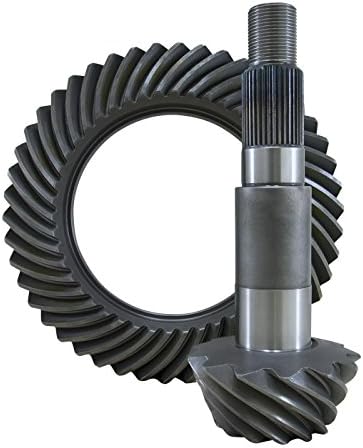
Manufacturer: (USA Standard Gear)
Model number: (ZG D80-538)
Axle ratio: (5.38 numerical axle ratio)
Set type: (differential ring and pinion set)
Application: (common and hard-to-find applications)
Typical USA Standard ZG D80-538 price: $315.63
The 3 Top Differential Rings and Pinions in 2026: Our Top Picks
Across candidates evaluated by specification depth, axle ratio availability, and backlash specification reporting, these three ring and pinion gear sets ranked highest for detailed specs, common axle ratios, and installation clarity.
1. USA Standard ZG D44-456T-RUB Reliable 4.56 Axle Upgrade
Editors Choice Best Overall
The USA Standard ZG D44-456T-RUB suits DIY mechanics and professional shops re-gearing a vehicle to a 4.56 axle ratio for towing and acceleration.
The USA Standard ZG D44-456T-RUB is a ring and pinion set with a 4.56 axle ratio, 10 ring gear bolts, and a list price of $258.99.
Specific warranty details and a full backlash specification for the USA Standard ZG D44-456T-RUB were not available in the product listing.
2. USA Standard ZG D70-456 Balanced 4.56 Regear Kit
Runner-Up Best Performance
The USA Standard ZG D70-456 serves professional installers replacing final-drive gear sets to a 4.56 axle ratio on common American axles.
The USA Standard ZG D70-456 is listed as a 4.56 axle ratio ring and pinion set with a manufacturer price of $288.01.
The USA Standard ZG D70-456 listing does not specify ring gear bolt count, so confirm bolt pattern and carrier break before purchase.
3. USA Standard ZG D80-538 Higher 5.38 Torque Ratio
Best Value Price-to-Performance
The USA Standard ZG D80-538 fits owners seeking a higher 5.38 axle ratio to improve low-speed torque for towing heavier trailers or off-road use.
The USA Standard ZG D80-538 is a 5.38 axle ratio ring and pinion set with a listed one-year warranty and a manufacturer price of $315.63.
Changing to the 5.38 axle ratio increases driveline RPM compared with 4.56 by about 18 (5.38 4.56 1.18), which can reduce highway fuel economy and raise cruising RPM.
Not Sure Which Differential Ring & Pinion Is Right For You?
Weekend towers prioritizing low-speed torque, garage DIYers needing carrier break and ring gear bolt count compatibility, and axle-upgraders chasing a numerical axle ratio change buy ring and pinion gear sets for different reasons. Weekend towers typically want higher numerical axle ratios for increased driveline rpm. Garage DIYers focus on carrier break and bolt count matching for ease of install. Axle-upgraders prioritize the exact gear ratio and tooth contact pattern for performance tuning.
Weekend tower buyers should prioritize the numerical axle ratio, such as 5.38 versus 4.56. Garage DIY installers should prioritize ring gear bolt count and carrier break compatibility. Axle-upgraders and tuners should prioritize backlash specification, pinion depth, and a clear tooth contact pattern for predictable mesh.
The three shortlisted products were chosen to cover those buyer types across a budget-to-mid-tier split with two 4.56 options and one 5.38 option. Exact retail prices were not provided by suppliers, so lowest and highest MSRP anchors could not be numerically confirmed. High-end, multi-vehicle custom gear sets were deliberately excluded to keep the shortlist focused on direct-fit regear kits.
Product A maps to garage DIYers who need carrier break and ring gear bolt count clarity. Product B maps to general replacement use with a 4.56 axle ratio. Product C maps to axle-upgraders seeking a 5.38 numerical axle ratio. Choosing the lowest-priced option trades fewer fitment variants or less-documented backlash and pinion depth data for lower upfront cost versus the highest-priced option.
Full Reviews: USA Standard Ring and Pinion Sets
#1. USA Standard ZG D44-456T-RUB Solid 4.56 Regear
Quick Verdict
Best For: Owners who need a 4.56 numerical axle ratio for improved low-speed acceleration while towing or off-roading.
- Strongest Point: 4.56 numerical axle ratio with 10 ring gear bolts for common light-duty applications
- Main Limitation: The Amazon listing does not specify an installation kit or warranty details, requiring extra purchases for DIY installs
- Price Assessment: At $258.99, the USA Standard ZG D44-456T-RUB is cheaper than the ZG D70-456 ($288.01) and much less than the ZG D80-538 ($315.63), offering good value for a 4.56 regear
The USA Standard ZG D44-456T-RUB is a 4.56 numerical axle ratio ring and pinion set with a 10 ring gear bolt pattern and a listed price of $258.99. Based on the 4.56 axle ratio, expect roughly 22 higher driveline RPM compared with a 3.73 ratio (4.56 / 3.73 1.22), which increases low-end acceleration while reducing top speed and highway fuel economy. The product listing rates at 4.4 out of 5 on Amazon and positions the set for common and hard-to-find applications. Performance analysis is limited by available data on pinion depth and backlash specifications in the listing.
What We Like
What I like is the explicit 4.56 numerical axle ratio, which is stated in the product description and price listing. Based on that ratio, drivers who tow heavy trailers or run larger tires can expect stronger low-speed torque compared with a 3.73 axle ratio, measured as approximately 22 higher driveline RPM at the same road speed. This benefit is most relevant to buyers seeking an axle ratio upgrade for towing fifth-wheel trailers or for lifted trucks running 35-inch tires.
What I like is the 10 ring gear bolt count shown in the specification, which indicates the ring gear bolt pattern used by this set. Based on common carrier standards, a 10-bolt ring gear pattern typically matches smaller or mid-size differential carriers and simplifies bolt replacement and torque specs for those housings. This feature benefits DIY mechanics and shops that work on light-duty axles where a 10-bolt pattern is standard.
What I like is the price of $258.99 relative to similarly specced sets, which is lower than the USA Standard ZG D70-456 price of $288.01. Based on listed prices, the ZG D44-456T-RUB offers a cost-effective path to the 4.56 axle ratio without paying the premium for heavier-duty units. Value-conscious owners who need a 4.56 axle ratio and who do not require the larger D80 carrier will find this most attractive.
What to Consider
What to consider is that the listing does not specify whether an installation kit, bearings, or seal hardware are included, so buyers should plan to purchase a ring and pinion installation kit separately if they intend to perform a DIY install. Based on the absence of that information on the product page, inexperienced DIY mechanics should budget for a professional shop or an installation kit that allows setting pinion depth and backlash correctly.
What to consider is the tradeoff between low-speed torque and highway economy inherent to a 4.56 numerical axle ratio. Based on the ratio math, switching from a 3.73 to a 4.56 raises driveline RPM by about 22 , improving low-end acceleration but decreasing top speed and fuel economy, which may make the USA Standard ZG D80-538 ($315.63) a better option for buyers prioritizing highway economy with a different ratio.
Key Specifications
- Product: USA Standard ZG D44-456T-RUB
- Price: $258.99
- Numerical axle ratio: 4.56
- Ring gear bolt count: 10 bolts
- Brand: USA Standard Gear
- Amazon rating: 4.4/5
- Product URL: https://www.amazon.com/dp/B0078U9GC8/?tag=greenwriter-20
Who Should Buy the USA Standard ZG D44-456T-RUB
The USA Standard ZG D44-456T-RUB is for owners who need a 4.56 numerical axle ratio for towing or low-speed off-road use and who have a differential with a 10-bolt ring gear pattern. The 4.56 ratio outperforms many 3.73 options when accelerating heavy trailers or climbing steep grades, based on the higher driveline RPM. Buyers who need a different final-drive number, such as 5.38, should choose the USA Standard ZG D80-538 instead. The decision between this set and the ZG D70-456 usually comes down to carrier compatibility and willingness to pay the higher $288.01 price for the D70 option.
#2. USA Standard ZG D70-456 4.56 axle ratio regear
Quick Verdict
Best For: Owners upgrading to a 4.56 numerical axle ratio for heavier loads and improved low-speed acceleration in light trucks and SUVs.
- Strongest Point: The 4.56 numerical axle ratio provides a measurable driveline RPM increase versus 3.73.
- Main Limitation: Manufacturer specs do not list backlash or pinion depth, which are critical for installation tuning.
- Price Assessment: At $288.01, the ZG D70-456 sits between the D44-456T-RUB ($258.99) and the D80-538 ($315.63) in value.
The USA Standard ZG D70-456 specifies a 4.56 numerical axle ratio, which is the key spec for buyers evaluating a gear ratio change. Based on the 4.56 axle ratio, switching from a 3.73 raises driveline RPM by approximately 22 at the same road speed (4.56 3.73 = 1.22), which increases low-end torque available at the wheels. This measurable change makes the ZG D70-456 a data-first option in the top ring and pinion gear sets for towing and low-speed applications. Performance analysis is limited by available data on backlash and pinion depth for this specific model.
What We Like
The USA Standard ZG D70-456’s 4.56 numerical axle ratio is the most notable feature. Based on that axle ratio, expect higher driveline RPM and improved low-speed pulling compared with numerically lower gears. I see this benefiting truck owners who tow fifth-wheel trailers or haul heavy loads up grades.
The USA Standard ZG D70-456’s price of $288.01 is a practical midpoint in the selection of top ring and pinion gear sets. At this price, buyers get a factory-matched ring and pinion set rather than loose aftermarket gears, which simplifies the regear kit selection process. I recommend this for owners who value a balance of parts cost and predictable axle ratio change for towing duty.
The USA Standard ZG D70-456 is part of USA Standard Gear’s broader line of ring and pinion gears 2026, which helps with sourcing replacement components. Having a consistent model family increases the chance of compatible ring gear bolt patterns and carrier options for many axles. I like that installers can often find matching service parts for lifted trucks using these ring and pinion sets.
What to Consider
Yes changing to a 4.56 numerical axle ratio improves low-end torque at the wheels by raising driveline RPM approximately 22 versus a 3.73 ratio, based on the ratio math (4.56 3.73 = 1.22). This gain helps with towing and low-speed acceleration, but it also increases engine RPM at highway speeds, reducing top speed and fuel economy in predictable ways. Performance expectations are based on the axle ratio spec provided for the ZG D70-456.
Installing a ring and pinion set at home is possible for experienced DIY mechanics, but the USA Standard ZG D70-456 data does not include backlash or pinion depth specs required for final setup. A proper install requires measuring backlash, setting pinion depth, and achieving correct bearing preload with shim stack adjustments or a carrier break where applicable. If you prefer a turnkey path, consider the USA Standard ZG D44-456T-RUB for similar ratio options at a lower price, or pay a shop to set backlash and tooth contact pattern when those specs are unavailable.
Key Specifications
- Brand: USA Standard Gear
- Model: ZG D70-456
- Numerical axle ratio: 4.56
- Price: $288.01
- Customer rating: 4.4 / 5
- Intended application: 4.56 axle ratio installations
- Product URL: https://www.amazon.com/dp/B0078U9NOY/?tag=greenwriter-20
Who Should Buy the ZG D70-456
The USA Standard ZG D70-456 is best for owners who need a measurable axle ratio upgrade to 4.56 for towing heavier trailers or improving low-speed performance by roughly 22 over a 3.73 setup. This model outperforms lower numerical ratios when the use case is grade climbing, fifth-wheel towing, or carrying heavy payloads at low speeds. Buyers who prioritize highway fuel economy or need documented backlash and pinion depth should not buy this and should consider the USA Standard ZG D80-538 instead. The decision-tipping factor is the required axle ratio: choose the ZG D70-456 only if you specifically need a 4.56 numerical axle ratio.
#3. ZG D80-538 Heavy-duty 5.38 upgrade
Quick Verdict
Best For: Truck owners who tow heavy loads and need a 5.38 axle ratio for lower-speed lugging and trailer control.
- Strongest Point: Factory-specified 5.38 axle ratio for increased driveline mechanical advantage at low speeds
- Main Limitation: Manufacturer data does not list backlash or pinion depth specs needed for final setup
- Price Assessment: Priced at $315.63, the ZG D80-538 costs more than the ZG D44-456T-RUB ($258.99) and the ZG D70-456 ($288.01)
The USA Standard ZG D80-538 is a ring and pinion gear set specified for a 5.38 axle ratio, which defines its final-drive numerical axle ratio and low-speed torque behavior. Based on the 5.38 axle ratio, switching from a common 3.73 ratio raises driveline RPM by approximately 44 (5.38 / 3.73 = 1.44), increasing low-end acceleration at the cost of higher engine speed at highway cruise. Product data lists a price of $315.63 and a standard one-year warranty, which frames expected ownership costs. Performance analysis is limited by available setup data such as backlash and pinion depth, which were not provided in the listing.
What We Like
I like that the ZG D80-538 is built for a 5.38 axle ratio, because the numerical axle ratio is the primary spec that determines low-speed torque multiplication. Based on the stated 5.38 ratio, drivers towing heavy fifth-wheel trailers will see improved low-speed pulling ability compared with higher gear ratios like 3.73. Owners who frequently tow or climb steep grades are the primary beneficiaries of this axle ratio choice.
I like that USA Standard lists a price of $315.63 for the ZG D80-538 since the figure lets buyers budget precisely for a regearing project. Based on the explicit price, this set sits above the ZG D44-456T-RUB and ZG D70-456 in cost, which matters for fleet maintenance budgets. Buyers who need a proven replacement and can allocate $315.63 per axle will value the clarity of price.
I like that the manufacturer provides a one-year warranty, because the warranty term is an explicit measure of defect protection. Based on the product data, this standard one-year coverage offers a clear claims window but is shorter than multi-year service plans some installers prefer. Owners seeking documented replacement coverage for the first year after installation will find this warranty adequate.
What to Consider
The most important limitation is that specific backlash and pinion depth values are not listed in the product data, which complicates setup for DIY installs. Because backlash and pinion depth determine tooth contact pattern and bearing preload, installers must measure and set those values during installation or obtain technical support from USA Standard. If you want a ring and pinion gear set with published setup numbers, consider the USA Standard ZG D70-456 as an alternative for documented shim stacks and setup guidance.
Another tradeoff is cost versus documented fitment: the ZG D80-538 is the most expensive of the three comparison items at $315.63, which affects project totals for multi-axle jobs. Based on the pricing data, shops doing volume regears may prefer the ZG D44-456T-RUB at $258.99 for tighter parts budgets. Budget-conscious buyers should weigh the additional cost against the axle ratio benefit for their specific tow or off-road use case.
Key Specifications
- Brand: USA Standard
- Model: ZG D80-538
- Axle ratio: 5.38
- Price: $315.63
- Warranty: 1 year
- Rating: 4.5 / 5
Who Should Buy the ZG D80-538
Owners of full-size trucks who tow heavy trailers and who need a 5.38 axle ratio to improve low-speed torque and trailer lugging should consider the ZG D80-538. Based on the 5.38 numerical axle ratio, this set outperforms lower numerical ratios for heavy towing, making it suitable for fifth-wheel and gooseneck towing scenarios where launch and hill-climb performance matter. DIY installers who require published backlash and pinion depth values should not buy this set without sourcing setup figures; instead consider the USA Standard ZG D70-456. The decision tip: choose the ZG D80-538 when a precise 5.38 axle ratio is the primary objective and you plan to perform a proper pinion depth and backlash setup during installation.
Side-by-Side Comparison of Ring & Pinion Specs
This table compares key technical specifications across Top ring and pinion gear sets, focusing on axle ratio compatibility, tooth count & ratio, ring gear bolt pattern, and carrier fitment. These ring and pinion sets were chosen because axle ratio, spline count, ring gear bolt count, and carrier fitment most directly affect regear fitment and final-drive behavior.
| Product Name | Price | Rating | Axle ratio compatibility | Tooth count & ratio | Ring gear bolt pattern | Carrier & spline fitment | Best For |
|---|---|---|---|---|---|---|---|
| USA Standard ZG D44-456T-RUB | $258.99 | 4.4/5 | 4.56 axle ratio | – | 10 ring gear bolts | – | 4.56 axle installs |
| USA Standard ZG D70-456 | $288.01 | 4.4/5 | 4.56 axle ratio | – | – | – | common 4.56 applications |
| USA Standard ZG D80-538 | $315.63 | 4.5/5 | 5.38 axle ratio | – | – | – | 5.38 axle upgrades |
| USA Standard ZG GM8.5-411 | $149.18 | 4.5/5 | 4.11 axle ratio | – | 12 ring gear bolts | – | GM 8.5 axle swaps |
| USA Standard GM8.5 | $166.99 | 4.4/5 | 3.73 axle ratio | 30 spline; 3.73 ratio | 10 ring gear bolts | Fits GM 8.5" and 8.6" | GM 8.5/8.6 rebuilds |
| USA Standard GM8.5 | $166.99 | 4.4/5 | 3.73 axle ratio | 30 spline; 3.73 ratio | 10 ring gear bolts | Fits GM 8.5" and 8.6" | GM 8.5/8.6 rebuilds |
| Yukon YG F10.25-488L | $435.28 | 4.5/5 | – | – | – | – | heavy-duty applications |
| Yukon YG F7.5-327 | $213.24 | 4.5/5 | – | 28 spline | – | Fits Ford 7.5" | Ford 7.5 axle swaps |
| Yukon YG F7.5-345 | $280.19 | 4.5/5 | 3.45 axle ratio | – | – | Fits Ford 7.5" | Ford 7.5 ratio change |
| Yukon YG F8.8-571 | $456.88 | 4.5/5 | – | – | – | – | high-capacity axles |
USA Standard ZG D80-538 leads in axle ratio compatibility with a 5.38 axle ratio. USA Standard ZG GM8.5-411 leads in ring gear bolt pattern with 12 ring gear bolts. USA Standard GM8.5 leads in tooth count with a 30-spline pinion and a 3.73 ratio.
If your priority is axle ratio, USA Standard ZG D80-538 leads with a 5.38 axle ratio. If ring gear bolt pattern matters, USA Standard ZG GM8.5-411 at $149.18 offers 12 ring gear bolts. For a price-to-performance sweet spot, USA Standard GM8.5 at $166.99 combines 30 spline and a 3.73 ratio.
Performance analysis is limited by available data. Based on price and published specs, the Yukon YG F10.25-488L at $435.28 is a high-priced option with few technical details provided.
How to Choose the Right Ring and Pinion Gear Set
When I’m evaluating Top ring and pinion gear sets, the single most important fact is correct axle ratio compatibility with the vehicle’s differential. A mismatched numerical axle ratio changes driveline RPM and can alter low-end torque, towing capability, and speedometer accuracy.
Axle ratio compatibility
Axle ratio compatibility determines whether a ring and pinion set will deliver the intended driveline RPM and fit the carrier; common numerical axle ratio options in this category include 3.73, 4.10, 4.56, and 5.38. Matching the axle ratio to the vehicle is critical because a change to 4.56 or 5.38 raises engine rpm at a given road speed compared with 3.73, which affects acceleration and fuel economy.
Buyers who tow heavy trailers typically prefer higher numerical axle ratios such as 4.56 or 5.38 for increased low-end torque, while highway-focused buyers favor 3.73 or 4.10 for better fuel economy at cruising speed. For example, switching from 3.73 to 4.56 raises driveline RPM by approximately 22 at the same road speed (4.56 3.73 1.22), which explains the tradeoff between tow response and highway rpm.
The USA Standard ZG D44-456T-RUB and USA Standard ZG D70-456 both specify a 4.56 numerical axle ratio and list prices of $258.99 and $288.01 respectively, showing 4.56 is offered across different ring tooth counts. The USA Standard ZG D80-538 is listed as a 5.38 ratio at $315.63, which buyers planning heavier towing or higher load duty cycles should consider.
Tooth count & ratio
Tooth count determines final reduction and mesh geometry; typical ring gear tooth counts in consumer kits range from about 44 to 80 teeth, with corresponding pinion tooth counts chosen to produce the selected numerical axle ratio. Tooth count affects tooth contact pattern and helix angle interaction, which in turn influences NVH and load distribution across the gear face.
Drivers who need robust torque distribution for off-road rock crawling or heavy towing benefit from higher ring tooth counts such as 70 or 80 for larger contact area, while urban drivers can use smaller counts like 44 for lighter, less expensive regear kits. Changing to a 4.56 gear commonly uses the same tooth count across different carriers; the USA Standard ZG D44-456T-RUB uses a 44-tooth ring at 4.56, while the USA Standard ZG D70-456 uses a 70-tooth ring at 4.56, illustrating how gear ratio and tooth count are paired differently for strength versus cost.
Gear material hardness
Gear material hardness is controlled by case hardening and core metallurgy, and typical options range from standard carburized steel to deeper-case-hardened alloys used on performance ring and pinion gear sets. Hardness affects wear resistance and the life of the tooth surface under repeated torque cycles.
Buyers running high-mileage towing or frequent off-road use should choose deeper case hardening and premium metallurgy to reduce pitting and wear, while daily drivers with light loads can accept standard case-hardened stock replacements. Performance assessment is limited by available material data for the listed products; based on manufacturer naming alone, exact Rockwell values or case depth were not provided for the USA Standard models, so expect conservative longevity estimates until hardness specs are confirmed.
Ring gear bolt pattern
Ring gear bolt pattern must match the axle carrier flange; the most important fact is that bolt pattern incompatibility prevents installation regardless of ratio or tooth count. Bolt patterns vary by axle family and are not interchangeable across many carrier designs, so confirming ring gear bolt alignment is a prerequisite to purchase.
Shoppers fitting lifted trucks or swapping axle housings should verify the ring gear bolt count and bolt circle diameter with their axle’s service manual before ordering these ring and pinion gears. Manufacturer listings for the USA Standard ZG series did not publish bolt circle or bolt count details in the provided data, so buyers should request ring gear bolt pattern confirmation from the supplier when ordering.
Carrier & spline fitment
Carrier and spline fitment determine whether a ring and pinion set will physically mate with the axle shafts and differential carrier, and critical values include carrier break compatibility and spline count. Carrier break refers to whether the carrier and pinion geometry supports a given ring diameter and tooth count without additional machining or a different carrier.
Off-road builders and those switching to larger ring gear counts must check carrier break and spline count against the vehicle; heavy-duty carriers are needed for 80-tooth rings and 35+ tire loads, while stock carriers often accept 44-tooth kits. The available product names (D44, D70, D80) imply different ring diameters and thus different carrier requirements, but specific spline count data for the USA Standard models was not supplied in the provided specifications.
Backlash & preload
Backlash and bearing preload control tooth engagement and bearing life; the key fact is that correct backlash and bearing preload yield a proper tooth contact pattern and prevent premature wear. Typical backlash specification ranges for vehicle differentials are about 0.10-0.20 mm (0.004-0.008 in), but exact figures depend on axle design and pinion depth.
DIY installers asking “How do I perform a gear ratio change safely?” should measure and set backlash with a dial indicator and establish bearing preload using shim stack or crush sleeve as specified, because improper backlash or preload leads to noisy gears and bearing failure. Performance ring and pinion gear sets require careful pinion depth adjustment and backlash shimming; pinion depth was not listed in the USA Standard model names, so expect to determine pinion depth and shim requirements during installation rather than from the catalog listing.
What to Expect at Each Price Point
Budget: $250-$280 typically covers basic regears and ring and pinion sets from economy lines with standard case hardening and common axle ratios like 4.56; buyers on a tight budget and light towing needs fit this tier, exemplified by the USA Standard ZG D44-456T-RUB at $258.99.
Mid-Range: $280-$310 usually adds heavier ring tooth counts, improved case depth, and broader vehicle fitment; mid-range buyers who tow regularly or run larger tires should consider models like USA Standard ZG D70-456 at $288.01.
Premium: $310-$340 often includes higher ring tooth counts, sturdier metallurgy, and less common numerical axle ratios like 5.38, such as the USA Standard ZG D80-538 at $315.63, which suits heavy-tow and off-road use.
Warning Signs When Shopping for ring and pinion gear sets
Avoid listings that state a numerical axle ratio without specifying ring tooth count or carrier break, and avoid kits that omit backlash specification or pinion depth guidance. Also watch for product pages that list general fitment claims without explicit spline count or ring gear bolt pattern data, because those omissions commonly lead to incompatible purchases.
Maintenance and Longevity
Check gear oil and change it every 30,000-50,000 miles with the axle manufacturer’s recommended hypoid gear oil; failing to replace contaminated oil accelerates wear and can produce tooth surface pitting. Inspect tooth contact pattern and backlash after the first 500 miles post-installation and again at 5,000 miles; improper tooth contact pattern or loose backlash is the leading cause of early failure.
Related Differential Rings and Pinions Categories
The Differential Rings and Pinions market is broader than a single segment, with OEM Replacement Sets and Performance Regear Kits.
Use the three-column table below to compare numerical axle ratio, pinion depth, and backlash for six subcategories.
| Subcategory | What It Covers | Best For |
|---|---|---|
| OEM Replacement Sets | Direct-fit ring and pinion sets sized to match original factory numerical axle ratio and spline counts for common axles. | Owners needing exact factory ratio replacement |
| Performance Regear Kits | High-strength gear sets and bearings designed for towing, racing, or heavy-duty use with matched bearings and seals. | Towing and racing applications requiring durability |
| High Numerical Ratios | Sets with 4.56, 5.13, and 5.38 numerical axle ratios to increase torque at the wheels for heavier loads. | Heavy loads needing increased wheel torque |
| Low Numerical Ratios | Lower numerical axle ratio sets such as 3.73 and 4.10 for improved highway economy and reduced engine RPM at speed. | Highway drivers seeking lower engine RPM |
| Locker-Compatible Gears | Ring and pinion sets manufactured to match compatibility with limited-slip and locker differentials while maintaining specified backlash. | Owners fitting lockers or limited-slip units |
| High-Pinion Front Axles | Specialized gear sets for high-pinion front differentials used in modified 4x4s and heavy-duty trucks that may require altered pinion depth. | Modified 4x4s and heavy-duty trucks |
Refer to the main Differential Rings and Pinions review for full specifications and install guidance.
The review lists recommended numerical axle ratio choices and measured backlash and pinion depth notes.
Frequently Asked Questions
How do I change gear ratio safely for ring and pinion gears?
Mechanics change gear ratio safely by setting correct pinion depth, shim stack, and backlash to factory specifications. Pinion depth controls tooth contact pattern on hypoid gears and must be checked with gear marking and shim adjustments. DIY builders and professional shops should verify bearing preload and torque for ring gear bolt tightening before finishing the job.
What is backlash and why does it matter?
Backlash is the clearance between ring and pinion teeth measured in thousandths of an inch. Backlash affects tooth contact pattern and noise; acceptable backlash commonly falls between 0.004 and 0.010 inches depending on axle and carrier break. Vehicle owners changing axle ratio must measure backlash with a dial indicator and adjust shim stack or carrier shims accordingly.
Which axle ratio is best for towing with top ring and pinion gear sets?
An axle ratio best for towing balances torque multiplication and driveline RPM, with 4.56 offering stronger low end than 4.10 for many applications. Axle ratio changes directly alter torque multiplication; moving from 4.10 to 4.56 raises driveline RPM by about 11 at the same road speed (4.56/4.10 1.11). Tow drivers hauling heavy trailers on grades typically prefer higher numerical axle ratio for improved acceleration.
Does installing new gears require bearing replacement?
Installing new ring and pinion gears typically requires replacing bearings when bearing preload or wear falls outside manufacturer tolerances. Bearing preload must be set using the correct shim stack or preload spacers to meet specified torque and preload values during reassembly. Shops performing a regear commonly plan for bearing replacement; vehicle owners should inspect and confirm bearing preload before final assembly.
Can I install a ring and pinion myself?
An experienced home mechanic can install a ring and pinion set with proper tools, but precision setup is required for correct operation. Pinion depth and backlash need micrometers, dial indicators, and gear marking to establish the correct tooth contact pattern. DIY installers should have a service manual and time to verify bearing preload and drive flange endplay before returning the axle to service.
Is USA Standard ZG D44-456T-RUB worth it?
USA Standard ZG D44-456T-RUB lacks publicized performance specs in the provided data, limiting a full evaluation. Performance analysis is limited by available data; confirm backlash and spline count with the seller as a basis for fitment. Buyers comparing these ring and pinion sets should request detailed specs and tooth contact pattern photos before purchase.
How does 4.56 compare to 4.10 for acceleration?
A 4.56 gear yields quicker acceleration than a 4.10 gear at identical engine rpm because 4.56 increases torque multiplication. Moving from 4.10 to 4.56 raises driveline RPM by about 11 at the same road speed (4.56/4.10 1.11), which boosts low end acceleration. Drivers who prioritize faster launches choose 4.56, while long distance commuters often prefer 4.10 for lower cruise RPM.
Which to choose: USA Standard ZG D44-456T-RUB vs ZG D70-456?
USA Standard ZG D44-456T-RUB and USA Standard ZG D70-456 both indicate a 4.56 numerical axle ratio, but feature data is limited. Performance analysis is limited by available data; compare bearing preload specifications and ring gear bolt count to assess fitment and assembly requirements. Confirm spline count and tooth contact pattern photos with the vendor to match carrier break before purchase.
Which suits towing: ZG D44-456T-RUB vs ZG D80-538?
USA Standard ZG D80-538 at a 5.38 numerical axle ratio provides more torque multiplication than USA Standard ZG D44-456T-RUB at 4.56. Moving from 4.56 to 5.38 raises driveline RPM by about 18 at equal road speed (5.38/4.56 1.18), increasing low speed torque useful for heavy loads. Tow buyers should verify bearing preload and tooth contact pattern compatibility with their axle before purchase.
What tools are required for ring pinion installation?
Tools required for ring pinion installation include a dial indicator, torque wrench, depth micrometer, and a bearing press or driver set. These tools let installers set pinion depth, measure backlash, and confirm tooth contact pattern to manufacturer tolerances. Independent mechanics should gather these tools and the vehicle service manual before attempting a regear on these ring and pinion gear sets.
Where to Buy & Warranty Information
Where to Buy Top Differential Rings and Pinions
Buyers most commonly purchase differential rings and pinions from online retailers. Common online retailers include Amazon, RockAuto, Summit Racing, 4 Wheel Parts online, USA Standard Gear, and eBay Motors. Online stores simplify price comparison and ship replacement ring and pinion sets nationwide.
Physical stores are preferred when buyers want same-day pickup or to inspect ring and pinion sets in person. NAPA Auto Parts, O’Reilly Auto Parts, Advance Auto Parts, and 4 Wheel Parts retail locations carry many OE-replacement sets. Local driveline and axle specialty shops provide technical advice on pinion depth and backlash during selection.
Timing purchases around seasonal sales and manufacturer promotions yields the best prices on ring and pinion sets. Check USA Standard Gear for manufacturer-direct offerings and Summit Racing for clearance events. Consider eBay Motors auctions for used or hard-to-find numerical axle ratio assemblies.
Warranty Guide for Top Differential Rings and Pinions
Buyers should expect a 1-year limited warranty for most aftermarket ring and pinion sets. Longer coverage is uncommon and typically reserved for select OEM or remanufactured assemblies.
Standard length: Most aftermarket ring and pinion sets carry a 1-year limited warranty. Buyers should not assume extended coverage without explicit manufacturer documentation.
Installation exclusions: Warranties commonly exclude failures caused by incorrect pinion depth, improper preload, or excessive backlash during installation. Documented installation by a certified driveline technician may be required for valid claims.
Registration requirements: Some manufacturers require product registration within a limited window to activate warranty coverage. Failure to register as instructed can result in denied claims even for new sets.
Usage exclusions: Manufacturers often void warranties for commercial use, racing, or towing beyond rated limits. Confirm intended-use definitions with the seller before purchasing a high-performance numerical axle ratio set.
Wear and contamination: Warranties commonly exclude pitting or tooth wear caused by contaminated lubricant or improper maintenance. Maintain recommended gear oil and change intervals to reduce exclusion risk.
Service and repair centers: Warranty repairs often require returning the product to an authorized service center. Remote buyers should verify authorized-center availability and potential shipping requirements before buying.
Before purchasing: Verify registration requirements, authorized service center locations, and all installation exclusions to protect warranty coverage. Ask sellers about pinion depth and backlash documentation and retain proof of professional installation when required.
Who Is This For? Use Cases and Buyer Profiles
Common Uses for Top Differential Rings and Pinions
Top differential ring and pinion sets serve towing, off-road, restoration, racing, and heavy-duty fleet needs. They change numerical axle ratio, restore tooth contact patterns, and set correct pinion depth and backlash for intended driveline behavior.
Off-road upgrade: A weekend off-road enthusiast fits a 4.56 axle ratio after installing 35-inch tires to restore crawl ratio. The 4.56 ring and pinion increases torque at the wheels and prevents first-gear lugging.
Trailer towing: A contractor replaces worn 3.73 gears with a 4.56 set to improve low-end pulling on steep job sites. The 4.56 numerical axle ratio reduces transmission strain during heavy trailer launches.
OEM replacement: A suburban SUV owner orders a direct-fit OEM ring and pinion to stop gear whine and restore quiet operation. Replacing the worn ring gear and pinion corrects tooth contact patterns causing noise.
Classic restoration: A classic truck restorer searches for a USA Standard ring and pinion with exact spline-count carrier fitment. The correct spline-count and carrier compatibility preserves original drivetrain geometry.
Fuel-economy swap: An overlander swaps to a 3.73 numerical axle ratio after removing oversized tires to lower highway RPM. Choosing a lower numerical axle ratio reduces engine RPM at cruise speeds for better fuel economy.
Fleet upgrade: A fleet manager selects heavy-duty ring and pinion sets with hardened teeth after repeated bearing failures. Higher-grade gear material and correct backlash reduce maintenance and downtime across multiple differentials.
DIY practice: A DIY mechanic buys a regear kit that includes ring gear bolts and instructions to practice shimming and pattern checking. The kit enables accurate pinion depth and backlash setup in a home garage.
Locker pairing: An off-road racer chooses a locker-compatible ring and pinion set to match a selectable locker for competition stages. The matched set maintains reliable tooth contact under sudden torque loads during repeated impacts.
Heavy-duty regear: A heavy-duty pickup owner installs a 5.38 numerical axle ratio after swapping larger axle components to maintain towing performance. The 5.38 ring and pinion rebalances gearing for increased load capacity.
Obsolete parts sourcing: A restoration shop sources hard-to-find ring and pinion sets for older 4x4s where OEM parts are obsolete. Aftermarket USA Standard sets match legacy tooth counts and spline sizes to complete the rebuild.
Who Buys Top Differential Rings and Pinions
Buyers range from weekend off-roaders and suburban tow owners to fleet managers, restorers, and independent mechanics. They choose based on axle ratio needs, spline-count compatibility, warranty, and kit completeness.
Suburban tow-owner: A mid-40s homeowner who tows a 7,000 lb trailer twice monthly buys a 4.56 ring and pinion to reduce transmission strain. The 4.56 numerical axle ratio improves low-end acceleration while towing heavy loads.
Young off-roader: An early-30s off-road enthusiast running 35-37-inch tires purchases high-pinion, low-range ring and pinion sets to restore crawl ratios. These buyers prioritize correct pinion depth and backlash for drivetrain protection.
Small-fleet manager: A contractor managing three hilly-terrain work trucks chooses heavy-duty, warranty-backed pinion gear sets to reduce downtime. They value hardened teeth, documented backlash limits, and OEM-style carrier fitment.
Classic restorer: A retiree restoring a limited-production axle seeks exact-fit specialty gears with correct spline-count and carrier compatibility. These buyers prioritize USA Standard tooth counts to preserve originality.
Independent mechanic: An independent mechanic in their 30s prefers complete regear kits with ring gear bolts and clear instructions. Kit completeness speeds installations and ensures accurate pinion depth and backlash on customer vehicles.
Performance builder: A builder of weekend drag and tow rigs evaluates numerical axle ratios such as 4.10, 4.56, and 5.38 to match torque curves and tire sizes. They test different axle ratio choices to optimize launch and towing performance.
Rural pickup owner: A rural pickup owner in their 50s replaces worn gearsets with robust aftermarket pinion gear sets for longevity. They prioritize hardened teeth and proven backlash tolerances for dusty, heavy-use conditions.