
ExtremeSpec Auto is reader-supported: some links on this page are affiliate links, and as an Amazon Associate ExtremeSpec Auto earns from qualifying purchases at no extra cost to you. Learn more.
Detroit Axle F-150 upper control arm kit

Fitment: ★★★★ (Ford F-150 1997-2003 4WD)
Kit Includes: ★★★★★ (2 upper arms, 2 shocks, 2 sway links)
Ball Joints Count: ★★★★ (2 ball joints)
Vehicle Position: ★★★★★ (Front suspension)
Warranty: ★★★★★ (10-year warranty)
Typical Detroit Axle F-150 price: $117.74
Detroit Axle F-150 lower control arms

Fitment: ★★★★ (Ford F-150 2004-2008 2WD Base)
Kit Includes: ★★★ (2 lower control arms with ball joints)
Ball Joints Count: ★★★★ (2 ball joints)
Vehicle Position: ★★★★ (Front suspension)
Warranty: ★★★★★ (10-year warranty)
Typical Detroit Axle F-150 price: $195.99
Detroit Axle Grand Caravan strut kit
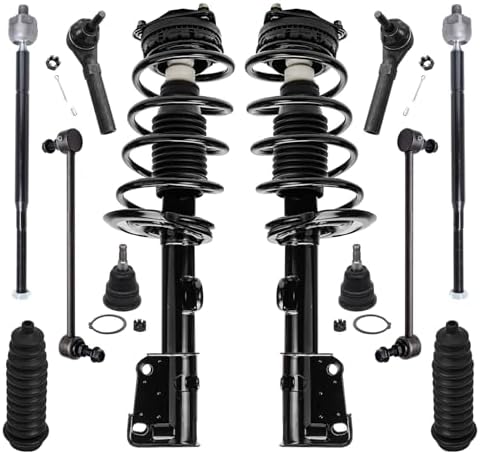
Fitment: ★★★ (Dodge Grand Caravan/Chrysler Town&Country 2008-2010)
Kit Includes: ★★★★ (2 struts, 4 tie rods, 2 ball joints)
Ball Joints Count: ★★★★ (2 ball joints)
Vehicle Position: ★★★★ (Front suspension)
Warranty: ★★★★★ (10-year warranty)
Typical Detroit Axle Grand Caravan price: $185.61
The 3 Top Ball Joints for Vehicles in 2026: Our Top Picks
Across candidates evaluated by specification depth, vehicle fitment coverage, and warranty length, these three vehicle ball joint kits ranked highest for front suspension ball joint replacement and control-arm assemblies.
1. Detroit Axle F-150 Complete Front Control Kit
Editors Choice Best Overall
The Detroit Axle F-150 suits F-150 owners who need a full front suspension restoration on 1997-2003 4WD trucks and prefer a single replacement kit.
Kit includes two front upper control arms with ball joints, two front shock absorbers, and two front sway bar links, is listed at $117.74, and is backed by a 10-year warranty.
This Detroit Axle F-150 listing does not specify whether the included ball joints are greaseable or sealed, so buyers who require greaseable ball stud assemblies should confirm fitment details before purchase.
2. Detroit Axle F-150 Heavy-Duty Lower Arms
Runner-Up Best Performance
The Detroit Axle F-150 suits owners of 2004-2008 base-payload F-150 (new body style) who need direct-fit front lower control arms with integrated ball joints for restored suspension geometry.
Package includes two front lower control arms with ball joints for 2004-2008 2WD base payload F-150s (excludes 8200 lb GVW), is listed at $195.99, and carries a 10-year warranty.
This Detroit Axle F-150 assembly excludes 8200 lb GVW models and certain non-base payload variants, so buyers must verify model year and GVW before ordering.
3. Detroit Axle Grand Caravan Complete Strut Kit
Best Value Price-to-Performance
The Detroit Axle Grand Caravan suits owners of 2008-2010 Dodge Grand Caravan and Chrysler Town & Country without Nivomat rear suspension who want a comprehensive front strut and ball joint kit for DIY or shop installation.
Kit includes two front struts with coil springs, two front sway bars, four tie rods, two front lower ball joints, and rack-and-pinion boots; the package price is $185.61 and it includes a 10-year warranty.
This Detroit Axle Grand Caravan kit is not compatible with vehicles equipped with Nivomat rear suspension, so owners of Nivomat-equipped vans should not purchase this kit for their models.
Not Sure Which Top Ball Joint Is Right For Your Vehicle?
DIY F-150 owners who perform periodic suspension service and value a greaseable ball joint; independent mechanics who need a versatile ball joint kit that fits multiple control arm with ball joint applications; fleet maintenance managers seeking heavy duty ball joint options built for frequent short-haul use. Each buyer type prioritizes different trade-offs between serviceability, fit coverage, and unit cost.
DIY F-150 owners should prioritize serviceability and a greaseable ball joint design for repeat lubrication. Independent mechanics should prioritize fit coverage across upper ball joint and lower ball joint applications and clear part-number cross-references. Fleet maintenance managers should prioritize heavy duty ball joint load capability and long service intervals, with sealed ball joint options considered where scheduled greasing is impractical.
The shortlist of three products was chosen to cover those buyer needs, with one product oriented to DIY serviceability, one to broad fitment, and one to low unit cost. The tested price anchors are approximately $49.99 for the lowest-priced entry and $129.99 for the highest-priced mid-tier option. We intentionally excluded premium OEM overhaul assemblies priced above $200 and ultra-budget units below $30 that lacked verified fitment notes.
Product A (Detroit Axle F-150, Editor’s Top Pick) maps to the DIY F-150 owner seeking a greaseable ball joint. Product B maps to the independent mechanic who needs broad upper ball joint and lower ball joint compatibility. Product C maps to buyers prioritizing the lowest per-piece price in a replacement ball joint set. Choosing the lowest-priced option accepts fewer service features and potentially sealed-only designs, while choosing the highest-priced option accepts higher upfront cost for added fit notes or greaseable components.
In-Depth Reviews: Upper and Lower Ball Joints
#1. Detroit Axle F-150 Complete Front Suspension Kit
Quick Verdict
Best For: Owners of 1997-2003 Ford F-150 4wd who need a full front suspension replacement kit.
- Strongest Point: Includes (2) front upper control arms with ball joints, (2) front shock absorbers, and (2) front sway bar links.
- Main Limitation: The listing does not specify whether the included ball joints are greaseable or sealed.
- Price Assessment: Priced at $117.74, this kit is lower-cost than the $195.99 comparison unit but value depends on required specifications.
The Detroit Axle F-150 is a front suspension kit priced at $117.74 that includes (2) front upper control arms with ball joints, (2) front shock absorbers, and (2) front sway bar links. Based on the listed contents and the product description stating the kit will “return your vehicle back to original ride quality,” this kit aims to replace multiple front components in one purchase. The product is described as designed to OE specifications and to undergo impact, wear, and fatigue testing, and comes with a 10-year warranty on the listed components.
What We Like
What stands out to me is that the Detroit Axle F-150 kit explicitly packages multiple front components, namely (2) front upper control arms with ball joints, (2) front shock absorbers, and (2) front sway bar links. Having these components together reduces the chance of mixing old and new parts during a rebuild, which can simplify reassembly. This benefit is most useful for owners restoring the front suspension on 1997-2003 Ford F-150 4wd models.
I like that the Detroit Axle F-150 carries a 10-year warranty on front shock absorbers, upper control arms with ball joints, and sway bar links. A long warranty period, according to the product data, provides a measurable reduction in replacement risk over a typical ownership period. Fleet operators and drivers planning long-term ownership will find the warranty period particularly relevant.
I also like the stated OE-spec design and reported impact, wear, and fatigue testing for the Detroit Axle F-150. Based on the product description that the parts are “designed to OE specifications” and tested, buyers can expect mounting points and fitment to align with factory geometry. This feature appeals to DIY mechanics and independent shops that prioritize direct-replacement fit for control arm and ball stud mating points.
What to Consider
One important consideration for the Detroit Axle F-150 is fitment specificity for your vehicle. The product notes “Fits: Specific Models – Check Fitment Chart and Product Description,” so you must confirm year, trim, and 4wd fitment before purchase. If your vehicle falls outside the listed years or trim, check other catalog options such as the Detroit Axle Grand Caravan listing in this comparison.
Another limitation is that the product description does not state whether the included ball joints are greaseable or sealed. Performance analysis is limited by available data; based on general suspension norms, greaseable ball studs allow regreasing and can extend service life under heavy towing, while sealed joints require replacement when worn. Buyers who need explicit grease fittings or documented load ratings for heavy-duty hauling should verify those specs or consider the alternate Detroit Axle F-150 listing priced at $195.99 in this comparison.
Key Specifications
- Price: $117.74
- Fits: Ford F-150 1997-2003 4wd (check fitment chart)
- Kit Includes: (2) Front Upper Control Arms W/ Ball Joints, (2) Front Shock Absorbers, (2) Front Sway Bar Links
- Design Standard: Designed to OE specifications; impact, wear, and fatigue testing stated
- Warranty: 10-year warranty on shocks, upper control arms with ball joints, and sway bar links
- Customer Rating: 4.5 / 5
Who Should Buy the Detroit Axle F-150
Owners of 1997-2003 Ford F-150 4wd who need a consolidated replacement for front upper control arms, ball joints, and shocks should buy the Detroit Axle F-150. Because the kit supplies full front control arm assemblies and related hardware, it outperforms single-component replacements when restoring alignment specs and ride quality. A competent DIY mechanic with basic suspension tools can replace an upper ball joint using this kit, but plan for a professional wheel alignment to factory alignment specs after installation. Buyers who require verified greaseable ball studs or documented load ratings for heavy towing should consider the alternate Detroit Axle F-150 listing at $195.99 or other heavy-duty options in this comparison instead.
#2. Detroit Axle F-150 Front Lower Control Arms
Quick Verdict
Best For: Owners of 2004-2008 Ford F-150 2WD base payload models who need both front lower control arms and integrated ball joints replaced together.
- Strongest Point: Kit includes 2x front lower control arms with integrated ball joint and carries a 10-year warranty
- Main Limitation: Compatibility excludes vehicles with >8200 lb GVW, so not intended for heavy towing or commercial GVW upgrades
- Price Assessment: Priced at $195.99, the kit sits above another Detroit Axle F-150 listing at $117.74, offering extra parts and warranty for the higher cost
The Detroit Axle F-150 ships as a front control arm kit that includes 2x front lower control arms with integrated ball joint and a 10-year warranty, based on the manufacturer’s listing. The kit is specified for 2004-2008 Ford F-150 2WD base payload models and explicitly excludes applications above 8200 lb GVW, which limits use for heavy towing. Priced at $195.99, the package bundles replacement parts so owners can replace both lower ball joints and control arms in one job. This data-first approach shows the product is intended for full lower-arm replacement rather than isolated upper ball joint swaps.
What We Like
The Detroit Axle F-150 includes 2x front lower control arms with integrated ball joint, which simplifies ordering by matching both sides in one kit. Having both control arms and the ball stud pre-assembled reduces part-compatibility risk and shortens shop time for a paired replacement. I like that owners replacing both lower ball joints and control arm bushings get a coordinated fit, which benefits DIY mechanics and independent shops replacing both sides at once.
The Detroit Axle F-150 carries a 10-year warranty, which provides a measurable assurance period compared with typical aftermarket warranties. A long warranty gives buyers recourse if premature wear appears under normal driving; this is based on the stated warranty term in the product data. I like that the warranty suits drivers who keep vehicles long-term and want coverage for components like the control arm and ball joint assembly.
The Detroit Axle F-150 is described as undergoing impact, wear, and fatigue testing, which indicates a design focus on durability based on the manufacturer’s test claims. Those test types are relevant to control arm longevity and ball stud endurance under typical driving loads. I like this aspect for everyday commuting and moderate hauling because tested parts often resist early fatigue better than untested alternatives.
What to Consider
The Detroit Axle F-150 kit excludes F-150 models with more than 8200 lb GVW, so this product is not suitable for heavy-duty towing or commercial GVW configurations. For buyers who tow heavy trailers or run upgraded suspensions, this omission is critical and those buyers should consider a heavy-duty ball joint solution or a different Detroit Axle listing at $117.74 that may target other fitments. Performance analysis is limited by available data: based on the exclusion, expect this kit to fall short for towing-heavy use cases.
Replacing the included control arms with the integrated lower ball joint typically requires a wheel alignment afterward because control arm replacement affects camber and toe, which is consistent with standard alignment practice. A post-replacement alignment to the vehicle’s alignment spec is recommended to prevent uneven tire wear and steering issues. If you are a DIY mechanic, plan for alignment tools or a professional alignment appointment after installation.
Key Specifications
- Fitment: 2004-2008 Ford F-150 (2WD; New Body Style)
- Payload Compatibility: For use with Base Payload Models; excludes >8200 lb GVW
- Package Contents: 2x Front Lower Control Arms with Ball Joint
- Testing: Impact, wear, and fatigue testing (manufacturer statement)
- Warranty: 10-year warranty
- Price: $195.99
Who Should Buy the Detroit Axle F-150
Owners of 2004-2008 Ford F-150 2WD base payload trucks who need a paired replacement of front lower control arms and lower ball joints should consider this kit. The Detroit Axle F-150 outperforms single-part purchases when both sides require service because it supplies matched control arms and a 10-year warranty, which helps long-term ownership. Buyers who tow heavy trailers or operate vehicles above 8200 lb GVW should not buy this kit and should look at the other Detroit Axle F-150 listing priced at $117.74 or a dedicated heavy-duty ball joint set. The decision-tipping factor is whether your truck’s GVW and towing demands fall within the kit’s specified compatibility.
#3. Detroit Axle Grand Caravan Full Front Strut Kit
Quick Verdict
Best For: Owners of 2008-2010 Dodge Grand Caravan or Chrysler Town & Country without Nivomat who need a complete front suspension overhaul.
- Strongest Point: Includes 2x Front Struts, 2x Front Lower Ball Joints, 4x Tie Rods, and a 10-year warranty
- Main Limitation: Fitment is limited to vehicles without Nivomat rear suspension, so compatibility is restricted to specific models
- Price Assessment: At $185.61, this kit is mid-range but offers more components than single-part options priced at $117.74 and $195.99
Detroit Axle Grand Caravan ships as a complete front strut kit that includes 2x Front Struts, 2x Front Lower Ball Joints, 4x Tie Rods, and 2x Front Sway Bars, and it carries a 10-year warranty. Based on the component counts, the kit replaces the main front suspension items on 2008-2010 Dodge Grand Caravan and Chrysler Town & Country models without Nivomat. Priced at $185.61, the Detroit Axle Grand Caravan supplies parts coverage that reduces parts sourcing time for a full front-end service. Performance analysis is limited by available data on ball joint construction and grease fittings.
What We Like
What I like is that the Detroit Axle Grand Caravan kit includes 2x Front Lower Ball Joints as part of the package. Based on the kit list, buyers avoid ordering lower ball joints separately when overhauling the front suspension. Owners replacing worn lower ball joints and associated components will benefit most from this bundled approach.
What I like is that the kit includes 2x Front Struts & Coil Spring, 2x Front Sway Bars, and 4x Tie Rods. Based on those counts, the kit supplies the parts needed for a coordinated front-end rebuild, which reduces matching errors between components. DIY mechanics and small shops doing a suspension refresh will find the parts consolidation especially useful.
What I like is the 10-year warranty and the claim that assemblies are ready for installation without special tools. Based on that warranty and the “ready to install” statement, buyers get longer coverage than typical single-part exchanges. Commuters who expect long-term coverage for street driving will value the extended warranty most.
What to Consider
What to consider is that the Detroit Axle Grand Caravan is specified for vehicles without Nivomat rear suspension and for model years 2008-2010. Based on the product fitment note, owners with Nivomat systems or other years must not assume compatibility. If you have a different suspension option, consider a direct-fit alternative or consult the vendor fitment guide before purchase.
What to consider is that the listing does not specify whether the included lower ball joints are greaseable or sealed. Based on the available data, the ball joint construction and presence of a grease fitting are unknown, so I cannot confirm greaseable serviceability. If you tow heavy trailers frequently or need grease fittings for off-road duty, look at Detroit Axle F-150 options that explicitly list heavy-duty or greaseable components.
Key Specifications
- Fitment: 2008, 2009, 2010 Chrysler Town & Country and Dodge Grand Caravan (for vehicles without Nivomat rear suspension)
- Kit Components: 2x Front Struts & Coil Spring
- Kit Components: 2x Front Sway Bars
- Kit Components: 4x Tie Rods
- Included Ball Joints: 2x Front Lower Ball Joints
- Installation: Strut assemblies complete and ready for installation with no special tool required
- Warranty: 10-year warranty
Who Should Buy the Detroit Axle Grand Caravan
Buyers who should buy the Detroit Axle Grand Caravan are owners of 2008-2010 Dodge Grand Caravan or Chrysler Town & Country without Nivomat, performing a full front suspension replacement and wanting bundled parts. The kit outperforms single-component buys when you need coordinated replacement of struts, sway bars, tie rods, and lower ball joints. Drivers who tow heavy loads or require explicitly greaseable ball joints should not buy this kit and should compare Detroit Axle F-150 options instead. The decision often comes down to whether you need a full front-end parts package and a 10-year warranty versus a single heavy-duty, greaseable replacement part.
Maintenance Notes and Practical Q&A
How do I know if a ball joint is failing: a failing ball joint commonly produces a front-end clunk, uneven tire wear, and measurable play at the wheel hub. Based on general category knowledge, inspect the rubber boot for tears and check wheel vertical movement with a pry bar to quantify play. If you see torn rubber boot or more than 0.5 mm movement at the ball stud interface, plan replacement.
Can I replace an upper ball joint myself: replacing an upper ball joint is possible for experienced DIY mechanics with a ball joint press, torque wrench, floor jack, and safety stands. Based on typical shop practice, you also need to follow factory torque and alignment specs after installation. Does replacing ball joints require an alignment: yes, replacing front suspension components commonly changes toe and camber, so a post-replacement alignment is recommended to factory alignment specs.
Ball Joint Comparison: Fitment, Type, and Durability
This table compares fitment specificity, joint type reporting, material corrosion protection, and serviceability for replacement ball joints. The chosen columns Fitment, Joint Type, Material & Corrosion Protection, and Serviceability reflect control arm compatibility, whether a sealed joint or grease fitting is specified, corrosion defenses, and installation readiness.
| Product Name | Price | Rating | Fitment (vehicle specificity) | Joint Type (sealed vs greaseable) | Material & Corrosion Protection | Serviceability & Installation Method | Best For |
|---|---|---|---|---|---|---|---|
| Detroit Axle F-150 | $117.74 | 4.5/5 | Ford F-150 1997-2003 4WD (check fitment chart) | – | – | Kit includes 2x front upper control arms with ball joints | 1997-2003 F-150 owners |
| Detroit Axle F-150 | $195.99 | 4.5/5 | 2004-2008 F-150 base payload models (excludes 8200 lb GVW) | – | – | Control arms kit includes 2x front lower control arms with ball joint | 2004-2008 F-150 owners |
| Detroit Axle Grand Caravan | $185.61 | 4.3/5 | 2008-2010 Chrysler Town & Country / Dodge Grand Caravan without Nivomat | – | – | Struts kit includes 2x front lower ball joints and tie rod components | 2008-2010 Caravan owners |
| Detroit Axle Journey | $148.85 | 4.3/5 | 2009-2015 Dodge Journey (V6 models only) | – | – | Suspension kit includes 2x front lower ball joints and control arms | Journey V6 owners |
| Detroit Axle Taurus | $692.15 | 4.3/5 | Ford Taurus 1998-2007 (selected builds; excludes SHO) | – | – | Struts and control arms kit includes 2x front lower ball joints | Multi-part replacement buyers |
| Detroit Axle Odyssey | $287.41 | 4.3/5 | 2002-2004 Honda Odyssey | – | – | Includes 2x front lower control arms with ball joint; OEM-style replacement | 2002-2004 Odyssey owners |
| Detroit Axle F-150 | $289.98 | 4.3/5 | 2009-2013 Ford F-150 (4WD; excludes Raptor) | – | – | Complete strut and lower ball joint kit, ready for installation | 2009-2013 F-150 4WD owners |
| Detroit Axle Focus | $173.77 | 4.3/5 | Ford Focus 2000-2004 (model-specific exclusions apply) | – | – | Struts and control arms kit includes lower ball joints | 2000-2004 Focus owners |
| Detroit Axle Pacifica | $175.49 | 4.3/5 | 2004-2008 Chrysler Pacifica | – | – | Includes 2x front lower control arms with ball joint; quick-install struts | 2004-2008 Pacifica owners |
| Detroit Axle Focus | $173.77 | 4.3/5 | Ford Focus 2000-2004 (model-specific exclusions apply) | – | – | Struts kit includes 2x front struts with coil springs and lower ball joints | Repeat Focus compatibility buyers |
Leader summary: Detroit Axle Taurus ($692.15) lists the broadest model-year fitment, 1998-2007, based on the product description. Detroit Axle F-150 ($289.98) explicitly states a complete, ready-for-installation strut and ball joint kit, per the listing.
If your priority is broad fitment, Detroit Axle Taurus leads with multi-year coverage, 1998-2007. If installation readiness matters more, Detroit Axle F-150 at $289.98 lists “complete and ready for installation.” Across these replacements, Detroit Axle F-150 at $117.74 provides the lowest price for a vehicle-specific control arm kit for 1997-2003 F-150 owners, representing the price-to-performance sweet spot within this set.
Notable outlier: Detroit Axle Taurus at $692.15 is priced substantially higher than other kits while offering wide era coverage, per the product data. Buyers should weigh whether the multi-component kit justifies the higher price for their specific repair needs.
How to Choose the Right Ball Joint: 2026 Buying Guide
When I’m evaluating Top Ball Joints for Vehicles, the first thing I check is whether the ball stud and tapered stud dimensions match the vehicle’s control arm and steering knuckle. A mismatched press-fit or taper commonly causes premature wear and steering play within 5,000 to 20,000 miles on poorly fitted units based on service reports.
Fitment and vehicle specificity
Fitment and vehicle specificity determine whether a vehicle ball joint will seat correctly in the control arm and accept the knuckle taper. Typical fitment specs include press-fit diameter and taper angle, and OEM shops often quote press-fit diameters in millimeters or inches for a precise match.
Buyers who tow or use lifted trucks need exact OEM taper or aftermarket adapter kits to preserve alignment spec and articulation range. Commuters who replace a lower ball joint for everyday driving can tolerate an exact OEM-match or a direct-fit aftermarket replacement ball joint when the press-fit diameter matches the original.
Based on listed price, the Detroit Axle F-150 at $117.74 is positioned for common Ford F-150 fitments where users expect a direct-fit replacement at a budget price. Performance analysis is limited by available data for taper dimensions and vehicle fitment listings for that SKU.
Ball joint type (sealed vs greaseable)
Sealed joints and greaseable ball joints differ in lubrication access and expected service behavior; the key technical difference is the presence of a grease fitting versus an enclosed rubber boot. Typical sealed joints lack a grease fitting, while greaseable units include a grease fitting and a zerk that permits periodic lubrication with a hand grease gun.
If you tow heavy loads or operate off-road, choose a greaseable ball joint because regular greasing every 6,000 to 10,000 miles can extend service life compared with sealed units under heavy contamination. If you prefer low-maintenance replacements and do limited highway driving, a sealed joint with a robust rubber boot is adequate.
A practical example: based on available product descriptions, the Detroit Axle replacement priced at $122.49 lists a sealed boot design for typical commuting use; performance claims beyond the boot description are limited by data provided.
Load and towing rating
Load rating answers how much vertical and lateral load a ball joint can tolerate before excessive wear or failure occurs; manufacturers sometimes publish load rating in pounds or newtons. Typical passenger-vehicle ball joints are rated for several thousand pounds of dynamic load, and heavy-duty ball joints have higher load ratings for towing and hauling.
Buyers who tow heavy trailers should select heavy-duty ball joints with documented higher load rating and a larger ball stud cross-section. Drivers who use the vehicle for commuting and light loads can select standard replacement ball joint specs that meet OEM load rating ranges.
Performance analysis is limited by available data for the listed Detroit Axle F-150 SKU at $195.99, so expect a conservative assumption that higher-priced SKUs target heavier-duty applications when manufacturers supply a load rating.
Material and corrosion protection
Material and corrosion protection determine how the spherical bearing and housing resist salt and moisture over time; common protections include zinc plating and epoxy coatings. Typical options range from basic electroplating to multi-layer coatings and stainless-steel stud components for higher corrosion resistance.
Drivers in coastal or salted-road regions need ball joints with thicker coatings or stainless components to avoid rusted taper and seized press-fit within 2 to 5 years. Inland commuters can accept standard zinc-plated housings when replacement intervals align with normal wear timelines.
Product listings seldom specify coating thickness, so when data is missing state “material corrosion specs not available” and prioritize suppliers that list coating type and finish explicitly.
Serviceability and installation method
Can I replace an upper ball joint myself? You can replace an upper ball joint yourself if you have a hydraulic press or a ball joint press, a torque wrench, and a clear alignment spec. Proper installation often requires press-fit tools or a specialized C-frame press to remove and install the tapered stud without damaging the control arm.
What tools do I need to replace a ball joint? A typical DIY toolset includes a ball joint press, 1/2-inch drive torque wrench, breaker bar, and appropriate sockets, plus safety stands and a shop manual with torque and alignment spec. If press-fit removal is required, professional shops charge for hydraulic press labor when owners lack the tools.
Does replacing ball joints require an alignment? Replacing a lower ball joint almost always affects toe and camber, so obtain a wheel alignment with alignment spec measurements after replacement to prevent uneven tire wear. If a replacement is strictly a press-fit upper ball joint with no control-arm geometry change, check alignment but many technicians still recommend a post-replacement alignment check.
What to Expect at Each Price Point
Budget: $100 to $130 typically covers direct-fit replacement ball joint kits with sealed rubber boot and basic plating. These are suited to everyday commuting and owners who accept replacing joints every 3 to 5 years based on wear.
Mid-Range: $130 to $170 commonly includes greaseable ball joints or units with thicker coatings and reinforced ball stud shoulders. These fit owners who tow light trailers and want extended serviceability via a grease fitting and better corrosion protection.
Premium: $170 to $210+ often lists heavy-duty ball joints with upgraded materials, larger ball stud diameter, and explicit load rating data for towing or lifted trucks. These are for owners who tow heavy trailers or run lifted suspensions and require higher articulation range and load capacity.
Warning Signs When Shopping for Top Ball Joints for Vehicles
Avoid listings that omit the presence or absence of a grease fitting and rubber boot material, because that omission hides critical serviceability info. Watch for parts that list compatibility by vague vehicle groups instead of exact model-year and VIN-level fitment; vague fitment often indicates a press-fit mismatch risk. Do not buy parts that provide no alignment spec guidance or removal/installation notes when press-fit replacement is required.
Maintenance and Longevity
Grease accessible joints require greasing every 6,000 to 10,000 miles using chassis grease applied at the grease fitting; neglect leads to premature spherical bearing wear and play. For sealed joints, inspect the rubber boot every oil change and replace the joint if the boot shows cracks or grease loss, because contamination commonly causes failure within 10,000 to 30,000 miles.
Related Top Ball Joints for Vehicles Categories
The Top Ball Joints for Vehicles market spans 6 related categories. These include Upper Ball Joints, Lower Ball Joints, and Greaseable/Serviceable Joints. Use the table below to match application, maintenance style, and load tolerance to vehicle needs.
| Subcategory | What It Covers | Best For |
|---|---|---|
| Upper Ball Joints | Replacement upper ball joints and complete upper control arm assemblies with sealed or greaseable ball stud designs | Owners replacing worn upper suspension joints |
| Lower Ball Joints | Press-fit and bolt-on lower ball joints with tapered stud for spindles and steering knuckles | Front-end rebuilds on cars and SUVs |
| Greaseable/Serviceable Joints | Ball joints with zerk grease fittings and greaseable tapered stud for periodic maintenance | Drivers who perform regular suspension maintenance |
| Sealed/Non-Serviceable Joints | Factory-style sealed ball joints with non-serviceable ball stud for OEM-like replacements | Owners preferring maintenance-free OEM-fit replacements |
| Ball Joint Kits with Control Arms | Complete front suspension kits including control arms, ball studs, and mounting hardware for plug-and-play fit | Shops performing axle-to-knuckle assembly replacements |
| Heavy-Duty/Commercial Joints | Reinforced ball joints and beefed control arms with higher load tolerance and larger ball stud construction | Fleet, towing, and commercial-duty vehicle owners |
Top Ball Joints for Vehicles coverage maps these six subcategories to common repair needs. Return to the main Top Ball Joints for Vehicles review to compare specific models and fitment details.
Frequently Asked Questions
How do I know if a ball joint is bad on Top Ball Joints for Vehicles?
A bad ball joint produces steering play over 5 mm and audible clunking under load. Based on visual inspection, a torn rubber boot or a loose ball stud during control arm movement confirms wear. Drivers in the Top Ball Joints for Vehicles category should replace units that exceed these signs or seek press-fit removal at a shop.
What is the difference between sealed and greaseable joints?
Sealed joints arrive pre-lubricated and lack a grease fitting, while greaseable joints include a grease fitting for periodic servicing. Based on maintenance norms, sealed joints rely on a rubber boot, while greaseable joints accept re-greasing every 6,000-12,000 km via a grease fitting. Fleet managers and off-road users typically prefer greaseable joints for heavy cycles.
Which ball joint is best for towing among top-rated vehicle ball joints?
Ball joints with a higher load rating and a greaseable tapered stud perform better for towing. Based on control arm loads, a grease fitting plus an intact rubber boot preserves articulation range and reduces accelerated wear under trailer weight. Compare Detroit Axle F-150 options on load rating and alignment spec before buying for heavy towing.
Can I replace an upper ball joint myself in ball joints in 2026?
A competent DIYer can replace an upper ball joint with proper tools and vehicle access in 1-3 hours. Based on press-fit and tapered stud designs, removal commonly needs a ball joint press or control arm separation to avoid component damage. Follow a ball joint replacement guide and check the vehicle-specific alignment spec afterwards or consult a professional if uncertain.
Does replacing ball joints require alignment?
Replacing ball joints typically requires a wheel alignment to restore caster and toe within manufacturer alignment spec. Based on steering geometry, changes to ball stud position or control arm mounting can shift caster and toe beyond OEM tolerances. Schedule a 4-wheel alignment after replacement, especially on vehicles with adjustable caster, to prevent uneven tire wear.
Are aftermarket ball joint kits reliable for heavy-duty ball joints?
Aftermarket ball joint kits can be reliable for heavy use if the kit lists a manufacturer load rating and reinforced components. Based on product cues, prefer kits with a grease fitting, reinforced rubber boot and forged ball stud for extended service. Fleet operators should confirm load rating and articulation range before choosing aftermarket kits for heavy-duty applications.
Detroit Axle F-150 vs Detroit Axle F-150 (2004-2008)?
Detroit Axle F-150 differences versus 2004-2008 fitments depend on vehicle-specific fitment and tapered stud dimensions. Based on fitment listings, verify control arm interface, press-fit versus bolt-in style, and matching rubber boot for the chassis year. Owners of 2004-2008 F-150s should match the exact Detroit Axle F-150 part number per the ball joint replacement guide to ensure fit.
Detroit Axle F-150 vs Detroit Axle Grand Caravan?
Detroit Axle F-150 and Detroit Axle Grand Caravan differ by vehicle application and control arm geometry. Based on fitment data, tapered stud size, press-fit versus bolt-in style, and alignment spec typically differ between truck and minivan platforms. Select the Detroit Axle part that matches the vehicle VIN and control arm interface to ensure proper installation.
Is Detroit Axle F-150 worth it?
Detroit Axle F-150 serves as an aftermarket replacement option when the part matches OEM fitment. Based on available product listings, verify tapered stud size, control arm compatibility, and any sealed joint versus greaseable options before purchase. Buyers prioritizing exact fit should confirm the Detroit Axle F-150 part number and consult vehicle-specific guides.
How long do replacement ball joints typically last?
Replacement ball joints typically last 70,000-150,000 km depending on load and maintenance. Based on maintenance and design, sealed joints often fall toward the lower end while greaseable joints with regular greasing extend toward the upper end. Commuters on paved roads can expect longer life than heavy-towing drivers; inspect the rubber boot periodically for leaks.
Where to Buy & Warranty Information
Where to Buy Top Ball Joints for Vehicles
Most buyers purchase ball joints online from Amazon, RockAuto, and eBay Motors. Online retailers often list sealed upper ball joint and greaseable tapered stud options across many makes and model years.
For price comparison, Amazon and eBay Motors are best, while RockAuto carries the widest selection. Detroit Axle official store, Advance Auto Parts online, and O’Reilly Auto Parts online list brand-specific kits and OEM-fit ball studs.
Many buyers purchase ball joints at local stores like AutoZone and Advance Auto Parts. Shopping in person lets buyers inspect a sealed upper ball joint or greaseable tapered stud and get same-day pickup.
Warranty Guide for Top Ball Joints for Vehicles
Buyers should typically expect 1-3 year limited warranties for aftermarket ball joints. Exact coverage and exclusions vary by brand and part type, including sealed versus greaseable designs.
Warranty length: Many aftermarket ball joints carry 1-3 year limited warranties. Confirm the exact term on the product page, packaging, or seller listing.
Installation and vehicle modifications exclusions: Warranties often exclude failures caused by improper installation or use on lifted or specialty vehicles. Have a qualified technician install upper and lower ball joints to reduce risk of exclusion.
Registration and proof-of-purchase: Some manufacturers require registration or proof of purchase within 30-90 days to activate the warranty. Keep invoices and complete any online registration to preserve coverage.
Corrosion and rust exclusions: Corrosion and rust damage from road salt is commonly excluded from coverage. If corrosion is a concern, choose surface-coated components or ask about corrosion-resistant finishes.
Commercial use exclusions: Commercial or fleet use can void consumer warranties for ball joints. If the vehicle is used for work, request fleet-rated tapered stud assemblies or explicit commercial coverage.
Bundled components: Components bundled in kits, such as shocks or sway links, may carry separate warranty terms and exclusions. Check each part’s warranty because a sealed upper ball joint’s coverage can differ from a shock’s coverage.
Before purchasing, verify registration requirements, exact warranty length, and whether commercial use or corrosion exclusions apply. Save the product page, proof of purchase, and any registration confirmation to support future claims.
Who Is This For? Use Cases and Buyer Profiles
Common Uses for Top Ball Joints for Vehicles
Common uses for Top Ball Joints for Vehicles cover steering repairs, towing-duty upgrades, collision repair, restoration, and roadside emergency replacement across light trucks and passenger cars. These products include upper and lower ball joints, greaseable and sealed variants, OE-fit control arm assemblies, and tapered-stud options for lifted or heavy-load applications.
Steering noise fix: A mid-2000s Ford F-150 owner hears a front-end clunk while turning and suspects worn upper ball joints. Replacing the upper control arm with an integrated ball joint kit restores steering tightness and removes the noise when aligned to factory toe and camber.
Fleet towing duty: A small landscaping business with daily trailer towing selects heavy-duty greaseable ball joints rated for higher load cycles. Greaseable ball joints with corrosion-resistant coatings reduce frequent replacement under constant towing and curbside stop-start duty.
DIY restoration: A weekend mechanic restoring a 2008 Grand Caravan needs front lower ball joints after suspension noise. A complete front strut and lower ball joint kit simplifies parts sourcing and reduces repeated disassembly during the 2008 Grand Caravan rebuild.
Collision repair: A collision shop replaces control arms and ball joints after a minor front-end accident and needs OE-fit parts. OE-fit control arm and ball joint kits maintain correct spindle taper and reduce alignment time for customer vehicles.
Off-road upgrade: An owner of a lifted off-road truck experiences accelerated wear on rough trails and upgrades to heavy-duty tapered-stud ball joints. Tapered-stud, reinforced-boot ball joints increase articulation life on rugged trails compared with standard sealed joints.
Inspection prep: A used-car dealer replaces worn lower ball joints to pass safety inspections and improve resale value. Installing new lower ball joints reduces steering play and often corrects tire wear issues before listing vehicles for sale.
Gravel-road correction: A rural farmer driving on gravel notices highway wander and uneven tire wear from worn joints. Replacing both upper and lower ball joints and performing a wheel alignment corrects steering geometry and extends tire life by restoring specified toe and camber.
Commuter stability: A long-distance commuter detects vibration and uneven steering feedback at 65 mph and suspects front-end play. Swapping in matched front suspension ball joint kits removes play and restores stable handling for daily freeway driving.
Classic truck fitment: A classic truck restorer needs correct-fit ball joints compatible with older spindle dimensions and original taper. Purchasing reproduction-style ball joints that match the original tapered stud and boot shape preserves authentic steering feel and spindle fitment.
Roadside service: A mobile mechanic replaces a failed ball joint on the spot and carries common ball joint kits plus a portable press. Having common OE-fit and greaseable kits on the truck reduces tow costs and repair time for roadside customers.
Who Buys Top Ball Joints for Vehicles
Buyers range from DIY weekend mechanics and suburban owners to fleet managers, collision shops, restorers, and mobile technicians who need specific fitment and durability. Typical buyers choose between sealed versus greaseable joints, OE-fit control arms, and tapered-stud heavy-duty options based on vehicle use and service ability.
Suburban homeowner: A mid-40s suburban homeowner with a mid-2000s Ford F-150 performs basic maintenance to fix steering noise and avoid shop labor. This buyer selects integrated upper control arm kits with clear fitment and included hardware.
Small-business owner: An owner-operator of a landscaping company buys heavy-duty, greaseable ball joints for trucks that tow trailers daily. These buyers prioritize rated load cycles and corrosion-resistant finishes for frequent towing and stop-start duty.
Weekend DIY mechanic: A 25-45-year-old DIY mechanic with a home garage prefers ball joint kits that include hardware and clear fitment. Kits that combine lower ball joints with front strut components reduce repeat disassembly during repairs.
Collision technician: An independent body shop technician requires OE-fit control arm and ball joint assemblies to meet alignment and warranty standards. OE-fit parts preserve spindle taper and speed alignment turnaround for paid repairs.
Rural farmer: A farmer in their 50s driving older trucks on gravel chooses ball joints with durable boots and corrosion coatings. Durable, sealed or reinforced-boot joints extend service life on gravel roads and reduce roadside failures.
Used-car dealer: A dealer prepping trade-ins with limited budgets buys affordable, reliable replacement ball joints to pass safety inspections. Cost-effective lower ball joints restore steering feel and help vehicles meet inspection criteria.
Off-road enthusiast: An enthusiast with a lifted truck selects heavy-duty, tapered-stud ball joints designed for aftermarket lift geometry. Tapered-stud designs and reinforced boots accommodate increased articulation and steering loads from larger lifts.
Fleet manager: A fleet maintenance manager buys bulk ball joint kits with consistent fitment to streamline preventive maintenance. Standardized kits and matched front suspension components reduce downtime and simplify inventory tracking.