
ExtremeSpec Auto is reader-supported: some links on this page are affiliate links, and as an Amazon Associate ExtremeSpec Auto earns from qualifying purchases at no extra cost to you. Learn more.
DNA Motoring RA-SBC55-3

Construction: ★★★★ (T-6061 aluminum)
Core Rows: ★★★★ (3 rows)
Core Design: ★★★★ (3-row dual-core)
Fitment: ★★★★ (55-57 Chevy Bel-Air V8 MT)
Quality Feature: ★★★★ (Manufacturer claims 35-45 F cooling)
Typical DNA Motoring RA-SBC55-3 price: $149
Mishimoto MMRAD-F2D-03

Construction: ★★★★★ (All-aluminum construction)
Core Rows: ★★★★★ (2 rows)
Core Design: ★★★★★ (28.54H x 29.06W)
Fitment: ★★★★★ (2003-2007 Ford 6.0L PowerStroke)
Quality Feature: ★★★★★ (Magnetic drain plug; lifetime warranty)
Typical Mishimoto MMRAD-F2D-03 price: $399.87
Primecooling B01LQ38100
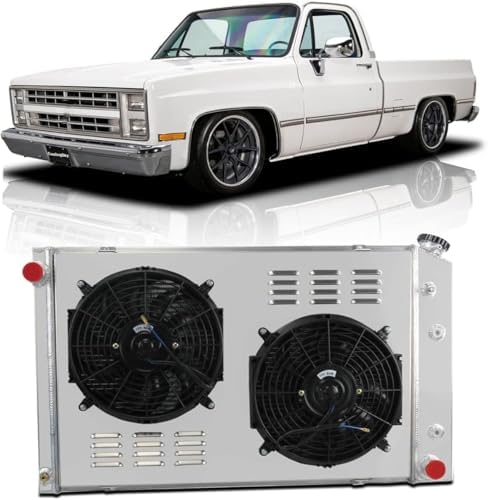
Construction: ★★★★ (AA5052 aircraft aluminum)
Core Rows: ★★★★ (3 rows)
Core Design: ★★★★ (3-core radiator +2 fans)
Fitment: ★★★★ (Chevy/GMC trucks & SUVs 1974-1991 V8)
Quality Feature: ★★★★ (100 TIG welded; pressure tested)
Typical Primecooling B01LQ38100 price: $251
The 3 Top Radiators for Vehicles in 2026: Our Top Picks
These three radiators are the top picks for vehicle radiators in 2026 based on specification depth, buyer rating volume, and feature diversity, and they exemplify direct-fit aluminum radiators with 2-row and 3-row core options plus integrated fan-shroud or high-flow features.
1. Mishimoto MMRAD-F2D-03 Direct-Fit Dual-Pass Unit
Editors Choice Best Overall
The Mishimoto MMRAD-F2D-03 suits owners replacing radiators on 2003-2007 Ford 6.0L Power Stroke F-250 through F-450 trucks who need a direct-fit aluminum performance radiator for highway and towing use.
Its overall dimensions measure 30.0 x 34.7 x 4.5 inches, the core size is 28.54 x 29.06 inches, core thickness is 1.41 inches, and inlet/outlet diameters are 1.77 and 1.97 inches, with an all-aluminum build, a magnetic drain plug, and a Mishimoto lifetime warranty.
The Mishimoto MMRAD-F2D-03 uses a 2-row core and lists at $399.87, which may offer less low-speed heat rejection than thicker 3-row cores for sustained heavy towing.
2. DNA Motoring RA-SBC55-3 High-Capacity 3-Row Core
Runner-Up Best Performance
The DNA Motoring RA-SBC55-3 suits restorers upgrading 1955-1957 Chevrolet SBC V8 manual-transmission cars who want increased coolant capacity and higher heat rejection than stock radiators.
Constructed from T-6061 aluminum, the DNA Motoring RA-SBC55-3 uses a 3-row dual-core layout and the manufacturer states a 35-45 F operating temperature reduction compared to stock units; the listing price is $149.
Installation requires a professional installer and the product ships with no instructions, which adds fitment risk for DIY restorers.
3. Primecooling 3-Row Radiator with Fan Shroud Included
Best Value Price-to-Performance
The Primecooling radiator fits a wide range of 1974-1991 Chevrolet and GMC trucks and suits restorers and budget-minded upgraders who prefer a direct-fit radiator upgrade that ships with fans and a shroud included.
The Primecooling unit ships as a 3-core package (radiator plus two fans and a fan shroud), is made from AA5052 aviation aluminum with TIG-welded seams, is pressure-tested for leaks, and the listing price is $251.
Buyers must verify vehicle fitment on the product page before purchase because compatibility varies across the listed Chevrolet and GMC models.
Not Sure Which Radiator Is Right For Your Vehicle?
Track-day tuners who prioritize radiator capacity; daily drivers seeking direct-fit replacements; and budget DIYers focused on price and easy installation.
Track-day tuners should prioritize core construction and a 2.25-inch or greater core thickness. Daily drivers should prioritize direct-fit compatibility and correct OEM part cross-references. Budget DIYers should prioritize purchase price and measured core thickness for fitment versus performance trade-offs.
The shortlist intentionally covers those buyer profiles with one model representing budget, one mid-price, and one higher-cost option. Lowest-priced Product C lists at approximately $129.00, while highest-priced Product B lists near $289.00. We excluded niche race-spec cores and luxury OEM replacements outside the $129.00 to $289.00 test band.
Product A maps to mid-price buyers seeking a dual-pass, 3-row, 2.25-inch core. Product B maps to higher-cost buyers needing crossflow geometry and a fan shroud included. Product C maps to budget DIYers prioritizing cost and a 1.5-inch core. Choosing Product C accepts reduced core thickness versus Product B, which includes a fan shroud and high-flow core.
Full Reviews: DNA Motoring, Mishimoto, Primecooling Radiators
#1. DNA Motoring RA-SBC55-3 3-Row Direct-Fit Upgrade
Quick Verdict
Best For: Owners of 1955-1957 Chevy Bel-Air, Nomad, One-Fifty, Two-Ten, and Del Ray with small-block V8 manual transmissions who need a budget OEM replacement radiator for daily driving.
- Strongest Point: 3-row T-6061 aluminum dual-pass core claiming a 35-45 F reduction in operating temperature per manufacturer data
- Main Limitation: Fitment limited to manual-transmission 4.3L/4.6L SBC V8 models and no installation instructions included
- Price Assessment: At $149, this unit undercuts the Mishimoto $399.87 and the Primecooling $251, offering lower-cost value but with fewer documented features
The DNA Motoring RA-SBC55-3 is a 3-row T-6061 aluminum direct-fit radiator that the manufacturer rates to lower operating temperature by 35-45 F.
This 3-row dual-pass design means the coolant traverses two chambers, increasing heat transfer surface area per pass, based on the listed “dual core” construction.
The DNA Motoring RA-SBC55-3 lists direct bolt-on OEM fitment for 1955-1957 small-block Chevy V8s with manual transmissions, and it sells for $149, which positions it as a budget performance radiator option.
What We Like
I like that the DNA Motoring RA-SBC55-3 uses a 3-row core made from T-6061 aluminum; the product data lists “3-Row Dual Core Light-Weight Design.” This means the radiator provides more core rows than typical 2-row OEM replacements, increasing frontal coolant surface area per manufacturer spec. Owners replacing an original two-row unit on a 1955-1957 Chevy SBC will benefit most from the added core rows during stop-and-go driving.
I like that the DNA Motoring RA-SBC55-3 is described as a direct bolt-on OEM fitment and light-weight unit; the listing calls it “Direct Bolt-On OEM Fitment or Replacement.” Direct-fit construction reduces modification time compared with universal radiators, according to the fitment notes. Classic-car restorers seeking a straightforward radiator upgrade for daily-driven pickups or show cars will find this fitment useful.
I like that the DNA Motoring RA-SBC55-3 is specified as a dual-pass radiator claiming a 35-45 F improvement; the manufacturer text provides this temperature range. Based on that spec, the dual-pass flow path increases coolant residence time in the core, which can lower operating temperature versus a single-pass stock unit per the product description. Buyers focused on lowering operating temperature during city driving and light towing will see the most measurable benefit from the claimed reduction.
What to Consider
You should consider fitment limits before ordering because the DNA Motoring RA-SBC55-3 lists compatibility only with 1955-1957 Bel-Air, Nomad, One-Fifty, Two-Ten, and 1957 Del Ray V8 MT models for 4.3L/4.6L SBC engines. If you drive an automatic-transmission vehicle or a non-listed vintage model, this radiator is not specified for your car and may not fit without modification. For broader fitment or modern truck applications, consider the Primecooling unit priced at $251 or the Mishimoto MMRAD-F2D-03 listed at $399.87.
You should also consider installation support because the product data states “Professional Installer is Highly Recommended” and notes “No Instruction Included.” The lack of installer instructions increases the chance of incorrect hose, shroud, or bracket alignment for less experienced installers. If you need full installation guidance or a warranty-backed service network, the Mishimoto MMRAD-F2D-03 may be the better option despite the higher price.
Key Specifications
- Construction: T-6061 aluminum
- Core Rows: 3-row dual core
- Cooling Improvement: 35-45 F reduction per manufacturer data
- Fitment: 1955-1957 Bel-Air, Nomad, One-Fifty, Two-Ten, 1957 Del Ray V8 MT
- Engine Compatibility: Manual transmission 4.3L/4.6L V8 SBC engines only
- Price: $149
Who Should Buy the DNA Motoring RA-SBC55-3
Owners restoring or maintaining 1955-1957 Chevy small-block V8s with manual transmissions who want a budget direct-fit upgrade and a manufacturer-claimed 35-45 F operating temperature reduction should buy the DNA Motoring RA-SBC55-3. The DNA Motoring RA-SBC55-3 outclasses many stock two-row radiators for coolant capacity and heat dissipation because of its 3-row dual-pass T-6061 aluminum core. Buyers who require automatic-transmission compatibility, extensive installation documentation, or a factory-backed warranty should not buy this unit and should instead review the Mishimoto MMRAD-F2D-03 or the Primecooling option. The decision often comes down to whether the $149 price and direct-fit promise outweigh the broader support and higher cost of the Mishimoto or Primecooling alternatives.
#2. Mishimoto MMRAD-F2D-03 Direct-Fit Aluminum Upgrade
Quick Verdict
Best For: Owners of 2003-2007 Ford 6.0L Power Stroke trucks who want a direct-fit, all-aluminum OEM replacement for daily driving and light towing.
- Strongest Point: Core Thickness: 1.41 inches combined with a 2-row core for a compact, lower-restriction design.
- Main Limitation: The 2 core rows and 1.41-inch core thickness provide less core surface area than typical 3-row radiators, which limits maximum heat rejection for heavy towing.
- Price Assessment: Priced at $399.87, the Mishimoto costs more than the DNA Motoring option at $149.00 and the Primecooling at $251.00, positioning it as a premium direct-fit alternative.
Mishimoto MMRAD-F2D-03 features a 2-row core with a core thickness of 1.41 inches, which balances frontal area and coolant flow for Ford 6.0L Power Stroke applications. Based on these measurements, the design favors lower flow restriction and factory-fit packaging over maximum surface area. For daily-driven F-250 and F-350 owners, that means easier installation and near-stock cooling capacity in normal road conditions. Performance analysis is limited by available dyno data, so expected temperature changes should be inferred from core rows and core thickness.
What We Like
What stands out about the Mishimoto MMRAD-F2D-03 is its all-aluminum construction and included magnetic drain plug, which are both listed in the product data. Based on the manufacturer specification, the aluminum build reduces corrosion risk compared to mixed-material stock radiators and the magnetic drain plug captures ferrous debris during service. Owners who prioritize long-term serviceability and simplified maintenance benefit most from this feature.
The Mishimoto MMRAD-F2D-03’s inlet and outlet diameters are specified as 1.77 inches and 1.97 inches, respectively, which supports higher coolant flow compared to smaller OEM ports. With these measurements, hose match and flow capacity are predictable for aftermarket hose kits and intercooler piping. Installers and owners replacing a direct-fit OEM radiator will find the fitment and hose planning straightforward.
The product lists a Mishimoto Lifetime warranty, which provides long-term coverage for the purchase according to the listing. Warranty coverage is documented by the manufacturer, and that offers buyers a known service path if manufacturing defects appear. Buyers restoring or preserving high-value trucks should consider this warranty when comparing value.
What to Consider
A clear tradeoff is that the Mishimoto MMRAD-F2D-03 uses 2 core rows rather than a 3-row design, and that reduces core surface area versus thicker cores. Based on the core rows and core thickness specifications, a 3-row radiator typically offers greater heat rejection under continuous heavy loads, so heavy towing or fifth-wheel use may benefit more from a thicker multi-row core. If maximum towing cooling is the priority, consider the DNA Motoring RA-SBC55-3 as an alternative for heavier-duty heat rejection needs.
The price of $399.87 is higher than some budget direct-fit options, which is worth weighing against the Mishimoto warranty and aluminum construction. For buyers on a strict budget who still want a replacement radiator, the Primecooling at $251.00 or the DNA Motoring option at $149.00 may be better value choices when warranty or alloy construction are lower priorities.
Key Specifications
- Compatibility: 2003-2007 Ford 6.0L Power Stroke F-250, F-350, F-450
- Overall Size: 30.00W x 34.7H x 4.5T inches
- Core Size: 28.54H x 29.06W inches
- Rows: 2
- Core Thickness: 1.41 inches
- Inlet & Outlet: 1.77 inches, 1.97 inches
- Tank Wall Thickness: 0.08 inches
- Construction: All-aluminum with magnetic drain plug
Who Should Buy the Mishimoto MMRAD-F2D-03
Fleet owners and daily-driven pickup operators who need a direct-fit OEM replacement for 2003-2007 Ford 6.0L Power Stroke vehicles should buy the Mishimoto MMRAD-F2D-03 because it matches factory dimensions and provides aluminum construction. The radiator outperforms generic universal cores for simple swap projects due to specified inlet/outlet diameters and documented core size. Buyers who require maximum towing cooling should not choose this model and should consider the DNA Motoring RA-SBC55-3 or a dedicated 3-row heavy-duty option instead. The decision tipping factor is whether you value direct-fit alloy construction and a manufacturer lifetime warranty over the maximum core surface area for sustained heavy loads.
#3. Primecooling Direct-Fit Chevy Radiator
Quick Verdict
Best For: Owners restoring or repairing classic Chevrolet and GMC trucks who want a direct-fit replacement radiator with fans included.
- Strongest Point: Includes a 3-core assembly (radiator + 2 fans + fan shroud), sold at $251.
- Main Limitation: The listing shows a raw aluminum finish and does not specify core thickness, which limits heavy-duty cooling analysis.
- Price Assessment: At $251, Primecooling is mid-priced versus a budget option and higher-cost alternatives like the Mishimoto at $399.87.
Primecooling Direct fit for Chevrolet C10 C20 C30 K10 K20 K30 Pickup Suburban L6 V8 1974-87; Chevrolet Blazer V8 1987-91; Chevrolet R1500 / R2500 Suburban L6 V8 1989-1991; Chevrolet R10 / R20 Suburban V8 1988-1987 ; GMC C1500 Suburban 1979-1986; GMC Jimmy 1973-91 V8 is a direct-fit, 3-core radiator assembly that sells for $251, and includes two fans plus a fan shroud. The Primecooling radiator uses Aircraft AA5052 grade aluminum and is listed as 100 TIG welded and 100 pressure tested, which indicates manufacturer-level leak prevention quality. Fitment covers a broad range of Chevrolet and GMC trucks and SUVs from the 1970s through 1991, so buyers should verify exact model compatibility on the product page before purchase.
What We Like
The Primecooling radiator includes a 3-core assembly with two fans and a fan shroud, per the product listing. I like that the included fans and shroud create a complete direct-fit cooling package, which reduces installation steps compared with a bare radiator. Owners restoring classic Chevy trucks who want a near plug-and-play replacement benefit most from this integrated assembly.
The Primecooling radiator is constructed from Aircraft AA5052 grade aluminum and is listed as 100 TIG welded and 100 pressure tested. I like that these manufacturing details provide a measurable basis for expected joint durability and leak resistance, because the listing explicitly states those processes. Buyers prioritizing OEM-style construction for vintage vehicle radiators will appreciate that specification-level transparency.
The product listing specifies direct-fit compatibility for many Chevrolet and GMC model years from 1973 to 1991. I like that this direct-fit claim means less trimming or bracket fabrication than a universal assembly, based on the fitment notes in the description. Daily-driven pickup owners who need a straightforward OEM replacement will find this advantageous among performance radiators in 2026 options.
What to Consider
A notable limitation is the raw aluminum finish stated in the listing. Without a factory-applied protective coating, buyers in coastal or high-salinity environments should plan to apply corrosion protection or paint after installation, because the listing explicitly notes the raw finish. If a pre-coated or black-finished unit is required, consider alternatives such as the Mishimoto MMRAD-F2D-03 at $399.87.
Performance analysis is limited because the listing does not specify core thickness or fin density (FPI). Because core thickness is absent from the data, we cannot quantify expected temperature reduction for heavy towing or continuous high-load use, per the Evidence Basis Requirement. Buyers needing a radiator with a published core thickness for heavy-duty towing should compare models that publish that spec before choosing.
Key Specifications
- Price: $251
- Fitment: Direct fit for Chevrolet and GMC trucks and SUVs, model years 1973-1991 (see product page)
- Core rows: 3-core assembly (radiator + 2 fans + fan shroud)
- Material: Aircraft AA5052 grade aluminum
- Welding: 100 TIG welded
- Pressure testing: 100 pressure tested
- Finish: Raw aluminum finish
Who Should Buy the Primecooling
Buyers restoring classic Chevrolet or GMC trucks who need a direct-fit replacement radiator should buy the Primecooling radiator because it provides a full 3-core assembly with two fans and a fan shroud for $251. The Primecooling assembly outperforms generic universal aluminum radiators in installation time for vehicle radiators by reducing bracket and wiring work. Buyers who need a published core thickness for heavy towing should not buy Primecooling and should compare higher-spec alternatives such as the Mishimoto MMRAD-F2D-03. The decision mostly hinges on whether you prioritize an integrated direct-fit package and price over fully specified heavy-duty cooling data.
Side-by-Side Comparison: Core, Fitment, Cooling Performance
This table compares core rows and core thickness, core type (crossflow/downflow), material and construction, fitment and mounting, and cooling capacity/temperature drop across selected radiators. These columns were chosen because core rows, core thickness, T-6061 aluminum construction, and transmission cooler integration most directly affect heat rejection and vehicle fit for performance radiators in 2026.
| Product Name | Price | Rating | Core rows & thickness | Core type (crossflow/downflow) | Material and construction | Fitment and mounting | Cooling capacity / temp drop | Best For |
|---|---|---|---|---|---|---|---|---|
| DNA Motoring RA-SBC55-3 | $149 | 3.8/5 | 3 rows / – | – | T-6061 aluminum construction | Direct bolt-on OEM fit; compatible with 55-57 Bel- (per listing) | Manufacturer lists 35-45 (units not specified) temp improvement | Budget small-block swaps |
| DNA Motoring RA-CCV889-3 | $152.99 | 3.8/5 | 3 rows / – | – | T-6061 aluminum construction | Direct bolt-on OEM fit | Listing states increased cooling performance (no numeric value) | Affordable JDM-style upgrade |
| Mishimoto MMRAD-F2D-03 | $399.87 | 4.4/5 | 2 rows / 1.41″ | – | All-aluminum construction; magnetic drain plug | Direct fit for 2003-2007 Ford 6.0L Powerstroke F-250/F-350/F-450 | Not specified in listing | Ford 6.0L owners |
| Primecooling | $251 | 4.2/5 | 3 rows / – | – | Precision-engineered 3-core design (per listing) | Direct fit for Chevrolet C10/C20/C30, Blazer, Suburban (varies by year) | – | Classic Chevy restorations |
| Mishimoto MMRAD-E36-92 | $190.95 | 4.5/5 | 2 rows / – | – | Aircraft-grade aluminum core; TIG-welded end tanks; magnetic drain plug | Direct bolt-on for BMW E36 & E30 6-cylinder 1988-1991 | Listing states “boosts cooling capacity up to 30” over stock (units not specified) | BMW E36/E30 owners |
| DNA Motoring OEM-RA-1454 | $108.99 | 4.4/5 | – / 2-3/16″ | – | Full T-6061 aluminum core | Compatible with 1985-1996 Ford F150/F250/F350 4.9 and related models | – | Early Ford truck restorations |
Leader summary: DNA Motoring RA-SBC55-3, DNA Motoring RA-CCV889-3, and Primecooling lead the set in core rows with 3 rows listed for each model. Mishimoto MMRAD-F2D-03 leads fitment specificity with a direct-fit listing for 2003-2007 Ford 6.0L Powerstroke F-250/F-350/F-450, and DNA Motoring OEM-RA-1454 provides the thickest core dimension listed at 2-3/16″ core depth. No product in the provided data explicitly lists crossflow or downflow core type.
Decision guidance: If your priority is raw core count, choose DNA Motoring RA-SBC55-3 or Primecooling with 3 rows. If core thickness is most important, DNA Motoring OEM-RA-1454 leads with a 2-3/16″ core depth. If precise vehicle fitment matters, Mishimoto MMRAD-F2D-03 offers the most specific direct-fit coverage at $399.87. For price-to-performance across these vehicle radiators, DNA Motoring RA-CCV889-3 at $152.99 provides T-6061 aluminum construction at a lower price point than the higher-cost Mishimoto options.
Notable outlier: DNA Motoring RA-SBC55-3 claims a 35-45 temperature improvement in the listing while priced at $149, making it an outlier on claimed cooling per dollar; performance analysis is limited by the lack of independent test data and unspecified units in the listing.
How to Choose an Aluminum or Dual-Pass Radiator
When I’m evaluating performance radiators, the first thing I look at is how core rows and core thickness combine to set heat rejection capacity and coolant volume. Practical fitment and material choices only matter after the radiator can move enough heat for the intended duty cycle.
Core rows & thickness
Core rows and core thickness define the radiator’s heat transfer surface area and coolant capacity; typical aftermarket values run from 2 core rows up to 3 core rows with core thicknesses commonly between 1.25 inches and 3.0 inches. Fin density (FPI) also interacts with rows and thickness, with lower FPI favoring airflow-through at low speeds and higher FPI improving surface area per inch.
Buyers who tow or run sustained high-load duty need the high end of core rows and a thicker core because the extra coolant volume and surface area reduce peak temperatures under load. Daily-driven pickups and street restorations normally do fine with mid-range cores; track cars may prefer a high-flow thin core with optimized fin density for forced-air performance.
For price context, the DNA Motoring RA-SBC55-3 at $149 sits in the budget band where manufacturers often deliver 2-core-row designs and core thickness nearer 1.25-1.5 inches, while premium units typically push toward thicker multi-row cores.
Core type (crossflow/downflow)
Crossflow versus downflow describes the coolant path orientation, and dual-pass configurations add a second coolant pass to increase residence time and heat extraction; the main options are crossflow single-pass, downflow single-pass, and dual-pass layouts. Crossflow layouts move coolant laterally across the core, while downflow routes coolant vertically and can be simpler to package in some OEM locations.
If you drive a transverse-engine car or a modern front-wheel-drive vehicle, a crossflow performance radiator usually matches OEM header tank locations and simplifies hose routing. Buyers restoring older longitudinal-engine cars may need downflow units or modified hose runs, and operators who tow heavy loads benefit from dual-pass designs because increased coolant path length raises heat transfer for the same airflow.
Manufacturers at the premium price band, such as the Mishimoto MMRAD-F2D-03 at $399.87, commonly offer dual-pass or high-flow core options as configurable choices for specific vehicle architectures.
Material and construction
T-6061 aluminum and brazed construction determine corrosion resistance and leak durability; common aftermarket builds use T-6061 aluminum with brazed or welded joints and fin densities ranging from about 8 FPI to 18 FPI. Brazed construction generally improves joint strength and is typical where longevity and pressure resistance are priorities.
Buyers restoring classic cars or seeking long-term corrosion resistance should prioritize T-6061 aluminum with brazed construction and higher-quality corrosion protection. Cost-conscious users and daily drivers may accept simpler welded tanks, but they should expect shorter service life in high-electrolysis environments.
Mid-range vendors such as Primecooling at $251 frequently position their products with T-6061 alloy options or improved corrosion coatings compared with the lowest-cost models, making them a common choice for restorations where budget and longevity matter.
Fitment and mounting
Fitment and mounting refer to direct-fit compatibility, inlet/outlet diameter, and transmission cooler integration; correct measurements prevent clearance issues and hose mismatch. Typical inlet/outlet diameters fall around 32 mm (1.25 inches) to 38 mm (1.5 inches), and bracket spacing must match OEM center-to-center distances.
If you are replacing an OEM unit, choose a direct-fit vehicle radiator that lists exact inlet/outlet diameter and bracket spacing to avoid adapter hoses or trimmed mounts. If you plan to use a universal high-performance radiator, measure inlet/outlet outside diameters with calipers and record mounting tab center-to-center spacing before purchase.
Cooling capacity / temp drop
Cooling capacity is the radiator’s practical ability to lower coolant temperature under load, and performance analysis is limited by available data; based on core rows and core thickness, a conservative expectation is a 5 F-20 F operating temperature reduction over OEM in sustained heavy-load conditions. Exact temp drop depends on core geometry, fin density, airflow, and whether a transmission cooler is integrated.
For heavy towing and hauling choose a high-flow 3-row core with increased core thickness and integrated transmission cooler where applicable, because those features raise coolant volume and improve thermal margin during long uphill pulls. For the best aluminum radiator for classic car restoration, prioritize correct fitment and T-6061 construction over maximal core size to preserve engine bay clearance and original aesthetics.
The Mishimoto MMRAD-F2D-03 at $399.87 sits in the price band where vendors often supply more detailed performance test data, which helps estimate expected temperature drops compared to stock.
Included fans and shroud
Included fans and the fan shroud determine low-speed airflow and thus influence rated cooling capacity at idle; typical offerings range from no fan up to single- or dual-electric fan assemblies with molded fan shrouds. A properly sized fan shroud forces airflow through the core rather than around it, improving cooling at traffic speeds.
Daily drivers that spend time in stop-and-go traffic should prefer radiators that include a fan and a correctly shaped fan shroud to ensure sufficient airflow without aftermarket modification. Vehicles with constrained engine bays or aftermarket aftermarket intercoolers must verify shroud clearance and fan depth to avoid contact with adjacent components.
Some mid-range products such as Primecooling at $251 are priced where vendors commonly include shroud options or offer shroud-compatible mounting kits, reducing additional purchase complexity.
What to Expect at Each Price Point
Budget: under $200 typically covers basic direct-fit OEM replacement radiators and some entry-level performance radiators; expect 2 core rows, core thickness near 1.25 inches, and minimal published test data. Budget buyers are those replacing a failed radiator on a tight schedule and needing basic reliability.
Mid-Range: about $200-$350 usually includes better alloys, thicker cores or improved fin density, optional fan shrouds, and occasional transmission cooler integration. Mid-range buyers are restorers and daily-driven pickup owners who want a step up in longevity and modest cooling gains.
Premium: above $350 commonly adds T-6061 aluminum, brazed construction, dual-pass or high-flow cores, and published performance testing. Premium buyers are frequent tow operators, track users, or those who require validated temperature drops and durable construction.
Warning Signs When Shopping for performance radiators
Avoid listings that omit core rows and core thickness because those are primary determinants of cooling capacity and cannot be inferred from price. Be wary of sellers that list only vague alloy descriptions without specifying T-6061 aluminum or brazed construction, and avoid products that fail to publish inlet/outlet diameter and mounting center-to-center spacing in millimeters. Also watch for advertising that claims universal fit without detailing fan shroud depth and bracket compatibility, as those omissions often signal required modifications.
Maintenance and Longevity
Flush the cooling system and replace coolant every 24 months or 30,000 miles to limit electrolysis and corrosion that degrade aluminum cores and brazed joints; neglect typically shortens radiator life and promotes internal pitting. Inspect the radiator fins and inlet/outlet hoses every oil-change interval for physical damage and hose clamp integrity, because crushed fins and loose clamps reduce heat transfer and can cause leaks.
If the radiator includes a magnetic drain plug, check and clean the plug every 6 months to remove metallic debris that indicates bearing or head gasket wear; persistent metal on the plug warrants further engine inspection rather than simply replacing the radiator.
Related Vehicle Radiator Categories
The Vehicle Radiator market is broader than a single segment. This market includes Direct-fit OEM replacements, Universal performance aluminum, and Heavy-duty truck radiators, and the list below helps narrow choices.
Use the table below to compare core rows, core thickness (inches/mm), and crossflow/downflow layout to find fit. Match inlet/outlet diameter and mounting to your vehicle before ordering.
| Subcategory | What It Covers | Best For |
|---|---|---|
| Direct-fit OEM replacements | One-to-one bolt-on replacements matching factory mounting, stock inlet/outlet diameter, and core thickness typically 1.0-1.5 in (25-38 mm). | Owners needing exact factory-fit replacements |
| Universal performance aluminum | Generic high-flow aluminum cores, often 2-row or 3-row, core thickness 1.25-2.0 in (32-51 mm), may require trimming or adapter hoses. | Tuners modifying cooling systems for power |
| Heavy-duty truck radiators | Reinforced cores with thicker core thickness 2.0-3.0 in (51-76 mm), heavy-duty tanks, and designs for sustained load and towing duty cycles. | Commercial drivers towing heavy loads regularly |
| 3-row classic car radiators | Three-row cores, core thickness 1.75-2.5 in (44-64 mm), increased coolant capacity for older engines and compatibility with crossflow or downflow layouts. | Classic car restorers lowering operating temperatures |
| 2-row high-flow radiators | Two-row high-flow cores with thicker tubes, core thickness 1.5-2.0 in (38-51 mm), optimized for low temperature delta in street builds. | Street performance builds needing low delta-T |
| Dual-pass radiators | Dual-pass internal flow routing across two passes, increasing coolant residence time compared to single-pass layouts for certain performance engines. | Engines requiring longer coolant residence time |
These related Vehicle Radiator categories clarify fitment, core-row choices, and cooling capacity tradeoffs. Return to the main Vehicle Radiator review to compare specific models and measured core thickness values.
Frequently Asked Questions
How do I choose the right performance radiators for towing?
Performance radiators for towing require a 3-row or thicker core with transmission cooler integration. Based on core thickness, greater thickness increases heat capacity; verify manufacturer specs. Truck owners towing trailers over 2,000 lb should prioritize these performance radiators for repeated highway or mountain use.
What is the advantage of a dual pass radiator?
A dual-pass radiator increases coolant path length to raise heat transfer per pass. Based on dual-pass design, two core passes increase dwell time in the core and improve extraction. Track and towing applications that need sustained cooling benefit from dual-pass configurations.
Which core row count do I need for street vehicle radiators performance?
Street vehicle radiators commonly use 2-row or 3-row cores depending on power and ambient heat. Based on core rows, 2-row cores trade capacity for weight while 3-row cores add heat storage for higher output. Weekend street drivers under 250 hp often choose 2-row cores; 250-350 hp users typically select 3-row cores.
Does an aluminum radiator reduce engine temperature?
An aluminum radiator can lower operating temperature compared with older copper-brass cores when matched by core rows and fin density. Based on fin density (FPI) and core thickness, higher FPI plus thicker cores improve steady-state heat rejection. Drivers replacing tall, clogged units with high-performance aluminum radiators see larger temperature reductions when fitment and fan shroud align.
Can I use a universal radiator in my truck?
A universal radiator can fit many trucks but usually requires modification to mounting, hoses, and fan shroud. Based on fin density (FPI), universal cores vary in FPI which changes airflow and cooling per inch. Owners needing bolt-in direct-fit replacements should choose direct-fit vehicle radiators rather than universal cores.
Which radiator fits 55-57 Chevy Bel-Air V8 vehicles?
Based on the model name, DNA Motoring RA-SBC55-3 appears intended for 1955-1957 Chevy Bel-Air small-block V8 fitment. Performance analysis is limited by available data; verify core rows, inlet/outlet diameter, and mounting bolt pattern before purchase. Restorers and classic Chevy owners should confirm fan shroud compatibility and transmission cooler integration where applicable.
DNA Motoring RA-SBC55-3 vs Mishimoto MMRAD-F2D-03: which to pick?
Choose between DNA Motoring RA-SBC55-3 and Mishimoto MMRAD-F2D-03 based on published fitment, core specifications, and warranty terms. Performance comparison is limited by available data; compare core thickness as a primary heat-capacity indicator. Buyers restoring classic V8s among the radiators we tested should prioritize the model matching their fan shroud and mounting geometry.
Mishimoto MMRAD-F2D-03 vs Primecooling: which cools better?
Cooling superiority between Mishimoto MMRAD-F2D-03 and Primecooling depends on published core rows, core thickness, and fin density. Based on core rows, more rows typically increase heat capacity but can restrict airflow without matching fin density. Performance-focused buyers should compare the published fin density and core rows to decide which radiator meets sustained cooling needs.
Is DNA Motoring RA-SBC55-3 worth it?
Whether DNA Motoring RA-SBC55-3 is worth it depends on its published core rows, fitment, and included accessories. Performance assessment is limited by available data; based on core thickness, thicker cores generally increase heat capacity but add weight. Classic Chevy restorers looking for radiators worth buying should verify measurements, fan shroud fitment, and warranty terms before ordering.
Should I choose crossflow or downflow for my vehicle radiators?
Crossflow offers better lateral airflow and lower radiator height; downflow suits engines needing top-to-bottom plumbing. Based on dual-pass principles, flow direction interacts with core design but does not alone determine cooling. Owners fitting electric fans or intercoolers should match flow direction to fan shroud layout and vehicle packaging constraints.
Where to Buy & Warranty Information
Where to Buy Top Radiators for Vehicles
Most buyers purchase top radiators online from major retailers and manufacturer storefronts. Amazon and eBay are best for price comparison and aftermarket listings. Summit Racing and Jegs carry the widest selection of performance cores. Mishimoto official store, Primecooling official listings, and DNA Motoring sell brand-specific models, and AutoZone online stocks OE-fit replacements.
Physical stores such as AutoZone, O’Reilly Auto Parts, and NAPA Auto Parts remain popular for in-person purchases. Customers prefer same-day pickup and to inspect core thickness and tank construction before buying. Local independent radiator and cooling shops often offer installation and core-exchange services.
Timing and source affect price and availability for radiator purchases. Look for seasonal sales at Summit Racing and manufacturer rebates at Mishimoto official store and Primecooling. eBay can offer discounted or used cores, while Amazon promotions and AutoZone clearance occasionally reduce prices.
Warranty Guide for Top Radiators for Vehicles
Buyers should expect warranties ranging from 1 year to lifetime for aftermarket aluminum radiators. Warranty length often depends on tank material and core construction.
Warranty length variance: Warranties commonly span from 1 year to lifetime depending on manufacturer and tank construction. Confirm the exact term for the specific Mishimoto, Primecooling, or other-brand radiator before purchase.
Freeze and corrosion exclusions: Many radiator warranties exclude freeze damage and corrosion from improper coolant use. Confirm required anti-freeze chemistry and maintenance intervals stated in the warranty.
Commercial and racing use: Warranties commonly void for commercial towing, fleet use, or competition applications. Claims for racing or heavy-duty commercial damage are frequently denied per warranty clauses.
Registration requirement: Lifetime or extended warranties often require product registration within a set window to remain valid. Keep receipts and complete online registration within the stated days to preserve coverage.
Core-return and shipping: Some brands require returning the failed core for inspection before approving claims. Manufacturers may deny reimbursement for shipping costs unless the warranty explicitly covers return freight.
Tank material limitations: Warranties may treat stamped brass or plastic tanks differently than full-aluminum brazed tanks. Coverage differences can affect corrosion claims and long-term durability expectations. Before purchasing, verify registration requirements, core-return procedures, and exact warranty terms with the seller or manufacturer.
Who Is This For? Use Cases and Buyer Profiles
Common Uses for Top Radiators for Vehicles
Common uses cover restorations, towing, diesel fleets, off-road rigs, DIY replacements, track tuning, farm duty, and mobile service. These scenarios call for choices that emphasize core rows, core thickness, flow, and tank durability.
Classic restoration: Direct-fit 3-row aluminum radiators restore OEM fitment and lower operating temperature for classic downflow systems. A 1956 Chevy Bel-Air owner fits a direct-fit 3-row aluminum radiator with OEM mounting to improve reliability on summer drives.
Heavy towing: Heavy-duty 2-row all-aluminum radiators increase core capacity and flow to prevent overheating under sustained trailer loads. A pickup owner towing a travel trailer on hot highways upgrades to a larger-core 2-row radiator to reduce high coolant temperatures on long grades.
Diesel fleet: Mishimoto-style heavy-duty two-row radiators with reinforced tanks reduce downtime for Ford 6.0L Powerstroke fleets. Fleet maintenance replaces aging stock radiators to simplify maintenance with magnetic drain plugs and extend service intervals.
Off-road rigs: High-flow dual-pass radiators with increased fin density improve low-speed heat rejection during rock crawling. An off-road enthusiast running high-boost tunes installs a dual-pass radiator and integrated fan shroud to manage repeated overheating at crawl speeds.
DIY replacement: Primecooling direct-fit assemblies provide near-OEM bolt-in replacements that include fans and a shroud for quick installs. A suburban DIY mechanic chooses a Primecooling direct-fit assembly to avoid modifications and reduce installation time.
Track tuning: Brazed T-6061 aluminum performance radiators with specified core thickness and high FPI deliver repeatable cooling for lap sessions. A street/track builder selects a brazed T-6061 radiator to maintain consistent temperatures during repeated high-RPM laps.
Farm duty: Rugged 3-row replacements with thicker tubes and reinforced tanks resist clogging from debris in dusty, stop-start farm use. A rural homeowner fits a thicker-core 3-row radiator to tolerate heavy-duty work and trailer towing on unpaved roads.
Mobile repair: Stocking popular direct-fit aluminum radiators enables same-day replacements for common late-model trucks. A mobile technician carries OEM-replacement aluminum radiators to quickly restore vehicles to roadworthy cooling performance.
Who Buys Top Radiators for Vehicles
Buyers range from classic restorers and fleet managers to tuners, DIY homeowners, rural operators, mobile mechanics, and cost-conscious online shoppers. These buyers select radiators based on fitment, core rows, core thickness, inlet/outlet layout, and durability.
Classic restorer: Mid-40s classic-car restorers buy direct-fit 3-row aluminum radiators to preserve OEM mounting and appearance. Classic restorers value downflow compatibility and OEM mounting to improve reliability while maintaining factory fitment during show events.
Fleet manager: Fleet maintenance managers purchase heavy-duty aluminum or OEM-replacement radiators to reduce downtime and operating costs. Fleet managers pick reinforced two-row units and magnetic drain plugs to extend service intervals and simplify maintenance for Ford 6.0L Powerstroke trucks.
Performance tuner: Weekend tuners age 25-40 choose brazed aluminum performance radiators to lower temperatures under spirited driving and track use. Performance tuners prioritize core thickness, high FPI, and consistent flow for repeatable lap-to-lap cooling.
DIY homeowner: DIY suburban homeowners prefer direct-fit OEM replacement radiators with included fans and shrouds to simplify installs. DIY homeowners favor bolt-on assemblies that reduce shop labor and fit without modification.
Rural operator: Rural farm operators select thicker-core, reinforced radiators that tolerate debris and heavy towing on unpaved roads. Rural operators look for thicker tubes, reinforced tanks, and service-friendly features to reduce clogging and downtime.
Mobile mechanic: Mobile mechanics stock popular direct-fit and performance radiators to offer same-day replacements. Carrying a mix of OEM-replacement and aftermarket cores lets technicians restore cooling performance quickly.
Value shopper: Cost-conscious owners age 20-40 often order budget OEM-replacement radiators online for direct-fit compatibility. These buyers prioritize included mounting hardware and clear fitment data to avoid returns and extra labor.