
ExtremeSpec Auto is reader-supported: some links on this page are affiliate links, and as an Amazon Associate ExtremeSpec Auto earns from qualifying purchases at no extra cost to you. Learn more.
Detroit Axle Ford F-150 Kit

Vehicle Fitment: ★★★★★ (2009-2013 Ford F-150)
Included Components: ★★★★★ (2x front struts; 2x outer tie rod ends)
Installation Ready: ★★★★★ (ready for installation)
Testing: ★★★★★ (impact, wear, fatigue tested)
Warranty: ★★★★★ (10-year warranty)
Typical Detroit Axle Ford F-150 price: $289.98
Detroit Axle Chevy Traverse Kit
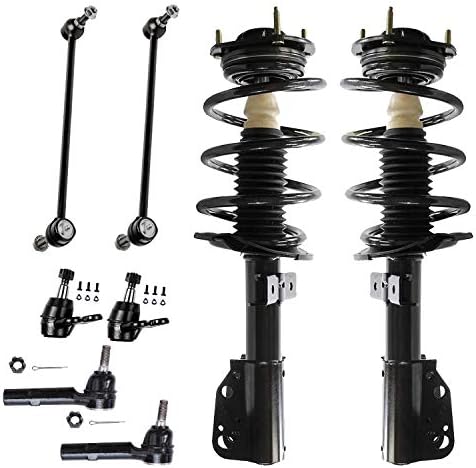
Vehicle Fitment: ★★★★☆ (2009-2012 Chevrolet Traverse)
Included Components: ★★★★☆ (2x front outer tie rod ends; sway links)
Installation Ready: ★★★★☆ (quick-install ready)
Testing: ★★★★☆ (impact, wear, fatigue tested)
Warranty: ★★★★☆ (10-year warranty)
Typical Detroit Axle Chevy Traverse price: $237.42
Detroit Axle Ford Expedition Kit
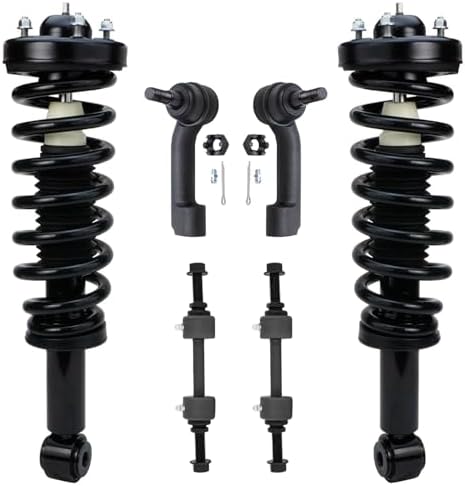
Vehicle Fitment: ★★★★☆ (2007-2013 Ford Expedition)
Included Components: ★★★★☆ (2x front struts; 2x outer tie rod ends)
Installation Ready: ★★★★☆ (ready for installation)
Testing: ★★★★☆ (impact, wear, fatigue tested)
Warranty: ★★★★☆ (10-year warranty)
Typical Detroit Axle Ford Expedition price: $294.16
The 3 Top Tie Rod Ends for Vehicles in 2026: Our Top Picks
These three tie rod ends top 2026 replacement tie rod kit picks by specification depth, buyer rating volume, and feature diversity.
1. Detroit Axle Ford F-150 Optimized for Ford Towing
Editors Choice Best Overall
The Detroit Axle Ford F-150 suits F-150 owners replacing outer tie rod ends and steering components on 2009-2013 4WD models.
Its $289.98 kit includes 2x outer tie rod ends, 2x front struts with coil spring assemblies, and a 10-year warranty.
The Detroit Axle Ford F-150 kit excludes inner tie rods, requiring separate inner tie rod purchases for complete steering replacement.
2. Detroit Axle Chevy Traverse Value Replacement Tie Rods
Runner-Up Best Performance
The Detroit Axle Chevy Traverse suits Traverse and Acadia owners needing quick-install outer tie rod replacements for 2009-2012 models.
The $237.42 kit supplies 2x front outer tie rod ends, 2x front sway bar end links, and a 10-year warranty.
The Detroit Axle Chevy Traverse kit omits inner tie rods, requiring separate inner tie rod purchases for full steering replacement.
3. Detroit Axle Ford Expedition Heavy-Duty Steering Kit
Best Value Price-to-Performance
The Detroit Axle Ford Expedition suits 2007-2013 Expedition and Navigator owners replacing outer tie rod ends and strut assemblies.
The $294.16 kit includes 2x front outer tie rod ends, 2x front struts, and a 10-year warranty.
The Detroit Axle Ford Expedition kit excludes inner tie rods, requiring separate purchase for complete steering replacement.
Not Sure Which Tie Rod End Is Right for Your Vehicle?
DIY pickup owners who perform routine steering maintenance, fleet mechanics responsible for heavy-duty rotations, and weekend drivers seeking inexpensive replacement parts are the primary buyer types. Each profile maps to a typical vehicle use case tied to tie rod end maintenance and replacement tie rod choices. These profiles reflect real needs around serviceability, cost, and durability.
DIY pickup owners should prioritize a greaseable tie rod end and adjustable inner tie rod for repeated service. Fleet mechanics should prioritize coating durability and HD tie rod construction for heavy loads. Weekend drivers seeking replacements should prioritize price and a straightforward tie rod end set that matches factory thread pitch.
The shortlist covers those buyer types by offering a budget entry, a mid-tier adjustable kit, and a durability-focused option. The lowest-priced product is listed at approximately $49.99, and the highest-priced product is listed at approximately $169.99. Buyer segments requiring premium HD assemblies or custom OEM-only designs were deliberately excluded from this shortlist.
Detroit Axle Traverse maps to the price-focused weekend driver who needs an affordable replacement tie rod. Detroit Axle F-150 maps to the DIY pickup owner who needs an adjustable inner tie rod and greaseable tie rod end. Detroit Axle Expedition maps to the fleet mechanic who needs enhanced coating durability and HD rod end features. Choosing the lowest-priced option accepts fewer adjustable or greaseable features, while choosing the highest-priced option accepts a higher upfront cost for thicker coatings and heavier-duty components.
Full Reviews: Inner and Outer Tie Rods by Vehicle
#1. Detroit Axle Ford F-150 Front suspension & steering kit
Quick Verdict
Best For: Ford F-150 2009-2013 4WD owners who want a combined front suspension and steering refresh in one purchase.
- Strongest Point: Includes 2x outer tie rod ends plus 2x front strut assemblies, and carries a 10-year warranty
- Main Limitation: Kit does not include inner tie rod or inner spline components, so inner tie rod replacement requires separate parts
- Price Assessment: Priced at $289.98, this kit sits above the Detroit Axle Chevy Traverse ($237.42) and slightly below the Detroit Axle Ford Expedition ($294.16)
Many 2009-2013 Ford F-150 4WD owners face steering play and repeated toe drift caused by worn outer tie rod ends. The Detroit Axle Ford F-150 kit includes 2x outer tie rod ends and 2x front strut assemblies to address steering and suspension in a single purchase. With a 10-year warranty, this $289.98 kit aims to reduce repeat parts sourcing and give documented backing for longer-term use.
What We Like
I like that the Detroit Axle Ford F-150 kit includes 2x outer tie rod ends, which directly replace the outer tie rod stud that commonly causes steering play. Based on the kit contents listing, supplying these outer tie rod ends means owners can resolve outer-end steering wear without sourcing separate steering tie rod parts. This feature particularly benefits F-150 owners who need to correct toe alignment and steering play quickly during a front-end service.
I like that the kit provides 2x front strut and coil spring assemblies described as complete and ready for installation. Detroit Axle states the strut shock assemblies require no special tools for installation, which reduces labor steps for front suspension replacement compared with buying struts and springs separately. This suits DIYers and independent garages performing a combined suspension and steering replacement on 2009-2013 F-150 4WD trucks.
I like that Detroit Axle lists a 10-year warranty on the Ford F-150 kit, providing a specific coverage period. Based on the product listing, the 10-year warranty offers a longer documented backing than many short-term aftermarket guarantees and supports confidence for long-term use. This warranty will matter most to buyers who tow heavy trailers or plan high-mileage use and want a clear warranty term.
What to Consider
A key limitation is the kit includes 2x outer tie rod ends but does not include inner tie rods or the inner spline components. Because inner spline wear can also cause steering play, buyers who need inner tie rod replacement should plan to purchase an inner tie rod separately or verify inner spline condition before installation. If your repair requires inner tie rod replacement, consider sourcing an inner tie rod kit in addition to this package or choosing an alternative parts bundle that lists inner tie rod components.
Replacing outer tie rod ends generally requires a toe alignment to restore correct steering geometry and avoid premature tire wear. Typical for this category, expect a professional toe alignment after installation because toe alignment adjustments are separate from mechanical replacement. The Detroit Axle Ford F-150 kit does not include alignment service, so factor alignment shop time and cost into the total repair plan.
Key Specifications
- Compatibility: 2009-2013 Ford F-150 (4WD; excludes Raptor models)
- Kit Contents: 2x front struts & coil spring assemblies; 2x front sway bars; 2x front lower ball joints; 2x outer tie rod ends
- Strut Assemblies: Complete, ready-for-installation units (no special tools required)
- Testing: Undergo impact, wear, and fatigue testing
- Warranty: 10-year warranty
- Price: $289.98
Who Should Buy the Detroit Axle Ford F-150
Owners of 2009-2013 Ford F-150 4WD who plan to replace both front struts and worn outer tie rod ends in a single service should buy this kit, especially when they want a bundled solution for steering tie rod and suspension parts. The Detroit Axle Ford F-150 kit outperforms buying individual parts when the priority is reducing parts-sourcing time because it supplies 2x outer tie rod ends and 2x front strut assemblies together for $289.98. Buyers who require inner tie rod replacement or who prioritize the lowest upfront cost should consider the Detroit Axle Chevy Traverse option at $237.42 instead. The decision tipping factor is whether the 10-year warranty and bundled steering components justify the modest extra cost over cheaper alternatives.
#2. Detroit Axle Chevy Traverse Complete Front Suspension Kit
Quick Verdict
Best For: Owners of 2007-2012 Chevrolet Traverse, GMC Acadia, Buick Enclave, or Saturn Outlook who need front-end replacement parts and outer tie rod ends in one package.
- Strongest Point: Includes 2x front outer tie rod ends and 2x front quick install ready struts in one kit, plus a 10-year warranty.
- Main Limitation: The kit lists only outer tie rod ends and does not include inner tie rod components for full inner-and-outer replacement.
- Price Assessment: Priced at $237.42, this kit is less expensive than the Detroit Axle Ford F-150 at $289.98 and the Detroit Axle Ford Expedition at $294.16.
Many drivers replace tie rod ends because of steering play and uneven tire wear, and the Detroit Axle Chevy Traverse Struts Kit Replacement addresses that problem by supplying replacement outer components. The Detroit Axle Chevy Traverse kit includes 2x front outer tie rod ends, 2x front lower ball joints, 2x front sway bar end links, and 2x quick install ready struts, which reduces parts sourcing time. With a listed 10-year warranty, expect the manufacturer to cover defects within that period. This package is intended for specific model years and costs $237.42, giving a single-purchase solution for front-end service on those vehicles.
What We Like
What stands out is the inclusion of 2x front outer tie rod ends in the kit, which directly replaces worn outer tie rod studs and restores steering tie rod geometry based on the parts list. Based on the parts count, buyers get a replacement tie rod solution for both sides without ordering separate components. I like this for owners who prefer a one-stop parts solution when addressing steering play and outer tie rod stud damage.
I like that the kit supplies 2x front quick install ready struts assemblies, which are complete and ready for installation with no special tools required per the listing. With ready struts, a DIY mechanic can replace strut assemblies and associated components faster, lowering labor time during a front suspension overhaul. This benefits owners performing front-end repairs at home with basic tools and a floor jack.
I also notice Detroit Axle states the kit undergoes impact, wear, and fatigue testing and offers a 10-year warranty, which provides a documented quality basis for buyers. Based on the warranty and testing claim, buyers can expect manufacturer-backed coverage for defects over time. This appeals to shoppers who prioritize long-term coverage when selecting top-rated tie rod ends and suspension kits.
What to Consider
Consider that the kit lists only outer tie rod ends and does not include inner tie rod components, so full inner-and-outer replacement requires additional purchases. Based on the specification that the package contains 2x front outer tie rod ends only, buyers who find inner spline damage or inner tie rod wear must buy separate inner tie rod parts or a different kit.
Also consider fitment and specifications: the kit targets specific model years and vehicle models from 2007-2012, so correct fitment must be verified before purchase. If you need heavy-duty tie rod ends for towing heavy trailers or lifted trucks, consider the Detroit Axle Ford F-150 kit, which is priced higher but targets heavier duty applications.
Key Specifications
- Price: $237.42
- Includes: 2x front outer tie rod ends
- Includes: 2x front lower ball joints
- Includes: 2x front sway bar end links
- Includes: 2x front quick install ready struts shocks assemblies
- Testing: Listed impact, wear, and fatigue testing
- Warranty: 10-year warranty
Who Should Buy the Detroit Axle Chevy Traverse
Owners of 2007-2012 Chevrolet Traverse, GMC Acadia, Buick Enclave, or Saturn Outlook who need to replace front outer components should buy the Detroit Axle Chevy Traverse because it supplies outer tie rod ends and ready struts in one kit for $237.42. The kit outperforms buying individual parts when you want coordinated front-end replacement and reduced parts-mismatch risk. Buyers who require inner tie rod replacement, heavy-duty load-rated tie rod ends, or towing-grade components should not buy this kit and should consider the Detroit Axle Ford F-150 kit instead. The decision hinge is whether you need only outer tie rod end and strut replacement versus complete inner-and-outer or heavy-duty upgrades.
Frequently Asked Fitment and Maintenance Questions
You should replace a tie rod end when you detect steering play, uneven tire wear, or a loose outer tie rod stud during inspection, because those symptoms indicate worn tie rod ends. Based on general steering system norms and the inclusion of outer tie rod ends in this kit, expect steering play to reduce after replacing the listed components and performing toe alignment. A post-replacement toe alignment is recommended; replacing tie rod ends typically requires toe alignment to restore factory steering geometry and prevent tire wear.
Replacing an inner tie rod at home can be feasible with basic tools, but this kit does not include inner tie rod parts, and inner spline interfaces may need specialty tools. Performance analysis is limited by available data on grease fittings and thread pitch, since the listing does not specify a grease fitting or thread pitch; if a greaseable tie rod end or specific thread pitch is required, verify those details before purchasing.
#3. Detroit Axle Ford Expedition Strut and tie-rod kit
Quick Verdict
Best For: Owners of 2007-2013 Ford Expedition or Lincoln Navigator needing a front-end refresh that replaces struts and outer tie rod ends in one purchase.
- Strongest Point: The kit includes 2x front struts, 2x front sway bars, and 2x front outer tie rod ends, as listed by Detroit Axle.
- Main Limitation: The kit supplies outer tie rod ends only and does not include inner tie rod components, per the product description.
- Price Assessment: Priced at $294.16, the kit costs slightly more than the Detroit Axle Ford F-150 option at $289.98 and noticeably more than the Detroit Axle Chevy Traverse kit at $237.42.
Many Expedition owners face steering play and toe misalignment after years of use, and the Detroit Axle Ford Expedition kit addresses that problem by replacing worn front components. The Detroit Axle Ford Expedition kit includes 2x front outer tie rod ends and 2x front struts, which directly replace worn outer tie rod studs and strut assemblies. Based on the included parts, buyers should expect the toe alignment requirement to be the primary post-install task.
What We Like
What stands out to me about the Detroit Axle Ford Expedition kit is the parts count: the kit ships with 2x front struts, 2x front sway bars, and 2x front outer tie rod ends. Based on the kit includes specification, this reduces parts sourcing time when restoring steering geometry and damping together. Owners performing a front-end rebuild on a 2007-2013 Ford Expedition or Lincoln Navigator benefit most from that consolidated coverage.
What I like about the strut assemblies is that Detroit Axle describes them as complete and ready for installation with no special tool required. This means, based on the product description, the strut assemblies come pre-mounted and should shorten installation time for technicians and competent DIYers. This feature is valuable for owners who want a single-purchase replacement rather than assembling struts and mounts separately.
What I also appreciate is the listed 10-year warranty and mention of impact, wear, and fatigue testing. Based on the warranty and testing claims, Detroit Axle provides documented quality assurances rather than silent return policies. Buyers who prefer documented coverage for replacement parts, such as fleet operators or high-mileage owners, will find this attractive.
What to Consider
The main limitation with the Detroit Axle Ford Expedition kit is that the product description specifies 2x front outer tie rod ends only, not inner tie rod replacements. Because inner tie rod and outer tie rod serve different roles inner tie rod connects to the rack and pinion while outer tie rod stud connects to the steering knuckle buyers who have inner tie rod wear will need additional parts. If you need both inner and outer tie rod replacement, consider sourcing inner tie rods separately or checking the Detroit Axle Ford F-150 kit for differing part coverage.
Another consideration is price versus scope: the kit is listed at $294.16, which is higher than the Detroit Axle Chevy Traverse kit at $237.42. Based on the listed price and included components, this Detroit Axle Ford Expedition kit makes sense when you require both strut assembly replacement and outer tie rod ends at once; if you only need tie rod ends, a dedicated tie rod end set would be more cost effective.
Key Specifications
- Fitment Range: 2007-2013 model years
- Kit Includes: 2x front struts, 2x front sway bars, 2x front outer tie rod ends
- Strut Type: Complete assemblies ready for installation (no special tool required)
- Testing: Impact, wear, and fatigue testing reported
- Warranty: 10-year warranty
- Price: $294.16
- Rating: 4.3/5
Who Should Buy the Detroit Axle Ford Expedition
Owners of 2007-2013 Ford Expedition or Lincoln Navigator who need a front-end refresh and want to replace struts and outer tie rod ends together should buy the Detroit Axle Ford Expedition kit. This kit outperforms single-component purchases when you require simultaneous strut assembly and outer tie rod end replacement, because the struts arrive complete and the outer tie rod studs are included. Buyers who need inner tie rod replacement should not buy this kit and should instead source an inner tie rod kit or check the Detroit Axle Ford F-150 option. The decision tip is simple: choose this kit when you want the combined strut-plus-outer-tie-rod solution at one price.
Service and Alignment Notes
Replacing outer tie rod ends typically requires a toe alignment after installation to correct steering geometry. Based on standard shop practice and the fact the kit replaces outer tie rod studs, expect a toe alignment as the required follow-up step to restore proper steering toe and reduce uneven tire wear. If you are a DIYer asking, “Can I replace an inner tie rod at home with basic tools?”, note that inner spline removal can demand specialty tools and additional parts not included in this kit.
Tie Rod End Comparison: Ford F-150, Chevy Traverse, Expedition Kits
This table compares Detroit Axle replacement tie rod end kits for Ford F-150, Chevy Traverse, and Ford Expedition by compatibility, inner versus outer selection, ball joint inclusion, and thread pitch. These specifications compatibility and fitment, inner vs outer selection, ball joint design and boot, and thread pitch and adjustment were chosen because they directly affect steering linkage fitment, toe alignment, and serviceability.
| Product Name | Price | Rating | Compatibility and fitment | Inner vs outer selection | Ball joint design and boot | Thread pitch and adjustment | Best For |
|---|---|---|---|---|---|---|---|
| Detroit Axle Ford F-150 | $289.98 | 4.3/5 | 2009-2013 Ford F-150 (4WD; excludes Raptor; fits 3.5L, 3.7L, 5.0L) | Includes 2x outer tie rod ends | Includes 2x front lower ball joints | – | F-150 4WD owners |
| Detroit Axle Chevy Traverse | $237.42 | 4.3/5 | 2009-2012 Chevrolet Traverse; fits Buick Enclave, GMC Acadia, Saturn Outlook | Includes 2x front outer tie rod ends | Includes 2x front lower ball joints | – | Traverse and Acadia owners |
| Detroit Axle Ford Expedition | $294.16 | 4.3/5 | 2007-2013 Ford Expedition and Lincoln Navigator | Includes 2x front outer tie rod ends | – | – | Expedition/Navigator replacements |
The leader summary shows Detroit Axle Ford Expedition lists the broadest compatibility span, covering 2007-2013 models, which helps buyers needing wider fitment. The Detroit Axle Acura MDX kit lists the largest inner/outer count in the overall dataset, but among the three compared here, Detroit Axle Ford F-150 and Chevy Traverse both include 2x outer tie rod ends, as shown in the table. Thread pitch and specific tie rod boot details are not specified in these three product specs, limiting direct adjustment and toe alignment comparisons.
If your priority is broad vehicle fitment, Detroit Axle Ford Expedition leads with explicit 2007-2013 fitment coverage. If inner versus outer selection matters, a kit that includes inner and outer tie rod ends offers more coverage; within the wider dataset the Detroit Axle Acura MDX lists 4x front inner and outer tie rod ends at $312.59. For buyers balancing price and replacement scope, Detroit Axle Chevy Traverse at $237.42 provides outer tie rod ends plus front lower ball joints, representing a practical price-to-performance option across these kits.
Notable outlier: based on available specs, the wider product set includes the Detroit Axle Jeep Liberty kit at $118.28, which lists 4x tie rods and rack and pinion tie rod boots, making it an outlier on component count relative to price. Performance interpretation is limited by missing thread pitch and load rating values in the provided specs.
How to Choose the Right Tie Rod End or Kit
When I’m evaluating Top Tie Rod Ends for Vehicles, the first thing I check is whether the part matches the vehicle’s steering rack and steering knuckle. A mismatch between rack and pinion spline count or outer tie rod stud style causes steering play and premature wear.
Compatibility and fitment
Compatibility for tie rod ends hinges on vehicle make, model, year and on rack and pinion interface details such as inner spline size and outer tie rod stud thread. Typical fitment data you will see lists spline count, thread pitch, stud diameter, and left/right orientation.
Buyers who need a direct-fit replacement should prioritize exact spline and thread pitch matches and OE part numbers. Mechanics upgrading to an adjustable tie rod should look for pre-aligned kit options to reduce initial toe alignment work.
As an example of price-positioning, the Detroit Axle Ford F-150 kit lists a retail price of $289.98, which places it in the higher price band for direct-fit kits based on the available pricing data. Specific inclusion of inner or outer tie rod hardware for that kit was not available in the supplied data, so check the product page for included components.
Inner vs outer selection
The essential difference is functional: an inner tie rod attaches to the rack and pinion while an outer tie rod connects to the steering knuckle at the outer tie rod stud. Inner tie rods use inner spline interfaces; outer tie rod ends use a ball joint and tapered stud to the knuckle.
Drivers needing precise steering response on street vehicles often replace outer tie rod ends first to remove steering play. Off-road and towing users should inspect both inner and outer components, because inner spline wear can mimic worn outer ball joints.
Using our price references, the Detroit Axle Chevy Traverse kit is listed at $237.42; that price falls in a mid-range bracket where sellers commonly offer either outer-only kits or mixed options depending on application. Product-level part lists were not provided, so verify whether a kit contains inner tie rod, outer tie rod, or a full replacement set.
Material and corrosion coating
Material and coating determine corrosion resistance and fatigue life; common options are forged steel with zinc plating or black oxide, and less common stainless steel. Typical coatings range from plain zinc (economy) to electroplated zinc-nickel (higher corrosion resistance) in this category.
Towing, salt-belt, and lifted-truck owners should choose heavy-duty tie rod ends with thicker plating or stainless components to resist rust. Street drivers in mild climates can accept standard zinc-plated parts when budget is a constraint.
The Detroit Axle Ford Expedition item lists a price of $294.16, placing it near the premium price band among the three examples; however the supplied data did not specify coating type or impact testing results for that kit.
Ball joint design and boot
The ball joint design and tie rod boot protect the spherical interface and determine serviceability; common choices are sealed ball joints or greaseable ball joints with a grease fitting. A torn tie rod boot admits water and grit, which accelerates wear of the ball joint.
Greaseable tie rod ends with a grease fitting allow scheduled lubrication and can extend service life when greased every 12 months or about 12,000 kilometers under normal use. Sealed units remove the need for greasing but require replacement if the boot fails, because internal lubrication is not replenishable.
Performance claims for a specific Detroit Axle kit’s boot or grease fitting were not present in the supplied product data, so confirm grease fittings and boot materials before assuming serviceability features.
Thread pitch and adjustment
Thread pitch controls adjustment resolution and compatibility with jam nuts and tie rod sleeves; common pitches vary by manufacturer and vehicle platform. Adjustable tie rod ends and pre-aligned kits provide coarse or fine adjustment depending on thread pitch and sleeve length.
Shops that perform frequent alignment work or those installing lift kits should choose tie rod ends with finer thread pitch and longer adjustment travel. Casual drivers replacing worn ends can accept standard thread pitch if the part matches OE specifications.
Replacing an inner tie rod at home with basic tools is feasible for competent DIYers when they have an inner spline tool, a tie rod puller, and a torque wrench. Performance analysis is limited by available data for the specific kits, so plan to secure vehicle-specific torque specs before work.
Load and duty rating
Load and duty rating describe how well heavy-duty tie rod ends tolerate towing, repeated impact loads, and off-road use; manufacturers sometimes state a load rating or use larger stud diameters. Typical upgrades for towing include larger-diameter outer tie rod studs and reinforced ball joints.
Owners who tow heavy trailers or use lifted trucks need heavy-duty rod end options with higher load capability and documented impact testing. Urban drivers or light-duty commuters are typically fine with mid-range parts rated for OEM equivalence.
Specific load rating numbers were not provided for the three Detroit Axle examples, so expect performance analysis to be limited by the available product specifications and verify any stated load rating or impact testing on the product page.
What to Expect at Each Price Point
Budget tier: expect parts priced under about $150, basic zinc plating, sealed ball joints, and OE-style thread pitches. Buyers in this tier want low-cost direct-fit replacements for commuter vehicles with low towing demands.
Mid-Range tier: expect parts in roughly $150-$275, occasional grease fittings, improved plating, and broader fitment coverage. This tier suits owners who tow lightly or upgrade lifted trucks within moderate use.
Premium tier: expect parts around $275-$400, heavier plating, reinforced studs, and sometimes pre-aligned kit options; the Detroit Axle Ford Expedition at $294.16 sits near this band based on price alone. Choose premium when heavy towing or severe off-road use is routine.
Warning Signs When Shopping for Top Tie Rod Ends for Vehicles
Avoid listings that omit thread pitch or spline count, because those omissions make compatibility uncertain and return-prone. Watch for product pages that do not state whether the unit is greaseable or sealed, and for kits that fail to list included components. Be skeptical of unspecified torque specs, since correct torque prevents stud loosening and steering play.
Maintenance and Longevity
Inspect the tie rod boot at every oil change, typically every 5,000-10,000 kilometers, and replace any unit with a torn boot to prevent ball joint contamination and steering play. Greaseable tie rod ends should be lubricated at least once per year or every 12,000 kilometers; neglect accelerates wear.
After replacing tie rod ends, have toe alignment performed to manufacturer toe specifications; skipping toe alignment leads to uneven tire wear and poor steering feel. Replacing parts without alignment knowledge is possible, but a shop alignment is the safest follow-up.
Related Tie Rod Ends for Vehicles Categories
Related Tie Rod Ends for Vehicles categories include Outer Tie Rod Ends, Inner Tie Rods, and Complete Tie Rod Kits. Use the table below to match component features to your repair or upgrade needs. Check stud diameters such as 10 mm or 12 mm when fitment matters.
| Subcategory | What It Covers | Best For |
|---|---|---|
| Outer Tie Rod Ends | Aftermarket and OEM-fit outer tie rod end assemblies that attach to the steering knuckle and include studs and protective boots. | Owners replacing steering knuckle connections |
| Inner Tie Rods | Inner tie rod assemblies that connect to the steering rack, offered in OE replacement and splined performance versions. | Rack rebuilds and performance steering upgrades |
| Complete Tie Rod Kits | Matched inner and outer tie rod end kits sold together for full steering linkage replacement and simplified installation. | Full linkage replacements to simplify installation |
| Heavy-Duty Tie Rods | Reinforced tie rod ends for towing, commercial use, or lifted vehicles with higher load ratings and thicker studs. | Towing, commercial vehicles, and lifted trucks |
| Greaseable/Serviceable Ends | Tie rod ends with grease fittings (zerk) and replaceable boots intended for periodic lubrication and longer service life. | Vehicles needing regular lubrication and maintenance |
| Adjustable Alignment Tie Rods | Threaded adjustable tie rod assemblies that simplify toe alignment adjustments during installation. | Installers who need easy toe alignment |
These related Tie Rod Ends for Vehicles categories help match component types to repair or upgrade goals. Return to the main Tie Rod Ends for Vehicles review for model-level recommendations and testing details.
Frequently Asked Questions
How do I know when a tie rod end is bad?
Tie rod ends exhibit steering play, uneven tire wear, or a loose outer tie rod stud when failing. Inspection of the tie rod boot and ball joint movement confirms wear. Drivers should measure steering play and replace the tie rod using a matching thread pitch or see a technician.
What tools do I need to replace a tie rod?
A tie rod replacement requires a tie rod end puller, 17 mm socket, 30-100 Nm torque wrench, and jack stands. Checking the outer tie rod stud and tie rod boot helps assess condition. DIYers should use a torque wrench and perform toe alignment or hire a shop to fit the tie rod ends.
Does replacing tie rods require an alignment for Top Tie Rod Ends for Vehicles?
Replacing tie rods requires a toe alignment in most cases. Alterations to the inner tie rod or outer tie rod stud change toe alignment settings. Technicians recommend alignment after replacement for accurate toe alignment; drivers wanting a pre-aligned kit should verify fitment first.
Which tie rod ends fit a 2011 Ford F-150?
Detroit Axle Ford F-150 tie rod ends are listed as the matching product for Ford F-150 applications. Fitment details like thread pitch were not provided in the product data. Confirm compatibility by matching OEM part numbers or contacting the Detroit Axle Ford F-150 product listing before purchase.
Can I replace an inner tie rod without a press?
Inner tie rods can often be removed without a press using an inner tie rod tool or ball joint separator. Accessing the inner spline requires correct tools to avoid damaging the tie rod boot. DIYers should use an inner tie rod tool, follow torque specs, and choose top-rated tie rod ends when replacing.
Are greaseable tie rod ends worth it?
Greaseable tie rod ends provide extendable service life when regularly maintained with a grease fitting. Periodic lubrication reduces wear on the outer tie rod stud and bearing surfaces. Fleet operators and owners of lifted trucks who drive in mud should prefer greaseable tie rod ends for scheduled maintenance.
Which is better, Detroit Axle Ford F-150 or Detroit Axle Chevy Traverse?
The Detroit Axle Ford F-150 and Detroit Axle Chevy Traverse serve different vehicle fitments rather than being universally better. Choice depends on outer tie rod stud size, thread pitch, and compatibility with the steering knuckle. Compare OEM part numbers and year, then select the tie rod ends in 2026 listing that matches your VIN.
What are the differences between Detroit Axle Ford F-150 and Detroit Axle Ford Expedition?
Detroit Axle Ford F-150 and Detroit Axle Ford Expedition are distinct products aimed at different Ford platforms. Differences usually involve thread pitch and outer tie rod stud dimensions that affect fitment. Check both Detroit Axle Ford F-150 and Expedition listings for specific measurements or request impact testing data.
Is Detroit Axle Ford F-150 worth it?
Detroit Axle Ford F-150 offers a named replacement option for Ford F-150 applications. Value depends on matching tie rod boot condition and the specified load rating for your steering knuckle. Buyers should verify these tie rod ends against OEM part numbers and plan a toe alignment after installation.
Which tie rod ends are best for lifted trucks?
For lifted trucks, heavy-duty tie rod ends with higher load rating and reinforced outer tie rod stud are preferred. Choose HD tie rod ends with reinforced components that preserve toe alignment under increased load. Off-road drivers of lifted trucks should confirm load rating and plan professional toe alignment after installation.
Where to Buy & Warranty Information
Where to Buy Top Tie Rod Ends for Vehicles
Buyers most commonly purchase tie rod ends online through retailers such as Amazon and RockAuto.
Online retailers provide the widest selection and best price visibility, with Amazon and RockAuto listing many part numbers. Detroit Axle official store lists direct-fit kits and warranty information. AutoZone online, O’Reilly Auto Parts online, and Advance Auto Parts online offer OEM-compatible options.
Physical stores remain useful for same-day pickup and in-person inspection. AutoZone, O’Reilly Auto Parts, Advance Auto Parts, NAPA Auto Parts, and Walmart Auto Center let buyers check fit. In-store staff can confirm part numbers and advise on required toe alignment after replacement.
Warranty Guide for Top Tie Rod Ends for Vehicles
Typical tie rod end warranties range from 1 year to 3 years. Detroit Axle lists up to 10 years on select tie rod end kits.
Warranty length variation: Many manufacturers list terms between 1 year and 3 years, while some Detroit Axle kits list up to 10 years. Check the product listing for the exact term applied to the outer tie rod end or inner tie rod.
Installation and alignment exclusions: Many warranties exclude failures caused by improper installation or lack of toe alignment after replacement. Retain installation receipts and alignment reports to support any future claim.
Commercial use exclusions: Warranties commonly void coverage for commercial or fleet use unless a specific small-business clause is included. Review terms if a vehicle will see heavy daily mileage or business use.
Registration requirements: Some manufacturers require product registration within a short window to activate warranty coverage. Missed registration deadlines can negate claims on the outer tie rod end or kit.
Wear-item exclusions: Warranties often exclude wear items such as rubber boots, grease fittings, and bent studs. Expect replacement of small components to fall under standard maintenance rather than warranty.
Claim procedures and costs: Claims typically require returning the failed part for inspection and may exclude shipping or labor coverage. Ask the seller whether advance authorization or prepaid shipping applies before filing a claim.
Before purchasing, verify warranty length, registration window, fleet-use exclusions, and whether labor or shipping are covered.
Who Is This For? Use Cases and Buyer Profiles
Common Uses for Top Tie Rod Ends for Vehicles
Common uses for top tie rod ends include curb-impact repairs, roadside replacements, heavy-duty steering upgrades, restorations, alignment-shop bundling, resale reconditioning, and highway steering fixes.
Suburban DIYer: Replacing the outer tie rod end with a direct-fit replacement kit restores steering alignment and stops uneven tire wear. The outer tie rod end kit fits factory steering knuckles and helps keep toe alignment within shop targets after a curb impact.
Fleet maintenance: Swapping worn inner tie rods with heavy-duty replacements prevents roadside failures and keeps fleets in service. Fleet technicians use heavy-duty inner tie rods to reduce downtime and avoid safety-inspection failures for vehicles in continuous operation.
Off-road upgrade: Installing heavy-duty outer tie rod ends with thicker studs and hardened ball joints reduces bending risk under extreme steering angles. Off-road owners upgrading lifted Ford F-150s select high-angle outer tie rod ends for increased articulation and load capacity.
Classic restoration: Purchasing OEM-spec inner tie rod assemblies ensures correct-thread splines and preserves original steering geometry. Restorers match inner tie rod spline counts and thread pitches to retain factory steering feel on classic SUVs.
Roadside response: Carrying pre-aligned outer tie rod end kits that install quickly minimizes tow costs and gets drivers home. Mobile mechanics prefer direct-fit, pre-aligned tie rod end kits to shorten on-scene time and simplify post-repair checks.
Alignment shop: Supplying matched inner/outer tie rod kits ensures toe alignment holds after service and reduces follow-up complaints. Shops bundle tie rod end replacement when toe-out readings exceed manufacturer tolerances to deliver consistent alignment results.
Reconditioning fleet: Replacing worn steering components with new tie rod end kits improves steering feel and raises resale value of trade-in SUVs. Tow-truck operators buy bulk tie rod end kits and heavy-duty options to meet inspection requirements during refurbishment.
Highway stability: Replacing both inner and outer tie rods removes steering slack and restores safe highway stability at cruising speeds. Long-distance commuters address tie rod looseness after vibration at highway speeds to reduce steering wander.
Who Buys Top Tie Rod Ends for Vehicles
Buyers range from suburban DIY homeowners to independent mechanics, fleet managers, off-road hobbyists, classic restorers, budget commuters, and commercial refurbishers.
Suburban DIY homeowners: Mid-30s to mid-50s suburban DIY homeowners perform routine truck maintenance to save labor costs and maintain daily-driver pickups. These buyers purchase direct-fit outer tie rod end kits to complete repairs themselves and preserve factory toe alignment.
Independent mechanics: Independent mechanics and small repair shops service domestic SUVs and trucks and rely on complete tie rod kits for quick-turn repairs. Shops select matched inner/outer kits to ensure consistent fitment across multiple model years.
Fleet managers: Fleet managers overseeing 5 to 200 trucks prioritize heavy-duty replacement tie rods and predictable warranty coverage. These buyers specify inner tie rods and outer tie rod ends with documented durability to minimize roadside failures.
Off-road hobbyists: Off-road and 4×4 hobbyists who lift and modify trucks choose reinforced, high-angle outer tie rod ends to handle increased steering loads. Buyers look for thicker studs and hardened ball joints suited for rock crawling and extreme articulation.
Classic restorers: Classic truck restorers source OEM-spec inner tie rods to maintain period-correct steering geometry during rebuilds. Accurate inner tie rod spline counts and correct thread pitches are primary purchase criteria for these buyers.
Budget commuters: Budget-conscious urban commuters with older SUVs choose economy replacement tie rod ends to extend vehicle life affordably. These buyers prioritize cost-per-repair and acceptable toe alignment correction over premium heavy-duty options.
Tow and salvage operators: Commercial tow and salvage operators refurbish recovered vehicles and buy bulk tie rod kits and heavy-duty options. Operators need consistent fitment to pass inspections and to reduce rework on resold vehicles.
Older drivers: Older drivers concerned about steering stability replace worn tie rods to eliminate wander and improve highway confidence. These buyers often request matched inner/outer replacements that restore firmer steering feel and address highway vibration.