Lift Height refers to the specific vertical distance a suspension system raises a vehicle’s chassis relative to its stock position. Your choice depends entirely on whether you prioritize ground clearance for off-road obstacles, a specific aesthetic look, or maintaining the factory’s original handling geometry.
Which Lift Height suits your needs?
| If this is you | The Lift Height that suits you | Why |
|---|---|---|
| You want to improve the look of your truck without changing how it drives. | 1 to 2 in. | Small lifts provide a subtle stance change while keeping the factory suspension geometry intact. |
| You need to clear larger rocks or deeper ruts on trails. | 3 to 5 in. | This range provides significant ground clearance for moderate off-roading and larger tires. |
| You are building a dedicated rock crawler or heavy-duty overland rig. | 6 in. and above | Extreme lift heights are necessary for maximum approach angles and clearance on technical terrain. |
| You are replacing a broken factory component and want the original ride. | 0 in. (Stock) | Matching the original height ensures the vehicle maintains its intended safety and handling specs. |
Car Suspensions we have reviewed in detail
Prices across these 3 run from $160.76 to $449.99; each one has a full review here.

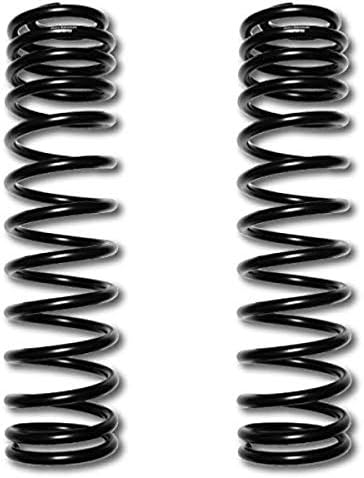
Rock Krawler RK03100 Coil Spring
If you own a Chevy truck, find the top-rated suspension component box for Chevy Silverado to upgrade your ride.
$160.76 price checked August 2026

SUPERLIFT Suspension Component Box 3377
$449.99 price checked August 2026
Read our full SUPERLIFT Component Box review
Understanding electrical requirements is vital, so learn about the correct operating voltage for car suspensions before buying.
How do I measure my required Lift Height?
To determine your required Lift Height, you must identify your starting point by measuring the distance from the center of your wheels to the bottom of your chassis or bumpers.
Measuring ground clearance and approach angles
Measure the clearance between your tires and the underside of the vehicle. Use a tape measure to find the distance from the ground to the lowest hanging point, such as the differential housing or the frame rails. If you are aiming for a specific lift, subtract your current clearance from your goal clearance to find the required Lift Height in inches.
Checking factory geometry and bolt patterns
Verify your current suspension setup by checking the manufacturer’s specifications for your vehicle’s model year. The Lift Height you choose must be compatible with the existing bolt patterns and mounting points. Because different vehicles have different frame geometries, a 3 in. lift on one truck might require different components than a 3 in. lift on another.
What happens if the Lift Height is too high or too low?
Choosing a Lift Height that is too low for your intended use results in “under-provisioning,” where the vehicle’s body or components strike obstacles. This often manifests as “body bash,” where the frame hits a rock, or “rubbing,” where the tires make contact with the inner wheel well or fenders.
The risks of a Lift Height that is too low
If the Lift Height does not provide enough clearance for the tires you intend to fit, the tires will rub against the suspension components or the wheel wells. This friction can cause rapid tire wear, generate excessive heat, and potentially damage the vehicle’s bodywork or braking lines.
Beginners should start by exploring the different types of car suspensions to see which system fits their needs.
The risks of a Lift Height that is too high
A Lift Height that is too high for your needs can lead to “over-provisioning,” which negatively impacts the vehicle’s stability and handling. Excessive lift changes the center of gravity, which may cause the vehicle to feel “tippy” or prone to swaying during high-speed cornering. It also puts increased stress on the drivetrain and steering components.
What should I do if I fall between two Lift Height values?
If you fall between two Lift Height values, you should generally choose the lower of the two options unless your specific use case requires the extra clearance. Choosing the lower value maintains better handling characteristics and keeps the vehicle’s geometry closer to the original factory design.
Why the lower value is usually safer
The lower Lift Height is typically the safer choice for daily driving because it minimizes the change to the vehicle’s caster and camber angles. If you are unsure of your requirements, the lower value provides a more predictable driving experience while still offering an improvement over the stock height.
When to choose the higher value
You should only move to the higher Lift Height if your primary goal is technical off-roading or clearing specific, known obstacles. If the difference between the two values is small—for example, choosing between a 3 in. and a 4 in. lift—the higher value may be acceptable if you have already accounted for the necessary steering geometry adjustments.
Consulting a qualified installer
Because Lift Height changes the mechanical geometry of the vehicle, a qualified installer should confirm the fitment before you order parts. They can ensure that the Lift Height you select will not cause binding or seizing of the suspension components. A professional can also verify that the chosen height will not interfere with the vehicle’s safety systems or structural integrity.