Operating Voltage in car suspension refers to the electrical potential required to power active components like electronic dampers, active leveling systems, or hydraulic pumps. The correct voltage depends entirely on your vehicle’s specific electrical architecture and the power requirements of the suspension hardware you intend to install.
Which Operating Voltage suits my car suspension?
| If this is you | The Operating Voltage that suits you | Why |
|---|---|---|
| You own a standard passenger vehicle or light truck. | 12V | Most standard automotive electrical systems operate on a 12V DC circuit. |
| You own a heavy-duty commercial truck or a large RV. | 24V | Heavy-duty vehicles often use 24V systems to handle higher power demands across longer wiring runs. |
| You are installing a specialized industrial or marine lift system. | 48V or higher | High-torque heavy lifting often requires higher voltage to minimize current and heat in the wiring. |
| You are retrofitting an older vehicle with modern active tech. | 12V (with a dedicated power supply) | If the original system lacks the capacity, a dedicated converter may be needed to stabilize the 12V supply. |
Car Suspensions covered by our own reviews
3 reviewed options, $160.76 to $449.99, with the full write-up behind each name.
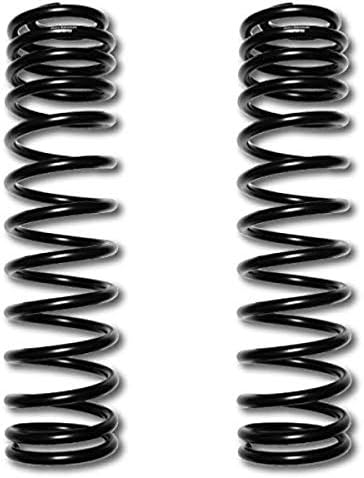

SUPERLIFT Suspension Component Box 3377
$449.99 price checked August 2026
Read our full SUPERLIFT Component Box review
Determining your specific needs is easier when you learn how to choose lift height for your vehicle.

How do I find the correct Operating Voltage for my vehicle?
To find the correct Operating Voltage, you must identify the native voltage of your vehicle’s electrical system before selecting any suspension components.
Checking the vehicle’s factory specifications
The first place to check is the vehicle’s owner’s manual or the identification plate usually located on the door jamb or under the hood. Manufacturers specify the nominal system voltage, which is typically listed as 12V or 24V.
Using a multimeter to verify voltage
You can confirm the system voltage by using a digital multimeter. With the engine running and the electrical load active, connect the multimeter probes to the battery terminals. A reading between 13.5V and 14.5V indicates a 12V system, while a reading between 27V and 28.5V indicates a 24V system.
You can also browse the different types of car suspensions to see which design fits your driving style.
Reading the component’s requirement
Once you know your vehicle’s voltage, you must match it to the requirements printed on the suspension hardware. Look for a “V” or “Volts” rating on the product’s housing or technical documentation. If the hardware requires 12V and your vehicle provides 12V, the components are compatible.
What happens if I choose the wrong Operating Voltage?
Choosing a suspension component with an Operating Voltage that does not match your vehicle’s electrical system leads to immediate mechanical or electrical failure.
Risks of under-voltage supply
If you connect a 24V suspension system to a 12V vehicle power supply, the component will suffer from under-voltage. This results in the system failing to move or providing insufficient force to dampen the ride. In active systems, this can cause the electronic valves to stay open or closed, leading to a harsh, un-damped ride or a complete lack of height adjustment.
Risks of over-voltage supply
Connecting a 12V suspension component to a 24V vehicle system creates an over-voltage condition. This typically results in the immediate melting of internal wiring, the blowing of fuses, or the permanent destruction of the electronic control unit (ECU). In some cases, this can cause a short circuit that damages the vehicle’s main alternator or battery.
What do I do if my vehicle falls between two voltage standards?
If your vehicle’s electrical output is inconsistent or falls between standard thresholds, you must stabilize the power before connecting the suspension.
Using a DC-to-DC converter
When the vehicle’s native voltage cannot match the suspension’s required Operating Voltage, a DC-to-DC converter is the standard solution. For example, if you are installing a 12V system on a 24V truck, a converter can step the voltage down. This ensures the suspension receives a steady, regulated voltage regardless of fluctuations in the main system.
Ensuring wiring can handle the current
In borderline cases where the voltage is correct but the distance from the battery is long, voltage drop becomes a factor. If the voltage drops too low by the time it reaches the suspension, the system will underperform. In these instances, you must ensure the wire gauge is thick enough to maintain the required Operating Voltage across the entire length of the run.
Because incorrect voltage can lead to permanent hardware damage or vehicle electrical failure, you should have a qualified automotive electrician verify the wiring and voltage stability before performing the installation.