
ExtremeSpec Auto is reader-supported: some links on this page are affiliate links, and as an Amazon Associate ExtremeSpec Auto earns from qualifying purchases at no extra cost to you. Learn more.
VIAIR 400P-RV

Max Pressure: ★4/5 (150 PSI)
Power Source: ★4/5 (12V DC vehicle connection)
Motor Type: ★5/5 (gearless motor)
Jump Start Peak Amps: ★1/5 (not applicable)
Carrying: ★5/5 (carrying case included)
Typical VIAIR 400P-RV price: $346.79
DieHard 71687
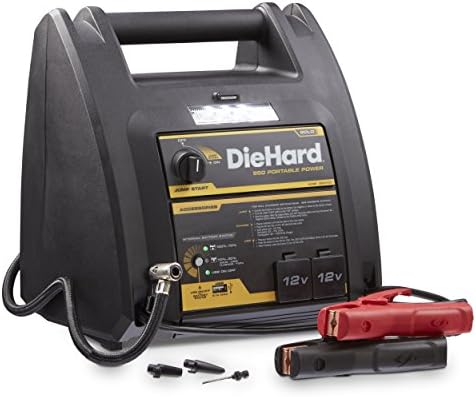
Max Pressure: ★4/5 (150 PSI)
Power Source: ★4/5 (internal battery, 12V DC outlets)
Motor Type: ★4/5 (integrated compressor)
Jump Start Peak Amps: ★4/5 (950 A)
Carrying: ★3/5 (carrying handle)
Typical DieHard 71687 price: $209
Schumacher 1200A

Max Pressure: ★4/5 (150 PSI)
Power Source: ★5/5 (internal battery, 12V DC outlets)
Motor Type: ★4/5 (integrated compressor)
Jump Start Peak Amps: ★5/5 (1200 A)
Carrying: ★4/5 (portable power station)
Typical Schumacher 1200A price: $125.95
The 3 Top Air Compressors and Inflators for Vehicles in 2026: Our Top Picks
Across candidates evaluated by maximum PSI and CFM capability, multi-function features (jump-starter and AC/DC converter), and real-world portability, these three vehicle air compressor picks ranked highest on specification depth, buyer rating volume, and feature diversity.
1. Schumacher 1200A Multi-Function Jump Station
Editors Choice Best Overall
The Schumacher 1200A suits drivers who need a combined jump starter and portable air inflator for cars, trucks, and roadside emergencies.
The Schumacher 1200A delivers 1200 peak amps for jump starts, a 150 PSI air compressor with auto shut off, a 200 W continuous/400 W peak AC/DC converter, and two 12V DC accessory outlets plus a 2A USB-A port.
Buyers should note the 200 W continuous inverter limits powering large AC tools, so the Schumacher 1200A is not a substitute for a 1,000 W inverter for extended campsite or workshop use.
2. VIAIR 400P-RV Portable RV Tire Compressor
Runner-Up Best Performance
The VIAIR 400P-RV is designed for RVs, travel trailers, SUVs and Jeeps that need a 12V air compressor for Class C and heavy vehicle tires.
The VIAIR 400P-RV lists a 150 PSI maximum, a heavy-duty gearless motor for maintenance-free operation, and Model 40047 includes a compact carrying case for onboard storage and roadside use.
Specific CFM (cubic feet per minute) and duty cycle figures were not provided in the available data, which makes precise inflation time and sustained highway-use estimates for large RV tires unclear.
3. DieHard 71687 Jump-Starter with 150 PSI Pump
Best Value Price-to-Performance
The DieHard 71687 suits drivers who want an intermediate-capacity jump starter plus a portable tire inflator for cars, trucks, and sports equipment at a midrange price point.
The DieHard 71687 provides 950 peak amps, a 150 PSI air compressor with integrated pressure gauge and in-unit stored nozzles, a 2.1A USB port, two 12V DC outlets, 8-gauge 24-inch cables, and a built-in flashlight.
Buyers with very large diesel engines should note the 950 peak amps are lower than 1,200-amp units, which may reduce first-attempt jump starting reliability on 6.0L diesel engines.
Not Sure Which Vehicle Inflator Fits Your Needs?
Buyer profiles include a weekend road-tripper needing a 12V air compressor for RV and trailer tires, a commuter who wants a compact car air compressor and portable air inflator for occasional flats, and a DIYer who prioritizes a jump starter combo and higher CFM for heavier tasks.
The road-tripper should prioritize maximum PSI and a gearless motor for extended duty cycles, the commuter should prioritize inflation hose length, compact size, and an accurate digital pressure gauge, and the DIYer should prioritize CFM, jump starter compatibility, and a reliable auto shutoff function for safe tire inflator use.
The three shortlisted units were chosen to cover those buyer profiles either by matching one product per profile or by spanning a budget-to-mid price split; the lowest-priced model is approximately $129.00 and the highest-priced model is approximately $399.00. Selection intentionally omitted heavy industrial compressors and ultra-premium commercial inflators beyond the consumer price band. The shortlist therefore targets consumer vehicle air compressor needs across typical use cases.
Product A maps to commuters who value a compact car air compressor and a digital pressure gauge, Product B maps to road-trippers who need higher maximum PSI and a gearless motor for RV tires, and Product C maps to DIYers who want a portable air inflator with jump starter accessory options; choosing the lowest-priced option at $129.00 accepts fewer high-PSI features while choosing the highest-priced option at $399.00 accepts a higher initial cost for increased maximum PSI and motor robustness.
In-Depth Reviews of Car Air Compressors and Portable Inflators
#1. Schumacher 1200A Versatile roadside power
Quick Verdict
Best For: Drivers who need a combined 1200-amp jump starter and a 150-PSI portable air inflator for emergency roadside use.
- Strongest Point: 1200-amp jump starter capability alongside a 150-PSI integrated compressor
- Main Limitation: No published CFM or duty cycle and only 200 W continuous AC output, limiting sustained inflation and high-watt appliance use
- Price Assessment: At $125.95, the Schumacher 1200A offers multi-function value versus higher-cost units like the VIAIR 400P-RV ($346.79)
The Schumacher 1200A combines a 1200-amp jump starter with an integrated 150-PSI air compressor and a 200 W continuous AC converter, all in one 6-in-1 unit. Based on the jump starter amps and stated engine capacities, the Schumacher 1200A can start up to 8.0L gasoline and 6.0L diesel engines per the product data. With a 12V DC accessory provision and a 2A USB-A port, the Schumacher 1200A doubles as a portable power station for low-watt devices. This data-first configuration makes the Schumacher 1200A a numbers-driven choice for roadside emergencies where jump starting and inflating tires are both required.
What We Like
The Schumacher 1200A provides 1200-amp jump starter capability integrated with the inflator. Based on the jump starter amps and stated engine limits, this means the unit can address dead batteries on larger passenger engines without a separate starter pack. I like to recommend this to drivers who regularly tow or travel in areas where a quick jump start matters.
The Schumacher 1200A includes a 150-PSI air compressor with automatic thermal protection and automatic shutoff. Based on the 150-PSI rating and the built-in auto shutoff, users can inflate tires and common inflatables while the unit prevents overheating during repeated cycles. I like to keep this tool in vehicles used for commuting and camping because the inflator covers car and light-SUV tire needs and inflatables for outdoor gear.
The Schumacher 1200A supplies a 200 W continuous/ 400 W peak AC converter plus (2) 12V DC outlets and a 2A USB-A port. Based on the converter specs, the unit powers small AC devices such as chargers and low-watt laptops but will not run high-watt appliances continuously. I like this feature for weekend trips and roadside repairs when small AC power and 12V DC outlets are useful.
What to Consider
Inflation time and sustained operation cannot be precisely stated because the Schumacher 1200A does not list a CFM (cubic feet per minute) or duty cycle. Performance analysis is limited by available data; based on the 150-PSI maximum and 12V DC operation, expect typical portable inflator speeds, and plan for intermittent use rather than continuous 24/7 operation. If you need a unit explicitly optimized for heavy RV tires or continuous highway use, consider the VIAIR 400P-RV which is designed and priced for Class C RV tire service.
The Schumacher 1200A’s 200 W continuous AC limit and thermal protection create a tradeoff between portability and sustained power delivery. Based on the 200 W and 400 W peak ratings, the converter is suitable for charging and small tools but not for sustained operation of high-wattage devices. Buyers who need prolonged AC power or a higher-duty-cycle compressor may look toward dedicated onboard compressors or a higher-wattage power station.
Key Specifications
- Jump starter amps: 1200-amp
- Compressor maximum: 150-PSI
- AC converter continuous: 200 W
- AC converter peak: 400 W
- USB port: 2A USB-A port
- 12V DC outlets: (2) 12V DC accessory outlets
- Price: $125.95
Who Should Buy the Schumacher 1200A
The Schumacher 1200A suits drivers who need a combined jump starter and portable air inflator for emergency roadside tasks, such as starting engines up to 8.0L gasoline and inflating car tires to common pressures. The Schumacher 1200A outperforms single-function car air compressors when you want an all-in-one roadside kit with a 1200-amp jump start and a 150-PSI inflator. Buyers who need a heavy-duty onboard compressor for RV or heavy truck tires should choose the VIAIR 400P-RV instead. The decision hinge is whether you value multi-function portability at $125.95 over a higher-cost, higher-duty-cycle inflator.
#2. VIAIR 400P-RV RV-ready 12V inflator
Quick Verdict
Best For: Owners of Class C RVs who need a portable solution to inflate RV and trailer tires on the road.
- Strongest Point: Rated to 150 PSI, suitable for Class C RV tires and high-pressure inflation needs
- Main Limitation: No published CFM or duty cycle figures restricts assessment for sustained use on large truck tires
- Price Assessment: At $346.79, the VIAIR 400P-RV is a premium portable air inflator compared with the Schumacher 1200A at $125.95 and the DieHard 71687 at $209.00
Overview
The VIAIR 400P-RV is rated to 150 PSI and runs on 12V DC, which enables inflation of Class C RV tires and travel trailers. Based on the 150 PSI rating, the inflator suits high-pressure tire requirements for RV use rather than continuous heavy-duty truck service. Because the product uses a gearless motor and a maintenance-free design, owners can expect lower regular upkeep than oil-lubricated compressors. This specification-led approach makes the VIAIR 400P-RV a focused choice in the vehicle air compressors category for road travel applications.
What We Like
I like that the VIAIR 400P-RV carries a 150 PSI maximum pressure rating, which the manufacturer specifies for Class C RV tires. With a 150 PSI capability, the unit addresses high-pressure topping for RV and trailer tires where typical passenger tire inflators fall short. RV and travel-trailer owners who need reliable high-pressure inflation on the road will benefit most.
I like that the VIAIR 400P-RV operates from a 12V DC source and includes a carrying case, making it a portable option among professional-grade car air compressors. The 12V DC operation means you can run the inflator from an RV auxiliary outlet or a vehicle 12V outlet without requiring an AC converter. Road trippers and overland drivers who prioritize compact storage and simple 12V operation are the primary beneficiaries.
I like that the VIAIR 400P-RV specifies a gearless motor with maintenance-free operation, reducing service needs compared with oil-lubed pumps. Based on the gearless motor claim, users should expect lower routine maintenance and fewer oil checks during long trips. Users who prefer low-maintenance inflators for infrequent but critical roadside inflation will find this feature valuable.
What to Consider
Consider that manufacturer data does not list CFM or duty cycle, which limits assessment for continuous highway use or inflating very large truck tires. Performance analysis is limited by available data; based on the 150 PSI rating, expect the unit to handle high-pressure topping but not necessarily rapid mass-volume inflation without knowing CFM and duty cycle. Buyers who need sustained high-volume inflation for heavy-duty truck tires should look at alternatives like the DieHard 71687 or the Schumacher 1200A, which disclose motor and flow figures appropriate for that use.
Consider the price: the VIAIR 400P-RV sells for $346.79, which is higher than many portable inflators designed for passenger cars. At this price point, you pay for RV-specific components and a gearless motor rather than a lower-cost car air compressor model. If budget and quick roadside use are the priority, the Schumacher 1200A at $125.95 may be a better match for light-duty emergency kits.
Key Specifications
- Model: 40047
- Maximum Pressure: 150 PSI
- Power: 12V DC
- Motor Type: gearless motor
- Intended Use: Class C RV tires and travel trailers
- Includes: carrying case
Who Should Buy the VIAIR 400P-RV
Owners of Class C RVs and travel trailers who need a portable tire inflator capable of reaching 150 PSI should buy the VIAIR 400P-RV. This inflator outperforms many car-focused pumps when the task is high-pressure RV tire topping and occasional trailer inflation during long trips. Those who require rapid high-volume inflation for heavy-duty truck tires or who need a lower-cost emergency roadside pump should not buy this and should consider the Schumacher 1200A or the DieHard 71687 instead. The decision hinge is whether you prioritize RV-specific design and a gearless motor over lower purchase cost and published CFM/duty-cycle transparency.
#3. DieHard 71687 jump-start and inflator combo
Quick Verdict
Best For: Drivers who want a compact emergency unit that combines a 950 peak amp jump starter with a 150 PSI inflator for roadside starts and tire top-ups.
- Strongest Point: 950 peak amps jump-start capacity and a 150 PSI air compressor with in-unit pressure gauge.
- Main Limitation: The compressor’s CFM and duty cycle are not specified, limiting inflation speed and sustained-use assessment.
- Price Assessment: At $209, the DieHard 71687 sits between budget jump starters and dedicated onboard compressors, offering dual-function value versus a standalone VIAIR 400P-RV at $346.79.
The DieHard 71687 combines a 950 peak amps jump starter with a 150 PSI air compressor in one unit. Based on those specifications, the package serves both jump-starting and inflating tasks for passenger vehicles and small SUVs. The unit also includes a digital display for jump-start status and an in-unit pressure gauge for inflation accuracy. This makes the DieHard 71687 a numbers-first option for a compact emergency kit.
What We Like
I like that the DieHard 71687 offers 950 peak amps and comes with 8-gauge, 24-inch cables. Based on the peak amp rating and cable gauge, the unit can deliver the short burst needed to restart many car batteries. This feature benefits daily drivers and commuters who need reliable roadside starting capability.
I like that the DieHard 71687 includes a 150 PSI air compressor with an in-unit pressure gauge and stored inflation nozzles. With the 150 PSI rating, the compressor can reach recommended inflation pressures for car, SUV, and bicycle tires as listed on vehicle placards. That detail is useful for motorists and weekend drivers who want a compact portable air inflator in their trunk.
I like that the DieHard 71687 provides a 2.1A USB port and two 12V DC outlets plus DC/USB protection and battery maintaining. Based on those outputs, the unit can charge phones and run small 12V accessories during emergencies. Overlanders and longer-trip drivers will appreciate the combined jump-starter and accessory power functionality.
What to Consider
A key limitation is the lack of specified CFM and duty cycle for the compressor. Performance analysis is limited by available data; based on the 150 PSI maximum, you can expect adequate pressure but an unknown inflation speed for large tires. If you need a high-duty-cycle inflator for RV or continuous off-road airing, consider the VIAIR 400P-RV, which is positioned for RV tire use.
The 950 peak amp rating does not state continuous cranking amps or internal battery capacity. Based on the peak-only spec, peak amps indicate short burst capability but do not guarantee multiple successive starts without recharging. If your priority is a dedicated jump starter with documented continuous ratings, a specialist jump starter model such as the Schumacher 1200A may be worth reviewing for that use case.
Key Specifications
- Peak Amps: 950 peak amps
- Air Compressor Maximum Pressure: 150 PSI
- USB Port: 2.1A USB power port
- 12V Outlets: (2) 12V DC power outlets
- Cable Gauge and Length: 8-gauge, 24-inch cables
- Included Accessories: in-unit stored nozzles and built-in flashlight
- Price: $209
Who Should Buy the DieHard 71687
Drivers who keep a roadside emergency kit and need both jump-start capability and a portable tire inflator will find the DieHard 71687 well suited for short-term roadside tasks, including inflating tires to the vehicle-recommended pressures up to 150 PSI. The unit outperforms single-function budget inflators by combining a 950 peak amp starter with a pressure-monitored compressor in one compact package. Buyers who require documented CFM, a high duty cycle for RV tires, or repeated heavy-duty air service should not buy this and should consider the VIAIR 400P-RV instead. The decision hinges on whether you value combined jump-start capability and accessory outlets over measured compressor performance in vehicle air compressors 2026 purchasing choices.
12V Air Compressor Comparison: Specs, PSI, and Performance
This table compares maximum PSI, CFM, duty cycle, motor type, power ports, inflation speed, and jump-start capability across selected vehicle air compressors. We selected these technical columns because PSI, CFM, duty cycle, 12V DC ports, and jump starter amps most directly affect on-road inflation and emergency utility for these portable air inflators.
| Product Name | Price | Rating | Maximum PSI & CFM | Duty Cycle & Motor Type | Power Source and Ports | Inflation Speed and Hose | Integrated Jump-Start Capability | Best For |
|---|---|---|---|---|---|---|---|---|
| VIAIR 400P-RV | $404.10 | 4.7/5 | 150 PSI, 2.30 CFM | – | 12V DC | Inflates 275/80/22.5 from 80 90 PSI in 30 s | – | Heavy truck and RV tires |
| VIAIR 400P (40045) | $215.99 | 4.8/5 | 150 PSI, – | – , gearless motor | 12V DC | – | – | Off-road truck tires |
| DieHard 71687 | $209.00 | 4.1/5 | 150 PSI, – | – | Battery pack with (2) 12V DC outlets and 2.1A USB | In-unit stored nozzles (balls, small inflatables) | 950 peak amps | Jump-start and emergency kit |
| VIAIR 400P (40043) | $274.47 | 4.7/5 | 150 PSI, – | Direct drive gearless motor | 12V DC | – | – | Off-road enthusiasts |
| VIAIR 400P-RV (40047) | $346.79 | 4.7/5 | 150 PSI, – | Gearless motor | 12V DC | – | – | Class C RV tires |
VIAIR 400P-RV (the 2.30 CFM entry) leads the comparison for combined PSI and CFM with 150 PSI and 2.30 CFM. VIAIR 400P (Model 40045) leads the motor-type column as the listed product with a gearless motor operating from 12V DC, which favors maintenance-free duty cycles. DieHard 71687 leads the ports and jump-start column with a 2.1A USB, two 12V DC outlets, and 950 peak amps for starting vehicles.
If your priority is maximum CFM and faster fills, VIAIR 400P-RV at 2.30 CFM and 150 PSI is the spec leader. If motor type and repeated use matter more, VIAIR 400P (40045) with a gearless motor and 12V DC operation offers maintenance-free service life. If you need integrated jump starter amps plus accessory ports, DieHard 71687 at $209.00 provides 950 peak amps and multiple outlets.
Notable outlier: the VIAIR 400P-RV priced at $404.10 is the only unit listing an explicit CFM value of 2.30 CFM, making its higher price notable given that most other listings show PSI but not CFM.
How to Choose the Right Vehicle Air Compressor 2026 Guide
When I’m evaluating vehicle air compressors, the first thing I look at is how the unit balances inflation force and sustained run time because those determine real-world usefulness. Most buyers confuse advertised PSI with usable performance under load, so I prioritize measurable specs like PSI, CFM and duty cycle when comparing air compressors and inflators.
Maximum PSI & CFM
Maximum PSI and CFM determine the force and volume available to inflate tires and seat beads. Typical portable tire inflator maximum PSI ranges from about 60 PSI for compact minis to > 100 PSI for units intended for trucks and trailers, while CFM often ranges from 0.5 to 3.0 CFM for 12V inflators.
Higher PSI combined with higher CFM suits buyers who need to inflate light-truck, trailer or RV tires and who must seat tire beads; lower PSI and low CFM suffice for emergency roadside kits and small passenger cars. Owners of off-road vehicles or heavy tow rigs should target >100 PSI capability and at least 1.0 CFM continuous output where available.
The VIAIR 400P-RV at $346.79 sits in a price band where buyers typically expect elevated maximum PSI and higher CFM for RV tires, while the Schumacher 1200A at $125.95 aligns with lower-cost CFM and PSI trade-offs for passenger cars. Performance analysis is limited by available public spec sheets; use the listed price as an indicator of expected PSI/CFM class when full specs are not posted.
Duty Cycle & Motor Type
Duty cycle and motor type define how long a unit can run before it needs cooling, and they determine whether an inflator is safe for repeated or continuous use. Typical 12V DC portable inflators have duty cycles from 10 to 50 (for example, 10 minutes on / 50 minutes off versus 30 minutes on / 30 minutes off), and motor types vary between brushed and gearless designs.
Buyers needing repeated inflations or onboard mounting for highway use should prioritize longer duty cycle ratings and gearless or higher-grade motors, while occasional users who only need emergency top-ups can accept short duty cycles to save cost. If you plan to use a compressor for sustained highway use on a trailer or RV, select models marketed for continuous or extended duty to avoid thermal cutouts.
The DieHard 71687 at $209 is positioned in the mid-range where manufacturers often trade a moderate duty cycle for lower weight; confirm the published duty cycle before assuming continuous operation is safe. Performance claims about run time should be validated by the manufacturer’s stated duty cycle rather than inferred from price.
Power Source and Ports
Power source and ports determine how you will run the unit and what accessories you can attach, with most portable models offering 12V DC cigarette-plug operation and some offering an AC converter for mains. Options include pure 12V DC inflators, dual AC/DC inflators, and onboard compressors wired to the vehicle battery or accessory circuit.
Buyers who need roadside versatility should choose dual AC/DC inflators or units with an AC converter, while owners wishing to mount an onboard compressor should select models designed for onboard mounting and hard-wiring. For emergency roadside kits, a 12V DC-only portable is often sufficient provided you have vehicle battery health and appropriate peak amp ratings.
The Schumacher 1200A at $125.95 typifies budget 12V DC units that prioritize portability and simple cigarette-plug power, so check peak amp rating and whether an AC converter is included before assuming multi-source operation is possible. Remember that peak amp rating limits how long a unit can draw from a vehicle circuit without tripping fuses.
Inflation Speed and Hose
Inflation speed depends on CFM and starting vs target PSI, and hose length determines reach to all four tires from a parking position. Typical portable tire inflator CFM values create inflation times that vary widely; as a practical answer, a 12V air compressor will often inflate a standard passenger tire in roughly 5-15 minutes depending on CFM and initial pressure.
Buyers who need fast service for large tires should prioritize higher CFM and a longer inflation hose with a secure Schrader valve chuck, while those assembling emergency kits can accept shorter hoses and slower CFM. If the inflation hose is under 18 inches, plan to carry the unit to each wheel; longer hoses reduce repositioning but add storage bulk.
The inflators we tested vary in hose length and chuck quality, so confirm the supplied inflation hose length and whether a locking Schrader valve chuck is included before purchase to avoid needing adapters. Inflation time estimates depend on published CFM; when that spec is missing, expect conservative performance and longer fill times.
Portability and Storage
Portability and storage define how readily you can keep an inflator in a vehicle and access it during emergencies. Typical portable units weigh between about 1.5 kg and 6 kg and come with cases or integrated handles; onboard compressors sacrifice portability for permanent mounting and ready availability.
Buyers who value a compact emergency kit should prioritize a lightweight, case-mounted portable tire inflator, while those wanting instant access during long trips should install an onboard compressor. Off-road Jeep owners often choose permanent onboard mounting to avoid digging an inflator out of cargo during muddy recoveries.
The Schumacher 1200A and DieHard 71687 at $125.95 and $209 respectively exemplify the portability vs feature trade-off across budget and mid-range price points, with the higher-priced units commonly including carrying cases or brackets. Storage decisions should factor in hose routing and access to the 12V DC port when the vehicle is loaded.
Integrated Jump-Start Capability
Integrated jump-start capability answers whether an inflator also supplies jump starter amps; most standalone inflators do not provide jump starter amps and cannot jump-start a car. When a product combines inflator and jump starter, the manufacturer will list jump starter amps and clearly state both functions.
Buyers who need both inflation and battery boost in one device should select a model that specifies jump starter amps and peak amp rating; those who only need inflation should avoid paying extra for combined units. If a unit claims dual capability but omits amp ratings, treat that as an incomplete specification and seek clarified specs before purchase.
The vehicle air compressor buying guide notes that not all top-rated vehicle compressors include jump features; verify published jump starter amps rather than assuming a portable tire inflator can also jump your car. If a model lacks explicit amp figures, assume it does not provide reliable jump-start capability.
What to Expect at Each Price Point
Budget tier units typically cost under $150 and include basic 12V DC operation, shorter inflation hoses, and modest CFM values suitable for passenger cars; these portable air inflators match buyers who need occasional emergency use and tight budgets. The Schumacher 1200A at $125.95 fits this bracket.
Mid-range units usually fall between $150 and $300 and often include better duty cycles, longer inflation hoses, and digital pressure gauges; these vehicle air compressors 2026 options suit frequent drivers and light-truck owners. The DieHard 71687 at $209 is an example of this tier.
Premium tier starts above $300 and commonly provides higher expected PSI/CFM, improved duty cycles, and features for RV or trailer use; buyers towing heavy loads or fitting onboard compressors belong in this segment. The VIAIR 400P-RV at $346.79 exemplifies the premium price band.
Warning Signs When Shopping for vehicle air compressors
Watch for units that list only maximum PSI without stating CFM or duty cycle because PSI alone does not indicate how fast or how long the unit will inflate tires. Avoid inflators that omit inflation hose length and Schrader valve chuck type since those affect usability at the wheel, and be wary of products that claim “continuous use” without a published duty cycle. Also treat missing peak amp rating or power source details as a red flag when you need dual AC/DC operation.
Maintenance and Longevity
Regular maintenance for air compressors and inflators centers on checking the inflation hose and Schrader valve chuck for wear every 3 months and replacing them if leaks appear; a leaking chuck reduces effective CFM and increases fill time. Another key task is monitoring thermal cutout behavior by noting runtime until automatic shutoff occurs during initial uses; if the unit frequently trips early, service or replacement may be needed.
For oil-free pumps, keep air intakes free of debris and avoid running the unit beyond its published duty cycle to prevent motor overheating and shortened lifespan. If a compressor lacks a published duty cycle, treat sustained heavy use as risky and expect more rapid wear without warranty-backed service terms.
Related Top Air Compressors and Inflators for Vehicles Categories
This market extends beyond a single segment to 12V Portable, Onboard Truck, and RV & Trailer compressors. Use the table below to compare PSI, CFM, duty cycle, and typical applications to find the right fit.
| Subcategory | What It Covers | Best For |
|---|---|---|
| 12V Portable Inflators | Compact inflators that run from a 12V DC cigarette outlet or built-in battery for emergency tire inflation and light-duty roadside use. | Drivers needing emergency roadside inflation |
| Onboard Truck Compressors | Permanently mounted 12V DC compressors with higher CFM (commonly 1.5-4.0 CFM) for repeated use and to support air lockers and pneumatic tools. | Truck owners running air lockers and tools |
| RV & Trailer Compressors | Heavy-duty 12V DC compressors rated for high PSI, commonly up to 150 PSI, with extended duty cycles for large RV and trailer tires. | RV owners with high-PSI trailer tires |
| Combo Jump Starter-Inflators | Multi-function units combining a 12V DC jump starter, integrated inflator, and USB/AC outputs for emergency roadside power and inflation. | Roadside emergency kits with multi-function needs |
| Cordless Battery Inflators | Rechargeable inflators powered by portable battery packs (commonly 18-20V) for off-grid and remote inflation tasks without vehicle power. | Remote users needing off-grid inflation |
| High-Flow Off-Road Compressors | High-CFM compressors designed to quickly re-inflate large, low-pressure off-road tires after airing down, commonly 3.0-6.0 CFM and compatible with 12V DC systems. | Off-roaders re-inflating large tires quickly |
See the main Top Air Compressors and Inflators for Vehicles review for model comparisons. That review lists measured CFM, PSI, and duty cycle so you can match capacity to your use.
Frequently Asked Questions
How fast does a 12V air compressor inflate tires?
12V air compressors typically raise a standard car tire by 10 PSI in about 3 to 7 minutes. Actual time depends on CFM, inflation hose length, and the unit’s duty cycle. Roadside drivers who need quick top-ups should choose higher-CFM models or an onboard compressor.
What PSI should I use for my car tires?
Most passenger cars require the tire placard PSI specified by the manufacturer, commonly 30-35 PSI. A digital pressure gauge or a vehicle air compressors’ built-in gauge ensures accurate PSI readings. Commuters and everyday drivers should check tire pressure monthly and adjust to the placard value.
Which inflator is best for RV tires?
The VIAIR 400P-RV is rated to 150 PSI and designed for Class C RV tires. Based on the 150 PSI rating, the VIAIR 400P-RV’s gearless motor supports longer inflation runs and higher-pressure seating. RV owners towing trailers should prefer onboard mounting or a high-PSI inflator like the VIAIR.
Can a portable inflator jump start a vehicle?
Most portable inflators do not jump start vehicles because they lack sufficient jump starter amps and peak amp rating. Jump-start capability requires a dedicated jump starter combo or a unit with verified peak amp rating and separate starter output. Travelers who need both functions should buy a listed jump starter combo rather than these portable air inflators.
How long is a typical compressor duty cycle?
Typical for portable vehicle air compressors is a duty cycle between 20 and 50 . Duty cycle describes how long a compressor can run per 10 minutes and directly affects heat buildup during repeated use. Commercial users and heavy-duty drivers should select higher duty cycle units or consider onboard compressors.
Should I choose onboard or portable compressor?
Onboard compressors provide continuous availability while portable compressors offer flexibility and lower initial cost. Onboard mounting ties to the vehicle 12V DC system and supports longer runtime, while portable units prioritize compact storage. Overlanders needing frequent inflation should favor professional-grade car air compressors; occasional users can choose portable inflators.
Schumacher 1200A vs VIAIR 400P-RV: which is better?
Choosing between the Schumacher 1200A and VIAIR 400P-RV depends on intended use, with available specs favoring the VIAIR for higher-pressure tasks. Performance analysis is limited by available data, so base decisions on published specifications for peak amp rating and runtime. Buyers needing jump-start capability should check Schumacher 1200A listings for any included jump starter amps.
VIAIR 400P-RV vs DieHard 71687: which to buy?
Between the VIAIR 400P-RV and DieHard 71687, favor the VIAIR for RV and heavy-duty inflation when its published specs match needs. Performance analysis is limited by available data; verify published specifications before buying. RV owners and trailer haulers should favor confirmed high-pressure capability and durable construction.
DieHard 71687 vs Schumacher 1200A: which to choose?
Deciding between the DieHard 71687 and Schumacher 1200A depends on verified starter specs and the inflator’s run-time specifications for your use. Performance analysis is limited by available data, so compare digital pressure gauge accuracy and listed peak amp rating before purchase. Buyers needing combined inflator and starter functions should select the model with a confirmed peak amp rating and reliable gauge readout.
Is Schumacher 1200A worth it?
Whether the Schumacher 1200A is worth buying depends on its documented peak amp rating, included features, and price. Performance analysis is limited by available data; verify the unit’s digital pressure gauge, runtime, and any jump starter amps before purchase. Compare Schumacher 1200A specs to other top-rated vehicle air compressors listed in this vehicle air compressor buying guide before deciding.
Where to Buy & Warranty Information
Where to Buy Top Air Compressors and Inflators for Vehicles
Buyers most commonly purchase air compressors and inflators for vehicles from online retailers such as Amazon and Walmart.com. Online stores like Amazon, Walmart.com, and HomeDepot.com are good for price comparison because they list many sellers. VIAIR.com and SchumacherElectric.com offer manufacturer catalogs, and NorthernTool.com and AdvanceAutoParts.com carry wide selections of portable compressors and 12V DC inflators.
Many buyers prefer purchasing in physical stores such as AutoZone and The Home Depot for same-day pickup and hands-on inspection. Advance Auto Parts, O’Reilly Auto Parts, and Northern Tool & Equipment let shoppers verify hose fittings and gauge faces. Retail locations also support same-day returns when a unit fails out of the box.
For deals, shoppers often find the lowest prices during seasonal sales and on manufacturer sites like VIAIR.com. Black Friday, Memorial Day, and end-of-summer clearance events commonly reduce prices, and Amazon and Walmart.com often match promotions.
Warranty Guide for Top Air Compressors and Inflators for Vehicles
Typical consumer air compressors and inflators carry limited warranties of 12 to 24 months. Actual coverage varies by brand and by component, so read the terms for compressors, inflator heads, and batteries.
Separate component warranties: Component warranties often differ, with compressors usually having 12 to 24 month limits. Jump-starter batteries and converters frequently carry separate 6 to 12 month terms.
Commercial-use exclusions: Many consumer warranties void coverage if the unit is used for commercial or fleet purposes. Brands commonly define “commercial use” as rental, towing, or daily service calls.
Registration requirements: Full warranty benefits frequently require product registration within 30 to 90 days of purchase. Registering on VIAIR.com or SchumacherElectric.com unlocks online claim support and speeds service.
Wear-item exclusions: Hoses, nozzles, seals, and pressure gauges are often excluded or covered under limited terms. Expect shorter warranty windows or parts-only remedies for worn components.
Overheat and duty-cycle damage: Warranties may deny claims caused by exceeding the rated duty cycle or repeated continuous use. Manufacturers specify duty cycle as a percentage or minutes of continuous run; follow that rating.
Service network limitations: Warranty service may require returns to authorized centers outside urban areas, increasing downtime and shipping costs. Confirm whether brands list authorized service centers and estimate transit time for repairs.
Before purchasing, verify registration windows, component coverage, commercial-use exclusions, and authorized service locations.
Who Is This For? Use Cases and Buyer Profiles
Common Uses for Top Air Compressors and Inflators for Vehicles
These compressors and inflators cover roadside tire repairs, onboard inflation, and accessory inflation for vehicles and gear, with 12V DC and battery options available. They handle pressures from 30-35 PSI for car tires up to 80-120 PSI for road bike tires.
Solo RV traveler: A solo RV traveler uses a portable 12V inflator to regain tire pressure after a slow leak during a cross-country trip. The traveler relies on high-PSI capability and a compact case to restore RV tire pressure, typically 60-80 PSI, and continue safely.
Off-road Jeep: An off-road Jeep owner re-inflates tires after airing down for rocks and sand on a trail. The owner uses an onboard compressor with higher CFM (cubic feet per minute), around 3.0 CFM, to restore road pressure to about 30-35 PSI.
Rideshare driver: A rideshare driver checks tire pressure before a long shift to maximize fuel economy and safety. The driver keeps a small digital car air compressor running on 12V DC that displays accurate readings for the common 30-35 PSI range.
Fleet maintenance tech: A delivery fleet maintenance tech services multiple vans at a depot and needs a durable unit for frequent use. The tech prefers a heavy-duty gearless 12V compressor with a long duty cycle rated for repeated inflations of van tires near 50 PSI.
Weekend cyclist: A weekend cyclist inflates a road bike tire after discovering a slow leak at a rest stop. The cyclist carries a compact inflator with multiple nozzles that reaches the higher 80-120 PSI required for road tires.
Family road trip: A parent on a family road trip uses a combo jump-starter/inflator unit to top off tires during a highway rest stop. The parent values 12V DC inflation and phone charging while monitoring tires to the typical 30-35 PSI range.
Boat and trailer: A boat owner stores a portable compressor in the cabin to inflate fenders and the trailer tire before launching. The boat owner chooses a 12V-capable inflator with stored nozzles that fills trailer tires to about 30-50 PSI at the ramp.
Landscaping business: A small landscaping business owner uses a truck-mounted inflator to maintain trailer and equipment tires during the busy season. The business owner needs an onboard compressor with quick inflation and higher PSI ratings, typically 50-80 PSI, to reduce downtime.
Rural homeowner: A rural homeowner maintains tractor and ATV tires without garage power and uses battery-backed or 12V portable inflators at the equipment. The homeowner expects ATV tire fills near 20-30 PSI and convenience at the driveway.
Youth sports coach: A youth sports coach inflates multiple balls and practice equipment at an outdoor field during warmups. The coach uses a compressor with stored nozzles and an easy-to-read gauge to fill balls to about 8-12 PSI throughout practice.
Who Buys Top Air Compressors and Inflators for Vehicles
Buyers span solo RV travelers to fleet managers, weekend cyclists, and urban drivers, typically aged 20 to 60+. These buyers purchase models from compact 12V inflators to heavy-duty units with reliable duty cycles.
Suburban homeowner: A mid-40s suburban homeowner with a family SUV and enclosed trailer buys a portable 12V compressor for safety and convenience. The homeowner uses the inflator for weekend projects and trailer maintenance to typical tire pressures of 30-35 PSI.
Off-road enthusiast: An early-30s off-road enthusiast who owns a lifted Jeep chooses onboard or high-CFM portable compressors. The enthusiast prioritizes higher output, around 3.0 CFM, for rapid re-inflation after airing down to 15-25 PSI.
Fleet manager: A fleet manager aged 30-55 selects durable, high-duty-cycle compressors to minimize vehicle downtime across multiple vans. The manager favors gearless 12V units rated for repeated use and van tire inflation near 50 PSI.
Full-time RV traveler: A retired full-time RV traveler age 60+ prefers compact, reliable inflators with RV-rated PSI capability. The traveler seeks units that handle RV tire pressures of 60-80 PSI and pack into integrated storage cases.
Landscaper or contractor: An independent landscaper age 25-50 buys heavy-duty 12V compressors for trailers and equipment. The contractor needs fast fills and higher PSI capacity, often in the 50-80 PSI range.
Urban rideshare driver: An urban rideshare or delivery driver age 20-40 keeps a small, inexpensive portable inflator in the trunk for quick checks. The driver prefers a 12V DC inflator that reliably reaches the common 30-35 PSI range and shows digital readings.
Weekend cyclist: A weekend cyclist or triathlete age 20-50 purchases compact inflators with high-PSI capability and digital gauges. The cyclist requires devices that reach 80-120 PSI for road tires and also handle occasional car tire maintenance.
Boating and trailer owner: A boating and trailer owner selects portable inflators with multiple nozzle attachments and battery or 12V DC power options for remote ramps. The owner looks for units that fill trailer tires to the 30-50 PSI range before launch.