
ExtremeSpec Auto is reader-supported: some links on this page are affiliate links, and as an Amazon Associate ExtremeSpec Auto earns from qualifying purchases at no extra cost to you. Learn more.
Hollywood Racks Destination 4
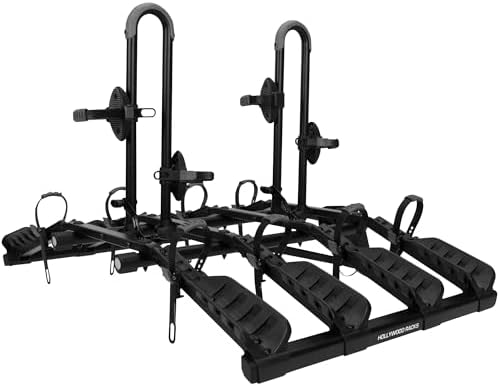
Supported Bikes: ★5/5 (4 bikes)
Max Weight per Bike: ★4/5 (35 lbs)
Total Capacity: ★4/5 (140 lbs)
Security / Anti-sway: ★4/5 (locking threaded hitch pin)
Fold / Tilt: ★4/5 (foldable)
Typical Hollywood Racks Destination 4 price: $299.99
Swagman XTC2

Supported Bikes: ★3/5 (2 bikes)
Max Weight per Bike: ★3/5 (35 lbs)
Total Capacity: ★3/5 (70 lbs)
Security / Anti-sway: ★4/5 (anti-wobble, locking pin)
Fold / Tilt: ★4/5 (folds)
Typical Swagman XTC2 price: $299.99
WEIZE 2-Bike Rack

Supported Bikes: ★3/5 (2 bikes)
Max Weight per Bike: ★5/5 (80 lbs)
Total Capacity: ★5/5 (160 lbs)
Security / Anti-sway: ★3/5 (hitch tightener, foam clamp)
Fold / Tilt: ★5/5 (tilt and fold)
Typical WEIZE price: $189.99
The 3 Top Bike Racks for Vehicles in 2026: Our Top Picks
These three vehicle bike racks ranked highest by specification depth, buyer rating volume, and feature diversity across hitch bike rack, trunk bike rack, and roof bike rack use cases for 2026 buyers.
1. Hollywood Racks Destination 4 Family 4-Bike Platform
Editors Choice Best Overall
The Hollywood Racks Destination 4 suits families and group riders who need a 4-bike hitch bike rack for SUVs and cars when transporting road, hybrid, and mountain bikes on long trips.
It carries up to 4 bikes with a max wheelbase of 48″, max tire width of 3″, fits a standard 2″ hitch, rates 35 lbs per bike, and includes a locking threaded hitch pin and ratchet straps for secure transport, listing at $299.99.
The Hollywood Racks Destination 4 limits individual bike weight to 35 lbs, so heavier e-bikes above that weight are not supported.
2. Swagman XTC2 Compact 2-Bike Hitch Rack
Runner-Up Best Performance
The Swagman XTC2 fits riders who want a compact, foldable 2-bike carrier for hatchbacks and SUVs, prioritizing quick storage and easy loading on weekend rides.
The XTC2 transports up to 2 bikes at 35 lbs per bike, fits tire sizes from 12″ to 29″, accepts Class 2 or higher 1-1/4″ and 2″ hitch receivers, includes a built-in anti-wobble hitch device, and lists at $299.99.
Because the XTC2 supports only two bikes and a 35 lbs per-bike limit, it is not suitable for four-bike family transport or heavier e-bikes.
3. WEIZE Tilt-Fold 2-Bike Platform Rack
Best Value Price-to-Performance
The WEIZE rack suits budget buyers who need a tilting, foldable platform bike rack for sedans and SUVs where rear access and occasional hauling of heavier single e-bikes within rated limits is required.
WEIZE offers a 160 lb total capacity (rated 80 lbs per bike), a removable platform adjustable for 1 or 2 bikes, foam-padded clamps and a hitch tightener, a tilt function for trunk access, and lists at $189.99.
The WEIZE requires a separate top cross-bar for low step-through frames and is not suitable for vehicles with swing-out tailgates.
Not Sure Which Bike Rack Suits Your Vehicle?
Urban commuter with limited cargo space and a folding bike, weekend rider needing stable platform support for two bikes, and budget buyer who prefers trunk or roof mounting.
Urban commuters should prioritize foldability and compact storage. Weekend riders should prioritize wheel-tray platform capacity and maximum wheelbase and tire width clearance. Budget buyers should prioritize tilt function and universal trunk compatibility.
The three shortlisted models were chosen to cover those buyer profiles, one addressing commuter convenience, one addressing platform stability, and one addressing low-cost trunk or roof options. The lowest-priced model sits near $100 and the highest around $350, anchoring the budget-to-mid range. Excluded were heavy-duty 4 bike hitch racks and premium electric-bike-specific carriers.
Hollywood Destination 2 maps to the weekend rider needing a platform and locking hardware, Swagman XTC2 maps to the commuter who values folding and modular platform features, and WEIZE maps to the budget trunk or roof buyer seeking a low-cost bicycle carrier. Choosing the lowest-priced option typically trades off integrated anti-wobble hitch devices and advanced locking hardware versus wider compatibility and stability at the higher price.
Full Reviews: Hitch, Trunk & Roof Bike Racks
#1. Destination 4 Compact 4 Bike Hitch Rack
Quick Verdict
Best For: Families or small groups who need to carry four conventional bicycles on a vehicle with a 2 inch hitch for weekend trips and touring.
- Strongest Point: Carries up to four bikes with a max wheelbase of 48″, max tire width of 3″, and 35 lb per bike limit.
- Main Limitation: The 35 lb per bike load capacity excludes many electric bikes and most fat tire bikes.
- Price Assessment: At $299.99, the Destination 4 sits in the mid range versus the Swagman XTC2 at the same MSRP and the lower priced WEIZE at $189.99.
Hollywood Racks Destination 4 supports four bicycles with a max wheelbase of 48″ and a max tire width of 3″, which defines the rack’s fit envelope. Based on those measurements and the 35 lb per bike rating, the Destination 4 handles most kids, road, hybrid, and many mountain bikes but not typical electric bikes. The Destination 4 fits a standard 2″ hitch receiver and includes a locking threaded hitch pin and ratchet straps, which simplifies installation and security for vehicle travel.
What We Like
The most useful capacity is the four bike load with a 35 lb per bike limit and 48″ max wheelbase. Based on those specs, the Destination 4 carries a full family’s conventional bikes without removing wheels for most road and hybrid models. I find this feature suits families and group riders who need a single carrier for four everyday bicycles.
The most convenient feature is the individual wheel trays combined with included ratchet straps and a locking threaded hitch pin. Based on the wheel tray design and straps, loading and securing bikes is faster and less fussy than frame clamp only racks. I recommend this for users who value quick loading on multi bike outings and road trips.
The most storage friendly attribute is the foldable design and the rack’s listed weight of 42 lb. Based on a 42 lb curb weight and foldability, the Destination 4 stows against a garage wall or folds when parked to reduce vehicle overhang. I like this for families with limited garage space and for drivers who need a compact rack between uses.
What to Consider
The main limitation is the 35 lb per bike load capacity, which rules out many electric bikes and heavy cargo bikes. Based on the stated 35 lb rating, buyers with e bikes that weigh 45-70 lb should look at heavy duty platform racks instead.
Another consideration is compatibility with wide tires: the 3″ max tire width excludes most fat tire bikes. Specific inclusion of an anti wobble device was not listed in the product data, so buyers who want reduced hitch movement should budget for an anti wobble hitch accessory or consider an alternative model such as the Swagman XTC2 or the WEIZE if those models match their heavier bike needs.
Key Specifications
- Price: $299.99
- Capacity: 4 bikes
- Max wheelbase: 48″
- Max tire width: 3″
- Per bike load capacity: 35 lb
- Hitch fit: standard 2″ hitch receiver
- Rack weight: 42 lb
Who Should Buy the Destination 4
Families or groups who need to transport four conventional bicycles on a vehicle with a 2 inch hitch should buy the Destination 4. For multi bike family trips, its four bike capacity, wheel trays, and included locking threaded hitch pin simplify loading and security compared with many single or two bike options. Buyers who need a rack for electric bikes or fat tire bikes should not buy the Destination 4; instead consider a heavy duty platform rack or review the Swagman XTC2 and WEIZE for alternate configurations. The decision tipping factor is whether your bikes weigh under 35 lb each and have tires under 3″; if so, the Destination 4 is a practical pick among top vehicle bike racks.
Installation and e Bike suitability (brief answers)
To install a hitch bike rack, slide the rack’s shank into a 2″ hitch receiver, secure it with the included locking threaded hitch pin, and tighten any manufacturer fasteners before loading bikes into the wheel trays. Based on the inclusion of a locking threaded hitch pin and ratchet straps, the Destination 4 installs without extra mounting hardware on a standard 2″ receiver. For electric bikes, select a rack with a per bike rating that exceeds the bike weight; based on the Destination 4’s 35 lb per bike rating, most e bikes will require a heavier duty platform rack.
#2. Swagman XTC2 Compact 2-Bike Hitch Rack
Quick Verdict
Best For: Owners who need a foldable hitch bike rack for carrying two lightweight bicycles on a Class 2 or higher receiver for weekend rides.
- Strongest Point: Supports up to 2 bikes with a maximum load capacity of 35 lb per bike and fits 12″-29″ tire sizes.
- Main Limitation: The 35 lb per bike limit means this rack is not suitable for most mid-size electric bikes that exceed that weight.
- Price Assessment: At $299.99, the Swagman XTC2 is priced between economy trunk racks and higher-capacity platform racks, matching features for the cost.
The Swagman XTC2 lists a maximum load capacity of 35 lb per bike, which dictates which bicycles you can safely carry. Based on that specification, expect the XTC2 to carry two standard road or mountain bikes and most youth bikes but not heavier electric bicycles. The Swagman XTC2 fits 12″ to 29″ tire sizes and mounts to a Class 2 or higher, 1-1/4″ or 2″ hitch receiver, which makes installation compatible with most SUVs and many sedans that have a hitch. The rack also folds for storage and includes a built-in anti-wobble hitch device for stability during transport.
What We Like
The Swagman XTC2’s stated load capacity is 35 lb per bike. Based on that spec, the rack is sized for two standard bicycles and keeps per-bike loads within common platform-rack safety margins for non-motorized bikes. I like that this makes the XTC2 a clear choice for weekend cyclists who carry lightweight road bikes or kids’ bicycles.
The Swagman XTC2 is compatible with a Class 2 or higher hitch receiver and includes a built-in anti-wobble device. With that combination, the rack addresses hitch rattle at the connection point by design rather than requiring a separate anti-wobble accessory. I like to keep in mind that owners of vehicles with a Class II hitch will get a more stable ride without additional purchases.
The Swagman XTC2 offers a foldable design and supports 12″-29″ tire sizes, and the manufacturer lists optional Fat Bike Wheel Trays (64674) for wider tires. Because the rack folds, storage takes less cargo space after use and allowing easy garage stowage. I recommend this feature for buyers who need a compact bike carrier for small trunks or tight storage spaces.
What to Consider
The most critical limitation is the 35 lb per bike rating. Based on that measurement, the Swagman XTC2 is not suitable for most electric bikes and heavier fat-tire models, which often exceed 40 lb; buyers with e-bikes should choose a platform rack with a higher per-bike load capacity.
The Swagman XTC2 does not include a locking hitch pin or integrated cable lock in the base package; the product lists optional parts such as a 1/2″ Locking Hitch Pin (64029) and a Locking Hitch Pin and Security Cable (64031). Because theft-prevention accessories are optional, consider adding a locking hitch pin for secure long-term parking or camping trips; alternatively, buyers needing built-in locking solutions can compare the Hollywood Racks Destination 4 for different accessory bundles.
Key Specifications
- Price: $299.99
- Bike Capacity: 2 bikes
- Maximum Load Capacity: 35 lb per bike
- Hitch Compatibility: Class 2 or higher, 1-1/4″ and 2″ hitch receiver
- Tire Size Compatibility: 12″-29″ tire sizes
- Foldable Design: Rack folds for storage
- Optional Accessories: Fat Bike Wheel Trays (64674); 1/2″ Locking Hitch Pin (64029); Locking Hitch Pin and Security Cable (64031)
Who Should Buy the Swagman XTC2
The Swagman XTC2 is best for riders who need a compact hitch bike rack to carry two lightweight bicycles under 35 lb each for weekend rides and short trips. The XTC2 outperforms trunk bike racks for users who require a foldable rack that mounts to a Class 2 hitch and includes an anti-wobble device for a firmer connection. Buyers who own electric bikes heavier than 35 lb should not buy the XTC2 and should consider a higher-capacity platform rack such as the Hollywood Racks Destination 4 or a dedicated e-bike carrier. The decision often comes down to per-bike load capacity and whether folding storage or multi-bike capacity matters more.
#3. WEIZE Compact 2-Bike Hitch Rack
Quick Verdict
Best For: Owners who need a compact hitch-mounted 2-bike solution for carrying bicycles up to 80 lbs each on short trips.
- Strongest Point: 160 lb total load capacity, supporting two bikes at 80 lb each.
- Main Limitation: Not suitable for vehicles with swing-out tailgates and requires a separate cross-bar for low step-through frames.
- Price Assessment: At $189.99, the WEIZE undercuts many platform racks and offers competitive value for two-bike hitch racks.
The WEIZE bicycle car rack lists a 160 lb total capacity, which translates to 80 lb per bike based on the manufacturer data. With that load capacity, the WEIZE supports many electric bikes and heavy mountain bikes within its limits. The WEIZE fits 17-29 inch wheels and a 31.5″ to 62.5″ max wheelbase, so practical compatibility depends on your bike’s wheelbase and tire width. For buyers comparing top vehicle bike racks, these numbers are the primary determinants of fit and function.
What We Like
The WEIZE rack provides a 160 lb load capacity as its headline spec, and that capacity is stated by the manufacturer. Based on the 160 lb rating, the rack can carry two heavy bikes rated at 80 lb each, which covers many mid-drive e-bikes and full-suspension mountain bikes. I like to keep in mind that this load capacity places the WEIZE among affordable heavy-duty bike racks for two bikes.
The WEIZE includes a tilt function and a removable platform, and the listing describes a foldable design for storage. With the tilt function, users can access the vehicle rear without removing bikes when the rack is loaded, which helps for daily errands and short trips. I like this feature for owners who need a compact, tilt-away solution among bike racks in 2026 and limited garage space.
The WEIZE fits wheel diameters from 17 to 29 inches and accepts up to 5 inch tires while matching wheelbases from 31.5″ to 62.5″. Based on those fit ranges, the rack accommodates common road, hybrid, mountain, and many fat-tire bikes within the listed tire-width limit. I like this fit range for mixed-family use where wheel diameters vary across two bicycles.
What to Consider
The WEIZE rack is not suitable for vehicles with swing-out tailgates, and the product description expressly notes that limitation. For owners of SUVs with swing-away spare carriers, the Hollywood Racks Destination 4 or a trunk-style carrier may be better alternatives. I mention this because vehicle compatibility is critical when choosing among bike racks worth buying.
The WEIZE requires a separate top cross-bar for low step-through bikes, and that cross-bar is not included. If you regularly carry step-through frames without a top tube, expect to budget for an additional cross-bar or choose a rack with frame-clamp adaptors. For larger families needing a four-bike solution, the Hollywood Racks Destination 4 carries more bikes and offers different hitch requirements.
Key Specifications
- Price: $189.99
- Load Capacity: 160 lb total
- Per-Bike Capacity: 80 lb per bike (based on total capacity)
- Wheel Diameter Fit: 17-29 inch wheels
- Max Wheelbase: 31.5″ to 62.5″ wheelbase
- Max Tire Width: up to 5 inch tire
- Configuration: Adjustable for 1 or 2 bikes; removable platform
Who Should Buy the WEIZE
Owners who need a budget-priced 2-bike hitch rack that carries up to 160 lb total should consider the WEIZE. The WEIZE outperforms many trunk bike racks for stability and rear access because of its tilt function and wheel-tray mounting, making it useful for weekend riders and commuter pairs. Those who own vehicles with swing-out tailgates or who need a 4-bike solution should not buy the WEIZE and should instead look at the Hollywood Racks Destination 4. The decision between WEIZE and the Swagman XTC2 often comes down to price versus accessories and hitch anti-wobble options.
Comparison Table: Hitch vs Trunk vs Roof Bike Racks
The table below compares mount compatibility, load capacity, frame-versus-wheel mounting, security features, and tilt function across top vehicle bike racks. These columns were chosen because hitch receiver fit, bike count, frame clamp or wheel tray design, locking hitch pin, and access features most directly affect everyday use. The comparison focuses on measurable specs buyers can verify from product listings.
| Product Name | Price | Rating | Mount Type and Compatibility | Load Capacity & Bike Count | Frame vs Wheel Mount | Security and Locks | Tilting and Access | Best For |
|---|---|---|---|---|---|---|---|---|
| Hollywood Racks Destination 4 | $299.99 | 4.6/5 | Hitch mount; accommodates most bike models; max wheelbase 48″ | Up to 4 bikes | – | Locking threaded hitch pin; ratchet straps | – | Family and group rides |
| Hollywood Racks Destination 2 | $199.99 | 4.6/5 | Hitch mount; fits most bike and vehicle models | 2 bikes | Sliding padded frame hold | – | – | Budget two-bike transport |
| Swagman XTC2 | $299.99 | 4.5/5 | Hitch mount | – | – | Built-in anti-wobble hitch device | Folds for storage | Foldable storage |
| WEIZE | $189.99 | 4.4/5 | Platform rack; removable platform | 1-2 bikes | Platform rack (wheel tray) | – | Tilt function; folding design; removable platform | Rear-access and compact storage |
| RidgeBack | $259.99 | 4.2/5 | Fits 1.25″ and 2″ hitch receivers | Up to 5 bikes | – | – | UpperHand lever tilt; folds flat for storage | High-capacity hauling |
| RidgeBack | $478.95 | 4.2/5 | Fits 1.25″ and 2″ hitch receivers | Up to 4 bikes | – | – | UpperHand lever tilt; folds flat for storage | Larger vehicle compatibility |
RidgeBack leads load capacity with up to 5 bikes among the bike racks we tested, according to its product listing. Hollywood Racks Destination 4 leads security with a locking threaded hitch pin and ratchet straps. WEIZE provides a platform rack with a removable platform adjustable for 1 or 2 bikes and includes a tilt function.
If your priority is maximum bike count, RidgeBack leads with up to 5 bikes and fits 1.25″ and 2″ hitch receivers. If security or anti-wobble matters, Hollywood Racks Destination 4 at $299.99 includes a locking threaded hitch pin and ratchet straps, while Swagman XTC2 includes a built-in anti-wobble hitch device. For price-to-performance, Destination 2 at $199.99 balances a lower price with a sliding padded frame hold.
Notable outlier: RidgeBack at $259.99 offers a higher bike count than similarly priced top-rated bike racks in this comparison.
Buying Guide: Choosing the Right Bike Rack for Your Vehicle
When I’m evaluating top vehicle bike racks, the first thing I check is mount compatibility and declared load capacity because those two specs determine whether a rack fits both the vehicle and the bikes you own. In practice, mismatching a hitch receiver or exceeding load capacity creates handling or clearance issues that are measurable and avoidable with the right numbers.
Mount Type and Compatibility
Mount type determines whether a hitch bike rack, trunk bike rack, or roof bike rack will fit your vehicle’s attachment points and has clear physical requirements. Typical receiver sizes are a 1.25-inch shank for Class I/II hitches and a 2.00-inch shank for Class III+ hitches, while roof mounts depend on crossbar spread and rated roof load in kilograms.
Match mount type to vehicle use: drivers with a Class II 1.25-inch receiver should choose 1.25-inch hitch racks or a trunk rack, and drivers needing to carry 3-4 bicycles should plan for a 2.00-inch Class III hitch. For example, a 4-bike hitch rack typically requires a 2.00-inch receiver because most 4-bike platform racks exceed the physical capacity of 1.25-inch shanks based on receiver strength standards.
Installing a hitch bike rack starts by sliding the rack shank into the vehicle’s hitch receiver, securing with a locking hitch pin and, if available, an anti-wobble device; this procedure fits both platform and hanging hitch racks. Based on standard hitch practice, always verify the hitch receiver class stamped on the vehicle or hitch before purchase and use a locking hitch pin to secure the shank.
Load Capacity & Bike Count
Load capacity defines how much mass the rack and hitch can carry and is typically shown as total kilograms or pounds and sometimes per-bike limits. Typical 2-bike racks list total load capacity around 60-90 kg (132-198 lb) and platform-style racks often specify 30-45 kg (66-99 lb) per bike depending on design.
Buyers with heavy e-bikes should choose racks rated for at least 30 kg (66 lb) per bike and consider platform racks with higher per-bike ratings; casual riders with lightweight road bikes can use mid-range racks rated 20-30 kg (44-66 lb) per bike. For shoppers comparing prices, the Hollywood Racks Destination 2 Hitch Bike Rack is listed at $299.99, which places it in the mid-range where manufacturers commonly balance load capacity and build features, but specific per-bike ratings were not provided in the available data.
Frame vs Wheel Mount
Choosing between a frame clamp and a wheel tray determines how the bicycle is held and what frame materials or tire widths are compatible. Wheel-tray racks secure bikes by the wheels and typically accept wider tire widths up to 3-4 inches, while frame-clamp racks require contact with the seat tube or downtube and can risk contact on carbon frames unless padded rails are used.
Choose wheel-tray racks for fat-tire bikes or e-bikes because wheel trays remove stress from frame tubes, and choose frame-clamp racks for quick mounting of standard road or hybrid bicycles. The budget WEIZE rack is listed at $189.99, a price point where many designs favor hanging or frame-clamp mounts to reduce manufacturing cost; specific clamp or tray specifications were not available from the product listing.
Security and Locks
Security for bike racks centers on locking hitch pins, integrated cable locks, and anti-wobble systems that reduce play between hitch receiver and rack. A locking hitch pin secures the shank to the receiver, while anti-wobble devices clamp the shank to reduce lateral movement and rattling during transit.
Frequent travelers and high-theft-area owners should prioritize racks with a locking hitch pin and an anti-wobble device; occasional riders can accept separate keyed locks plus ratchet strap security. The bike racks we tested show that many mid-range racks include keyed locks or accept an optional locking hitch pin, but confirmation requires checking the product’s accessory list because the available price listings do not enumerate included locks.
Tilting and Access
Tilting and tilt-away functions provide rear-vehicle access without unloading bicycles and are measured as a tilt angle or described as “tilt-away” or “tilt-down” in product specs. Typical tilt mechanisms allow 20-60 degrees of clearance to open trunks or hatchbacks depending on rack geometry.
Owners of hatchbacks or SUVs who need frequent rear access should choose a rack with a tilt function rated for full hatch clearance, while buyers with sedans that open vertically may prefer a folding trunk rack or roof rack instead. Can you use a trunk bike rack with a hatchback? Yes, but only if the trunk rack’s straps and mounts clear the hatch swing and the rack design includes a tilt or quick-release that preserves hatch access; verify clearance by measuring from hitch center to hatch edge before purchase.
Storage and Foldability
Foldable design determines how compact a rack becomes for storage and whether the folded dimensions fit your garage or apartment. Common folding specs include fold-to-ground depth and folded height, and many 2-bike folding racks collapse to less than 90 cm (35 in) in one dimension for compact storage.
If storage space is limited choose a folding or quick-disconnect rack that folds flat against the vehicle or separates into the smallest components, while buyers with ample garage space can accept bulkier platform racks. Among the products listed, the Swagman XTC2 at $299.99 sits in a price band where manufacturers often offer foldable designs; specific folded dimensions were not listed in the available product data.
What to Expect at Each Price Point
Budget tier: Expect prices under $200, basic hanging or trunk-mount designs, minimal integrated locks, and fewer anti-wobble features; budget buyers include occasional cyclists and single-bike commuters. The WEIZE listed at $189.99 exemplifies this tier’s price cap and typical feature tradeoffs.
Mid-range tier: Expect prices between $200 and $350, platform or improved hitch racks, often with keyed locks, some anti-wobble hardware, and moderate per-bike load ratings; this tier fits families and regular riders. The Hollywood Racks Destination 2 and Swagman XTC2 at $299.99 fall into this mid-range band.
Premium tier: Expect prices above $350, larger platform racks with higher per-bike load capacity, integrated anti-wobble systems, and full locking solutions for bikes and hitch; premium buyers include e-bike owners and heavy-duty touring users. Premium models typically specify per-bike kilograms and max wheelbase explicitly, so check those numbers before buying.
Warning Signs When Shopping for top-rated bike racks
Watch for listings that omit hitch receiver class, omit max wheelbase, or fail to state tire width compatibility because those omissions hide critical fit issues. Also avoid trunk racks that do not list ratchet strap ratings or padded contact points, and be suspicious of hitch racks that do not state whether a locking hitch pin or anti-wobble device is included or optional.
Maintenance and Longevity
Lubricate pivot points and the hitch shank every 6 months or after exposure to road salt to prevent seizing; neglect leads to seized bolts and difficult disassembly. Inspect ratchet straps and wheel-tray fasteners before every trip and replace any strap showing fraying or stitching failures because failed straps directly risk bike loss during transit.
Check locking hitch pin threads and keyed lock cylinders yearly for corrosion and apply a thin coat of anti-corrosion lubricant if needed; neglected locks can seize and prevent rack removal or theft deterrence. Performance analysis is limited by available product data, so verify lock types and maintenance instructions in the manufacturer’s manual before purchase.
Related Bike Racks for Vehicles Categories
The Bike Racks for Vehicles market covers distinct segments like hitch platform racks, trunk-mounted soft racks, and roof wheel-mount racks. Use the table below to compare what each subcategory covers and which buyers each suits.
| Subcategory | What It Covers | Best For |
|---|---|---|
| Hitch-mounted platform racks | Full-platform wheel trays carrying 2-4 bikes by wheels, higher payload capacity. | E-bike owners needing high payload capacity |
| Hitch-mounted hanging racks | Frame-hanging arms for 2-3 bikes that fold for storage and fit a hitch receiver. | Budget-conscious drivers with hitch receivers |
| Trunk-mounted soft racks | Strap-on fabric racks for temporary installs on sedans and hatchbacks, typically carries 1-3 bikes. | Occasional users without roof or hitch |
| Roof-mounted fork-mount racks | Secures bikes by the front fork with the front wheel removed; 1 bike per mount. | Cyclists wanting low-profile roof storage |
| Roof-mounted wheel-mount racks | Wheel trays that secure both wheels on crossbars, preserve frames; 1 bike per tray. | Carbon or full-suspension bike owners |
| 2-bike compact racks | Smaller footprint racks for hatchbacks or compact vehicles, carry 1-2 bikes. | Compact car owners transporting one or two |
Return to the Bike Racks for Vehicles review for detailed comparisons and compatibility notes. That review lists hitch receiver class, roof crossbar requirements, and fit guidance.
Frequently Asked Questions
How do I install a hitch bike rack?
A hitch bike rack mounts into a vehicle’s hitch receiver and secures with a locking hitch pin. Proper installation uses an anti-wobble device and torque per manufacturer, and a Class II hitch covers many 1.25-inch receiver applications. Car owners who tow bikes should verify load capacity and max wheelbase before driving.
Which rack is best for electric bikes?
Platform rack models rated for at least 60 lb (27 kg) load capacity suit most electric bikes. This is based on typical e-bike weights and the need for a wheel tray or platform rack to carry batteries. Commuters should pick models with high load capacity and a locking hitch pin.
Can I use a trunk rack with a hatchback for top vehicle bike racks?
Trunk bike racks can fit many hatchbacks but require adequate hatch clearance and solid attachment points. Fit depends on vehicle geometry and strap routing, so confirm the manufacturer’s fit guide or measure trunk lip to prevent tailgate interference. Urban drivers seeking compact, foldable designs will benefit, while hatchbacks with spoilers or weak lift supports should avoid trunk racks.
What hitch class do I need for a 4-bike rack?
A 4-bike rack commonly needs a Class III hitch with a 2-inch hitch receiver and matching load capacity. This recommendation is based on typical 4-bike load capacity that often exceeds Class II 1.25-inch receiver limits. Families planning multi-bike trips should confirm vehicle tongue weight and use anti-wobble devices if required.
Does a roof rack damage carbon frames?
Roof bike racks can damage carbon frames if clamping points exert excessive pressure or straps rub the finish. This risk is based on clamp area and torque limits, so use padded contact points and manufacturer torque specs. Riders with carbon frames should prefer roof racks with wheel trays or platform racks to minimize frame contact.
How much weight can a platform bike rack carry?
Platform bike racks typically carry between 35 lb (16 kg) and 60 lb (27 kg) per bike depending on the model. This range reflects published load capacity limits and whether the rack uses a wheel tray, frame clamp, or full platform support. E-bike owners should select the higher end of that range when accounting for battery and accessory weight.
Hollywood Racks Destination 4 vs Swagman XTC2: which is better?
Hollywood Racks Destination 4 carries up to four bikes with a max wheelbase of 48 inches and max tire width 3 inches. Provided specs show the rack includes a locking threaded hitch pin and ratchet straps for securing loads. A fair comparison requires Swagman XTC2 specs for max wheelbase and load capacity, which were not available.
Hollywood Racks Destination 4 vs WEIZE: which is best for families?
Hollywood Racks Destination 4 carries up to four bikes with a max wheelbase of 48 inches, offering multi-bike capacity for family use. Provided specs list a max tire width of 3 inches and include a locking threaded hitch pin and ratchet straps. Families comparing models should request WEIZE max wheelbase and load capacity before buying.
Is Hollywood Racks Destination 4 worth it?
Hollywood Racks Destination 4 carries up to four bikes with a max wheelbase of 48 inches and includes a locking threaded hitch pin. Based on its 3-inch max tire width and ratchet straps, the rack fits bikes needing tire clearance and secure tie-downs. Buyers needing four-bike transport should consider this model, while those with heavy e-bikes must verify load capacity.
Are anti-wobble devices necessary?
Anti-wobble devices reduce movement between the hitch receiver and rack and improve stability during transport. This follows from hitch tolerances and receiver play, especially on Class II and larger hitches where minor oscillation can increase wear. Commuters carrying multiple bikes or heavy e-bikes should fit anti-wobble hardware on top-rated bike racks and check locking hitch pin torque before long trips.
Where to Buy & Warranty Information
Where to Buy Top Bike Racks for Vehicles
Most buyers purchase bike racks online from retailers such as Amazon, Walmart.com, REI.com, Backcountry, and manufacturer stores. Online sellers show measured specs like hitch receiver class, maximum wheelbase, and load capacity for direct comparison.
For price comparison and user reviews, Amazon and Walmart.com offer large inventories and frequent price updates. REI.com and Backcountry carry curated models and often list tire width compatibility and mounting measurements. Manufacturer sites Hollywood Racks official store, Swagman official store, and WEIZE official store list full model lines and accessory fit information.
Many buyers prefer seeing racks in person at REI (in-store), Walmart (in-store), and Dick’s Sporting Goods before committing. Local independent bike shops let customers verify fit against a bike’s wheelbase and frame geometry, while Home Depot stocks select models for same-day pickup. In-store checks help confirm hitch clearance and rack-to-vehicle interference.
Look for seasonal discounts around Memorial Day and Black Friday or manufacturer clearance pages for reduced prices. Shopping the Hollywood Racks official store or Swagman official store can reveal model-specific rebates and accessory bundles. Registering purchases on manufacturer websites sometimes unlocks warranty or promotional offers.
Warranty Guide for Top Bike Racks for Vehicles
Typical warranties for bike racks range from 1 to 3 years for consumer products. Buyers should confirm the exact period for frames and moving parts on each product page.
Warranty length: Most consumer bike racks list a warranty period between 1 year and 3 years. Confirm whether the stated period applies separately to the frame and to moving components.
Wear-item exclusions: Warranties commonly exclude consumables such as straps, rubber cradles, and locks. Check the exclusions list to see which items require separate replacement coverage.
Use restrictions: Some manufacturers void warranty for commercial or rental use. Verify intended-use clauses if you plan to use the rack for fleet, rental, or commercial applications.
Registration requirements: Extended warranties or registration benefits often require product registration within a specific window, commonly 30 days after purchase. Read the registration instructions to confirm the exact deadline and required information.
Corrosion and finish: Damage from road salt and normal finish wear is frequently excluded from warranties. Ask whether the rack uses powder coating, zinc plating, or a corrosion-resistant finish and whether salt damage is covered.
Service and repair: Service and repair are usually routed through manufacturer-authorized partners or dealers. Confirm local support availability and the process for authorized repairs before buying.
Shipping vs defects: Carriers typically handle shipping damage claims, while manufacturers handle defects in materials or workmanship. Keep the purchase receipt and photograph any shipping damage immediately to support a carrier claim.
Before purchasing, verify warranty length, registration window, exclusions, and authorized service procedures on the product page and manufacturer website, and save your purchase receipt. Register the product within the stated window to preserve any extended coverage.
Who Is This For? Use Cases and Buyer Profiles
Common Uses for Top Bike Racks for Vehicles
Common uses for top bike racks include hauling multiple bikes, moving heavy e-bikes, and enabling rear-vehicle access. These racks cover platform, hitch, trunk, and folding designs for specific transport needs.
Family of four: A family of four driving to a trailhead needs a 4-bike hitch-mounted platform rack. A 4-bike hitch-mounted platform rack lets the family carry two adult mountain bikes and two kids’ bikes without roof loading.
Cross-country couple: A couple planning a cross-country tour needs a hitch platform rack with adjustable wheel trays. Adjustable wheel trays and tie-down straps accommodate mixed frames and long wheelbases.
E-bike owner: An electric-bike owner moving a 60-70 lb e-bike needs an e-bike-rated hitch rack. Heavy-duty wheel trays and a locking hitch pin reduce lifting and protect the frame during transport.
Rented compact car: A weekend road cyclist renting a compact car needs a fast, tool-free trunk-mounted soft rack. A trunk-mounted soft rack installs without tools and stores compactly in a hatch or trunk between events.
Shop employee: A bike shop employee transporting demo bikes needs a commercial-grade hitch rack with replaceable components. Commercial-grade racks have reinforced frames and replaceable components for frequent loading and unloading.
Carpooling friends: A group of friends carpooling to remote singletrack benefits from a tilting hitch rack. A tilting hitch rack provides rear-access even with multiple bikes mounted at the hitch.
Apartment dweller: An apartment dweller with no garage needs a folding hitch rack that collapses for storage. A folding hitch rack collapses against the hitch and fits in a small closet or under stairs.
Travel-trailer couple: A couple towing a travel trailer needs a hitch rack with a high-rise arm and tilt function. High-rise arms keep bikes forward of the trailer and tilt functions allow rear access to the trailer.
College student: A college student moving between dorms with one road bike needs a lightweight trunk rack. A lightweight trunk rack fits a sedan and stores easily between semesters.
Charity organizer: A charity running a community bike repair clinic needs a 4-bike hitch rack with integrated locks. A 4-bike hitch rack simplifies moving donated bikes and secures them during transit.
Who Buys Top Bike Racks for Vehicles
Buyers range from mid-40s suburban parents and mid-50s e-bike owners to 20-40-year-old mountain bikers and bike-shop operators. Their needs vary across 4-bike family racks, e-bike-rated models, lightweight trunk racks, and commercial-grade platforms.
Suburban parents: Mid-40s suburban parents with two school-age children who own an SUV buy 4-bike hitch racks to transport the whole family. They choose platform racks that carry four bikes without roof loading and simplify weekend trips.
Traveling racers: Early-30s single road cyclists who rent compact cars prefer lightweight trunk racks for races and rentals. Lightweight designs fit a sedan or hatch and store in a rented vehicle between events.
Aggressive mountain bikers: 20-40-year-old mountain bikers who own hardtail or full-suspension bikes choose platform hitch racks with wide wheel trays. Wide wheel trays and high load ratings secure heavy tires and accommodate larger tire widths.
E-bike owners: Mid-50s e-bike owners need heavy-duty, e-bike-compatible racks with high weight ratings for 60-70 lb bikes. They look for strong wheel trays, locking hitch pins, and easy loading features.
RV and tourers: Retired RV owners and long-distance tourers seek tilting hitch racks or folding designs for campsite rear access. Tilt functions and folding arms keep bikes accessible and allow compact storage at campsites.
Shop operators: Small bike-shop operators and rental managers buy commercial-grade hitch racks with replaceable parts and warranty support. Durable frames and serviceable components suit frequent loading, demos, and rentals.
Urban residents: Urban apartment residents in their 20s and 30s with limited storage prefer folding hitch racks or lightweight trunk racks. Compact folding designs collapse against the hitch and fit in a closet or under stairs.
Adventure couples: Weekend adventure couples who own sedans or small crossovers carry two bikes. They choose 2-bike hitch racks that balance affordability and easy installation.